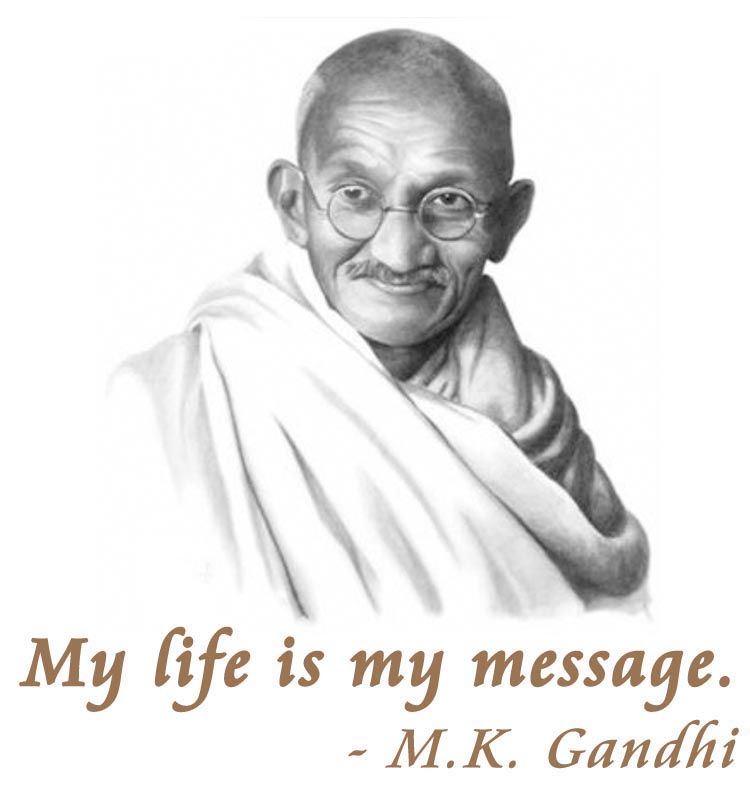
Remember Gandhi for the relevance of his thoughtsNearly eight decades have passed since the death of Mohandas Karamchand Gandhi, yet the resonance of his life remains undimmed. |
- By Rajdeep Pathak*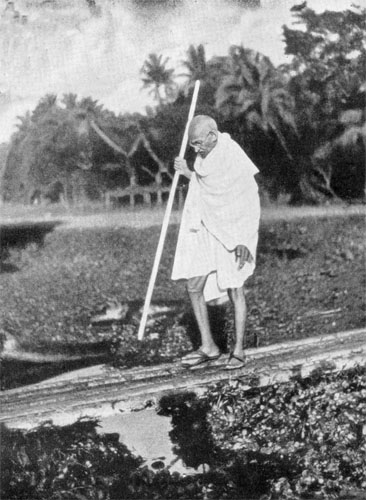 Nearly eight decades have passed since the death of Mohandas Karamchand Gandhi, yet the resonance of his life remains undimmed. As we observe Martyrdom Day on January 30, we remember the Father of the Nation not as a static figure of the past, but as a living conscience. He taught us that true liberation is never won through political manouvering alone. It is a moral victory, forged in the crucible of character and truth. This day of January 30 must also go beyond mere ritual. It requires a renewed commitment to his core philosophy, which is that any movement for liberty is hollow if it is not anchored in a moral foundation. For Gandhi, the political was always a reflection of the spiritual. And we are again and again challenged to re-engage with his most profound insight. Gandhi often remarked that whatever impact his life’s work had on Indians was rooted in the conviction that patriotism and ethics are inseparable. He believed that a nation’s freedom cannot be achieved through brute force alone. It must be won through a radical internal transformation which, in a broader sense, is an awakening of conscience as much as a mobilization of masses. This, he felt, was the deeper contribution of his leadership. “I claim of non-violence that it is infinitely greater than and superior to brute force,” he said, adding that, “the soul force which is non-violence is infinitely subtler and stronger than the material force of physical violence.” Before Gandhi rose to national prominence, the idea of patriotism in India was (often) constrained to elites – lawyers, journalists, and urban reformers who articulated grievances in courts and newspapers. Grassroots support existed, but it was sporadic and reactive. Gandhi’s genius was to make patriotism inclusive, active, and moral – a lived reality for peasants, workers, women, and students alike. In his famous appeal during the Champaran Satyagraha (1917), Gandhi announced, “I am prepared to die, but there is no cause for which I am prepared to kill.” In these words we find the core paradox of his method: courage without violence, sacrifice without retaliation, resistance without hatred. This was not a tactical compromise. It was a strategic affirmation of the moral dignity of the individual. As the historian and editor of the ‘Modern Review’, Ramananda Chatterjee observed, Gandhi “transformed nationalism from a political sentiment into a moral force”. He did not shy away from the word patriotism – rather, he expanded its meaning. For Gandhi, true patriotism demanded a willingness to stand not only against oppression, but against the inner tyranny of ego, greed, and hatred. “A nation’s greatness is measured,” he asserted, “by how it treats its weakest members.” Here was a nationalism that did not sleepwalk into rage, but reflected deeply on the ethical quality of its ends. Central to Gandhi’s philosophy was ahimsa (non-violence) – not as a passive avoidance of harm, but as an active, dynamic force shaped by the ancient wisdom of Vedanta. From the Upanishads he drew the fundamental insight that Atman (the essential Self) is one in all beings. If the divine spark is present in every person, then to harm another is to harm the Self. “Non-violence,” Gandhi taught, “is the greatest force at the disposal of mankind.” It was a force that did not capitulate to fear, but triumphed over it. The German scholar Thomas Weber aptly captured this dimension when he wrote that Gandhi’s non-violence was “not the expression of weakness, but the embodiment of ethical power.” In the mass movements of Non-Cooperation (1920–22), Civil Disobedience (1930–34), and the Quit India Movement (1942), millions were motivated not by threats of violence, but by a shared conviction in the moral inevitability of justice. When Gandhi spoke of his work multiplying patriotism “tenfold,” he was drawing attention to a qualitative shift in the national psyche. Patriotism under colonial rule could easily have degenerated into resentment, or even aggressive nationalism. Instead, Gandhi’s leadership cultivated a patriotism grounded in self-respect, mutual respect, and universal compassion. Consider the Salt March of 1930. Seventy-eight days and nearly 240 miles of walking from Sabarmati to Dandi, crossing one after another district and village. What began as a protest against a tax on salt became an embodied declaration of collective self-worth. Thousands, inspired by Gandhi’s example, made salt from seawater in defiance of colonial law. They did so not with swords in their hands, but with a sense of moral clarity that resonated across villages, towns, and hamlets. It was a pure voluntary movement, where Gandhi invoked the spirit of oneness in calling upon ‘world sympathy in the battle of right against might’. The historian Ramachandra Guha remarks that Gandhi’s movements “brought millions of Indians out of private sorrow into public action.” They became stakeholders in the freedom struggle not merely as subjects of a political demand, but as co-creators of a moral destiny. Patriotism was no longer an abstract slogan. It was a shared ethical resolve to assert human dignity, truth, and justice. One of the most enduring misinterpretations of Gandhi’s philosophy is the idea that non-violence is synonymous with passivity or weakness. In his own words, Gandhi dispelled this notion that “Non-violence and truth are inseparable and presuppose courage – courage that goes to the root of one’s being.” The American civil rights leader Martin Luther King Jr., deeply influenced by Gandhi, aptly summarized this paradox of strength through non-violence: “Non-violence is not sterile passivity, but a powerful moral force which makes for social transformation.” King’s own struggle in the United States would later prove the universality of Gandhi’s vision: that ethical force has the capacity to awaken hearts and transform societies. As we commemorate Gandhi’s martyrdom, the question before us is not merely historical gratitude, but contemporary relevance. What does Gandhi’s fusion of non-violence with Vedantic strength mean in a world still riven by conflict, polarization, and injustice? One answer is found in Gandhi’s own definition of truth that “Truth is God, but God is not a thing apart from everyday life; He is realized in relationships with others.” This is not reinterpretation; this is call to action. In a globalized age marked by both connectivity and division, Gandhi’s insistence on ethical engagement remains a moral compass. Patriotism without empathy, freedom without justice, and progress without compassion are pitfalls Gandhi warned against. Hope the world listens. Courtesy: The Statesman, 30.01.2026 * The writer is Programme Executive, Gandhi Smriti and Darshan Samiti. |