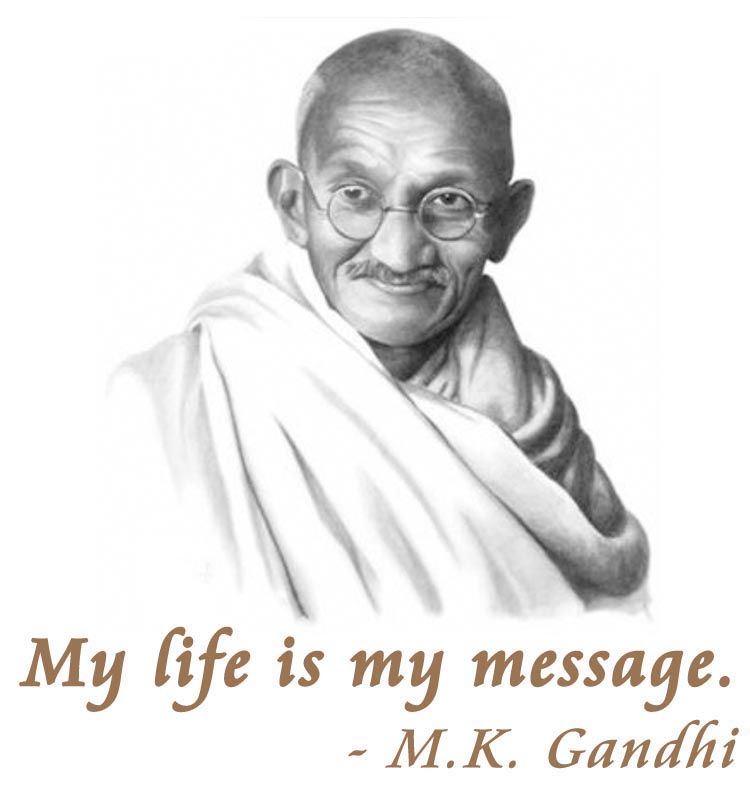
The Enduring Relevance of Gandhian Non-Violence: A Path to Truth and Harmony in Contemporary Society |
- By Md. Hasanur Ali*AbstractMahatma Gandhi, a staunch advocate of truth and non-violence, held non-violence, or Ahimsa, as a cardinal virtue with profound significance. Beyond being a mere principle, it served as a gentle yet potent instrument for self-control and influence over others in all circumstances. Truth and non-violence formed the bedrock of Gandhian philosophy, extending far beyond the avoidance of physical harm to encompass the mitigation of inner turmoil within the human heart. Gandhi regarded non-violence as a means to discover truth itself. In the contemporary world, nations worldwide grapple with diverse internal and external crises. In today’s context, the pervasive impact of violence can be felt in various facets of life, from the domestic and communal to societal, national, and even international levels. The question arises: can non-violence find a place in the current milieu? Violence, rather than offering solutions, perpetuates a cycle of new forms of violence, planting seeds for future conflicts. In contrast, the practice of non-violence offers a path to address and resolve issues while safeguarding our environment, society, and the global community. Hence, Gandhi’s doctrine of non-violence remains pertinent in navigating the complexities of society. This paper aims to delve into the Gandhian conception of non-violence and its enduring relevance in our daily lives, as well as its impact on the broader world. IntroductionMahatma Gandhi, an iconic figure in the history of the Indian independence movement and a proponent of Truth and Non-violence, placed a profound emphasis on the principle of Ahimsa, or non-violence. This fundamental concept often described as "as old as the hills," transcends temporal boundaries and continues to be an enduring testament to the potential of human goodness. Gandhi fervently advocated for Non-violence, not merely as an abstract notion, but as a practical way of life, illustrating its potency in effecting socio-economic transformation and political liberation. At the heart of his philosophy lay a pivotal moment in the history of humanity, wherein individuals were compelled to make distinctions between truth and untruth, love and hate, and non-violence and violence. This juncture provided Gandhi with an opportunity to rewrite the narrative of mankind and reassert the age-old principle of non-violence, urging its acceptance and practice among his contemporaries. According to Gandhi, the concept of Ahimsa is multifaceted, encompassing both negative and positive dimensions. The negative aspect, Ahimsa as non-injury or non-harming, revolves around refraining from causing harm to living beings. Simultaneously, the positive aspect of Ahimsa involves the embodiment of boundless love and boundless charity. Ahimsa is not a passive abstention from harm but an active commitment to self-sacrifice and constructive suffering. Gandhi interpreted it as the epitome of selflessness and universal love. Beyond abstaining from harm, Ahimsa extends to loving even those labeled as enemies or opponents. Gandhi’s pledge to suck the poison out of a dying enemy bitten by a snake serves as a vivid illustration of this profound compassion and love. Ultimately, Ahimsa is about the cultivation of joy and contentment derived from alleviating the suffering of others. It is an intrinsic part of the human spirit, rooted in the shared connection to a divine, spiritual reality. At its zenith, Ahimsa signifies the dissolution of self-centered individuality, replaced by a profound sense of love and oneness with the entirety of creation. It stands as a powerful antidote to arrogance, hostility, and division, replaced by the transformative force of love. Gandhi eloquently captured the essence of Ahimsa in his Autobiography when he wrote, "I must reduce myself to zero. Ahimsa is the farthest limit of humility."1 This fundamental tenet represents the supreme calling of humanity, an evolution towards universal, positive love. It is not a mere abstract philosophy; rather, it holds profound social significance. Drawing inspiration from Aristotle’s assertion that friendship is the cohesive force in societies, Gandhi ardently advocated for a brotherly ethic rooted in Ahimsa. He believed that Ahimsa possesses an inherent, compelling power to usher in peace and unity across the world. In his pursuit of Ahimsa, Gandhi illuminated the transformative power of non-violence through practical application in the tumultuous socio-political landscape of India during the struggle for independence. His unwavering commitment to Satyāgraha, a form of nonviolent resistance, brought forth a wave of change. He acknowledged that the path of Ahimsa was strewn with challenges, yet it remained the most potent instrument of socio-economic and political transformation. As Gandhi remarked in his autobiography, "An Autobiography: The Story of My Experiments with Truth," (2011), ‘Ahimsa is not mere absence of violence; it is the positive virtue of love, the enduring choice of an extraordinary soul.’ This statement encapsulates the essence of his philosophy, where Ahimsa emerges not as a passive stance but as an active and enduring commitment to love, boundless compassion, and the ultimate unity of all living beings. Mahatma Gandhi’s unwavering advocacy of Truth and Non-violence, with Ahimsa as its cornerstone, stands as a testament to the enduring power of these principles. The profound duality of Ahimsa, which embraces both the harmful and beneficial elements, emphasizes the comprehensive nature of this ideology. Gandhi’s idea of Ahimsa, which he saw as a force for kindness, love, togetherness, and transformation, has continued to motivate people for decades and serves as a steadfast ray of hope and progress. Gandhi has given five valuable principles of non-violence which are as follows;
The legacy and methods of Mahatma Gandhi have once again emerged as a topic of significant discussion. Many essential Gandhian principles are being embraced, even if not explicitly attributed to Gandhi himself. The youth, in particular, no longer view Gandhi as a mere theoretician or an impractical proponent of neither ethics nor do they consider his ideas as utopian or outdated. Instead, they regard him as an exceptional figure whose influence cannot be overlooked. In contemporary society, numerous filmmakers, social activists, political leaders, environmentalists, developmental economists, educators, social scientists, and a diverse range of professionals are creatively incorporating and promoting Gandhian ideals to tackle the evolving challenges of the world.3 Gandhi’s principles of non-violence, civil disobedience, and self-sufficiency have proven to be enduring and relevant in addressing issues like social justice, sustainability, and human rights. This resurgence of interest in Gandhi’s philosophy reflects a growing recognition of his enduring impact and the timeless wisdom of his ideas, making them an invaluable resource for contemporary problem-solving and social change.4 Gandhi’s legacy, far from being obsolete, continues to inspire and guide individuals across various fields, fostering a more just and sustainable world. Theological Influences on Gandhi’s Non-Violence PhilosophyGandhi’s commitment to secularism and his receptivity to diverse theological and philosophical perspectives are widely acknowledged. His profound understanding of non-violence was shaped through the assimilation of various concepts and philosophical tenets. Jainism and Buddhism played pivotal roles in laying the foundation of Gandhi’s theory of non-violence, with both religions emphasizing non-violence as the fundamental principle of existence. In these traditions, all other principles and actions are derived from this core belief. Gandhi’s deep engagement with Jain scriptures, particularly the Acaranga Sutra, left an indelible mark on his philosophy. The Sutra’s assertion that all life is dear and precious resonated strongly with Gandhi, reinforcing his commitment to non-violence and the sanctity of life.5 While Jainism’s attitude tended to be negative, emphasizing renunciation and non-attachment, Gandhiji combined these principles with his belief in life affirmation, forging a unique path that integrated these teachings into his philosophy of non-violence. During the same era as Jainism, Buddhism also exerted a significant influence on Indian society, indirectly contributing to Gandhi’s moral development. The Buddha’s motto, ‘charatha bhikkhave charikam bahujana hitaya balujana sukhana,’ found a practical application in the realm of active politics and social reforms in Gandhi’s actions and philosophy.6 The Bhagavad Gita, an ancient Indian scripture, was another important influence on Gandhi’s thinking. The Gita stressed the principles of non-attachment and selfless action, which resonated deeply with him. However, it is important to note that the Gita did not explicitly teach non-violent resistance to evil. Gandhi innovatively built upon its teachings, devising a systematic process for resisting evil through nonviolent means. Christianity, with its message of love and compassion, even towards one’s enemies, left an indelible imprint on Gandhi’s life and philosophy. This message of universal love and compassion deeply influenced his commitment to non-violence and his unwavering dedication to truth and justice. By synthesizing these diverse theological schools, Gandhi embarked on a profound quest for a meaningful life. His life was anchored in truth, honesty, and the moral courage to stand for what is right and just, even at great personal cost. Through this synthesis of ideas, Gandhi developed his distinctive understanding of non-violence, applying the ethics of love from the New Testament and the Bhagavad Gita on a grand scale to explore the possibilities of peace and justice as never before. So, Gandhi’s philosophy of non-violence was a profound synthesis of diverse theological and philosophical influences, including Jainism, Buddhism, the Bhagavad Gītā, and Christianity. These influences not only shaped his understanding of non-violence but also guided his unwavering commitment to truth, justice, and compassion in the face of adversity. Gandhi’s life and work serve as a testament to the transformative power of these diverse spiritual and philosophical traditions on one of history’s most influential figures. Gandhi’s profound understanding of Satyāgraha as the practical embodiment of non-violence is emblematic of his holistic philosophy. The concepts of truth, non-violence (Ahimsa), and Satyāgraha are intricately interconnected, forming the bedrock of his ethical and spiritual framework. These principles coexist harmoniously, like the two sides of a coin, with Ahimsa serving as the manifestation of non-violence, and Satyāgrahaas its technique in action. Gandhi elucidated Satyāgraha as ‘literally holding onto Truth and it means, therefore, Truth-force. Truth is soul or spirit. It is, therefore, known as soul force.’7 Initially, the technique Gandhi employed in South Africa to secure rights for Indians was labeled as ‘passive resistance,’ an English phrase. However, he found this terminology to be restrictive and inherently negative, conveying a sense of weakness, hatred, and the potential for violence. As a result, he coined the word ‘satyāgraha,’ derived from ‘sat’ (truth) and ‘āgraha’ (firmness) (https://en.wikipedia.org/wiki/Satyagraha).8 The concept of Satyāgraha serves as the practical conduit through which Gandhi breathed life into his religious and ethical ideals of truth and non-violence. Functioning as the technique of Ahimsa, it translated these lofty ideals into tangible action. At its core, Satyāgraha is driven by the spirit of truth, the ethical and religious criteria that guide one’s thoughts and deeds. Satyāgraha defies a single, rigid definition and has been described in multifaceted ways. It is often characterized as the weapon of the strong, contrasting with the perception that it is the recourse of the weak. In this sense, it underscores the profound demands it places on those who choose to wield it. It is a force that "Satyāgraha excludes the use of violence in any form or shape, whether in thought, speech, or deed."9 Satyāgraha, as a method of resistance, exemplifies the depth and breadth of Gandhi’s commitment to non-violence and truth. His assertion that Satyāgrahais the way in which Ahimsa is implemented or put into action encapsulates the inseparable connection between the two.10 In reality, Satyāgraha preserves the Ahimsa concept by promoting the attainment of rights and justice by nonviolent means. It is proof of the strength of the human spirit and its ability to bring about social and political change without the use of force. Gandhi’s constant dedication to ideals that go far beyond the individual is demonstrated through the philosophy of Satyāgraha, which is based on truth and non-violence. It is a powerful reminder that righteousness and justice can be pursued using non-violent, soul-force methods, and it exhorts people to adopt the unshakeable resolve to stand up for truth and justice even in the face of insurmountable obstacles. The profound meaning of Gandhi’s assertion that "the world rests on the bedrock of Satya" highlights the centrality of truth to his philosophical outlook. He emphasized that Satyāgraha is a strong and ethical method of dispute resolution rather than a weapon for the weak or the timid. Several key attributes characterize Satyāgrahi’s approach:
Gandhi’s philosophy of Satyāgraha encapsulates the profound belief that truth, non-violence, and love are not only the pillars of personal conduct but also the means through which change and justice can be achieved in the world. Gandhi’s life and work were firmly anchored in the twin principles of non-violence and truth, which served as the bedrock of his philosophy. Non-violence, to him, was not merely a tactical strategy but a profound philosophical outlook intricately interwoven with the pursuit of truth.11 These two concepts were inextricably linked, with non-violence serving as the benign instrument for self-control and the harmonious coexistence of individuals under all circumstances. Truth and non-violence form the essential core of Gandhian philosophy, where the practice of non-violence extends beyond physical actions to encompass the inner sanctum of the heart. For Gandhi, non-violence was the path to truth, making these twin ideals of paramount importance. The entire framework of Gandhi’s remarkable life and work was erected upon the pillars of truth and non-violence. Non-violence was seen as the means to realize truth, and truth, in turn, was the ultimate end. They were inseparable, like two sides of a coin or facets of the same medal. Gandhi emphatically believed that there was no real way to attain truth in human relationships except through the practice of non-violence. The relationship between means and ends was a subject of intense consideration for Gandhi. While he considered Ahimsa (non-violence) as the means, he regarded truth as the end. He firmly rejected the idea that the ends could justify the means, emphasizing the moral integrity of the means as a critical determinant of achieving positive outcomes. In Gandhi’s view, the means held primacy over the ends, and he advocated that if the means were righteous, the ends would inevitably be virtuous. Non-violence was the means through which the ultimate truth could be attained. By prioritizing non-violence as a means, the end of truth could be realized, marking a profound alignment of moral and philosophical principles. This perspective encapsulated in Gandhi’s concepts of means and ends, carries global relevance.12 It serves as a timeless reminder that the journey to a just and truthful society must be paved with the non-violent means, reflecting the profound wisdom of a man who profoundly influenced the world. In another context, Gandhi drew a powerful analogy, likening means to a seed and the end to a tree, emphasizing the unbreakable connection between them: "The means may be likened to a seed, the end to a tree, and there is just the same inviolable connection between there means and the end as there is between the seed and the tree."13 Throughout most of his life, Gandhi unwaveringly practiced non-violence, successfully applying this fundamental creed to all his endeavors. Non-violence was not only a principle he held dear but also an integral part of his relentless quest for truth. In his own words, Gandhi expressed an unwavering conviction in non-violence, stating, "My love for non-violence is superior to every other thing mundane or supramundane. It is equalled only by my love for Truth, which is to me synonymous with non-violence through which and which alone I can see and reach Truth."14 Gandhi’s life was a testament to the deep interconnection of his commitment to non-violence and his unwavering pursuit of truth, a legacy that continues to inspire and resonate with people worldwide. Rekindling the Relevance of Gandhi’s Non-Violence in Contemporary SocietyGandhi’s doctrine of non-violence, or Ahimsa, is more important than ever in today’s culture. Today’s globe is beset by a number of issues, and violence has all too often been used as a solution to disputes, leading to a severe lack of peace and security. In our communities and civilizations, there is a high level of crime, hatred, violence, and mistrust. To further their own interests or for their own amusement, many turn to violence, which threatens the fundamental foundation of mankind and undermines our shared values. Gandhi’s nonviolent philosophy is still relevant in our tumultuous world. It offers a potent framework for promoting a society that is calmer and more harmonious. Gandhi noticed that the best approach to bring about peace and combat exploitation and injustice is via nonviolence. His life, which emphasized non-violence as the guiding principle of his worldview, served as a living example of these beliefs. He had considerable success in the South African uprising by employing nonviolence effectively. Gandhi’s words and lessons should inspire us in the contemporary crisis-ridden globe. Gandhi’s statement is a relevant reminder that hostilities only serve to intensify current issues and plant the seeds of future conflicts. His legacy stands for devoted devotion, compassion, and concern for the well-being of all. Gandhi’s insight serves as a reminder that conflict and violence only serve to create new issues and plant the seeds of further conflict. Gandhi’s philosophy of nonviolence has reverberations in society, education, politics, and economics and offers a way to a more peaceful and just world. Relevance of Non-Violence to SocietyGandhi’s impact on a global scale is unparalleled. While history has seen numerous social reformers and political leaders emerge, few have left an indelible mark on every facet of society as Gandhi has. He was not merely a political figure but a visionary social philosopher who envisioned a society in which Sarvōdaya, the welfare of all, could be a reality. Gandhi’s vision is akin to Karl Marx’s vision of a society where there would be no need for a governing body as individuals would govern themselves. Such an ideal society, in his view, represented the ultimate evolution of human society, offering a solution to the myriad problems humanity faces. Gandhi’s wisdom also lay in his ability to infuse the values of non-violence and Satyāgraha into the freedom struggle, at a time when they were considered antiquated concepts. Moreover, he vehemently opposed the prevailing practice of untouchability during his era, highlighting his commitment to societal transformation. Gandhi thought that prayer and non-violence were far more powerful and effective than guns and violence as agents of social transformation. He advocated for the individual over society and opposed the prevalent pursuit of material and industrial happiness. In Gandhi’s worldview, social change was contingent on individual transformation, and he advocated for open-mindedness and unwavering commitment to non-violence in thought, word, and deed as the path to resolving societal issues. Consequently, Gandhi’s concept of non-violence remains profoundly relevant in our society, offering a path to address a wide array of social challenges.15 Relevance of Non-Violence to EducationGandhi’s educational philosophy remains highly relevant in the contemporary context, emphasizing the holistic development of individuals, the incorporation of discipline, the harmonization of manual labor with learning, and the nurturing of a culture of peace. Beyond being a political leader, Gandhi was a profound educator who recognized that education wields immense power in driving socio-economic progress, material prosperity, political evolution, and moral growth. Gandhi’s all-encompassing philosophy, deeply grounded in ethics and morality, extended to his concept of education. He offered a novel interpretation of religion, seeing it as a "service to humanity." His view of religion diverged from the mainstream and intricately intertwined with his educational principles. This unique perspective guided his advocacy for "Nai Talim" or "basic education." This fresh educational paradigm, acknowledged by Acharya Kripalani as the linchpin of Gandhi’s social and political framework, was profoundly imbued with religious essence. Gandhi’s educational vision was rooted in the principle of ‘learning through practical engagement.’ He championed the idea of practical idealism, emphasizing the significance of vocational training and hands-on experience. His "Nai Talim" notion, which represents this strategy promoted inventiveness and a sense of dignity in manual labour. It represented a shift from the then-current educational model, which mainly prioritized intellectual, scientific, and moral development. Gandhi’s educational philosophy aspired for the highest levels of intellectual, scientific, moral, and ethical accomplishments while nurturing the individual’s spirit, intelligence, courage, and self-reliance. Significantly, Gandhi’s educational framework aimed to bridge the rural-urban gap and address socio-economic disparities in India. He believed in the unwavering commitment of individuals to his principles of truth and non-violence. By incorporating these ideals into his ‘basic education’ model, he sought to rectify these imbalances and foster social cohesion. Essentially, Gandhi’s educational philosophy had the potential to transform Indian society, underscoring the importance of adhering to the principles of truth and non-violence.16 Relevance of Non-Violence to PoliticsIn the realm of politics, the term is often considered the loftiest of all social activities, as it deals with the governance and well-being of the state. Ideally, politics should be driven by a commitment to the welfare of society, love for humanity, and the pursuit of righteous actions rather than selfish interests. However, the present political landscape is marked by conflicts, crises, disputes, and decay in human values and moral standards. In democracies, the quality of legislators is often questioned, leading to disillusionment among the public. The term ‘politics’ and ‘politicians’ have, for many, taken on negative connotations. Gandhi’s ultimate goal in politics was goodness, grounded in non-violence. Non-violence, in a political context, goes beyond the mere avoidance of physical harm; it encompasses a love that is devoid of anger, enmity, hatred, jealousy, and the like. Gandhi’s political philosophy emphasizes serving the welfare of all based on the principles of non-violence. In contemporary times, Gandhi’s introduction of the spirit of non-violence in Indian politics remains relevant. He injected morality and spirituality into politics, making it a force for good. Gandhi’s message of moral politics remains pertinent today and will endure into the future. By intertwining morality and politics, he cautioned against the disastrous consequences of a complete dissociation of morality from the political sphere. As societies grapple with political turmoil and ethical dilemmas, Gandhi’s philosophy serves as a beacon, guiding us toward a politics grounded in morality and non-violence. Relevance of Non-Violence to EconomicsGandhi, while not a conventional economist, developed his economic ideas in response to India’s stark realities – poverty, hunger, and a decline in human values. His economic philosophy cannot be separated from his holistic philosophy. Gandhi’s economic ideals were driven by ethics, non-violence, purity of means, sanctity of labor, and economic decentralization. His emphasis was on mass production by the masses, as opposed to mass production alone. These principles were not just concepts for him; they became a way of life. Key components of Gandhi’s economic philosophy include Swaraj (self-rule), Sarvodaya (welfare for all), Swadeshi (self-reliance), Trusteeship, and Decentralization. These principles draw inspiration from the five-fold path of Yama found in Patanjali’s Yoga Sutra and echoed in the teachings of the Bhagavad Gīta, Buddhism, and Jainism (Ahimsa, Satya, Brahmacharya, Asteya, and Aparigraha). In today’s rapidly evolving economic landscape, selfishness, profit maximization, cutthroat competition, and the use of violent means have become commonplace. The need to hark back to the wisdom of Gandhi in this century is paramount. His life, marked by simplicity and an unwavering dedication to the welfare of all, underscores the centrality of non-violence as an economic tool, and the significance of equitable sharing and distribution. In a world where economic issues are complex and multifaceted, Gandhi’s vision of a non-violent economy becomes even more relevant. It embodies principles that prioritize the common good over individual gain, and it calls for open-mindedness, adherence to non-violence in thought, word, and deed. As we grapple with global economic challenges, Gandhi’s non-violent economic model continues to offer guidance and inspiration. ConclusionThe enduring relevance of Gandhi’s philosophy and message to our contemporary world is unmistakable. His principles continue to inspire and guide countless individuals who recognize the profound significance of his teachings. Central to his philosophy is the concept of non-violence, which holds a pivotal place in our society. Gandhi’s definition of non-violence as a way of life rooted in a relentless pursuit of Truth underscores the profound implications of his ideology. It’s not just a path for those seeking Truth but a choice available to all. It reminds us that violence, far from being a solution, begets new problems and lays the seeds of future violence. Ahimsa and non-violence stand as the antidotes to various forms of violence, offering a holistic solution to societal, political, educational, and economic discord. Non-violence, as a universal principle, has been advocated and practiced worldwide, bearing testimony to the adage that ‘violence cannot be conquered by violence.’ It emerges as an effective instrument for addressing a wide array of conflicts in society. Our present milieu, marked by violence and exploitation, presents a pressing challenge. Non-violence, in this context, emerges as a compelling response to the dilemmas posed by a turbulent world. Gandhi’s philosophical underpinnings continue to guide us on a path of moral and ethical living, transcending temporal boundaries and retaining their profound relevance in the complex landscape of the modern world. His message resonates as a timeless reminder that non-violence is not just a principle but a dynamic force, a universal elixir capable of healing the wounds of a discordant world. Notes and References
Courtesy: Journal of Philosophy and the Life-world, Volume 26: 2023-2024 * Ph.D. Scholar Department of Philosophy, University of Gour Banga |