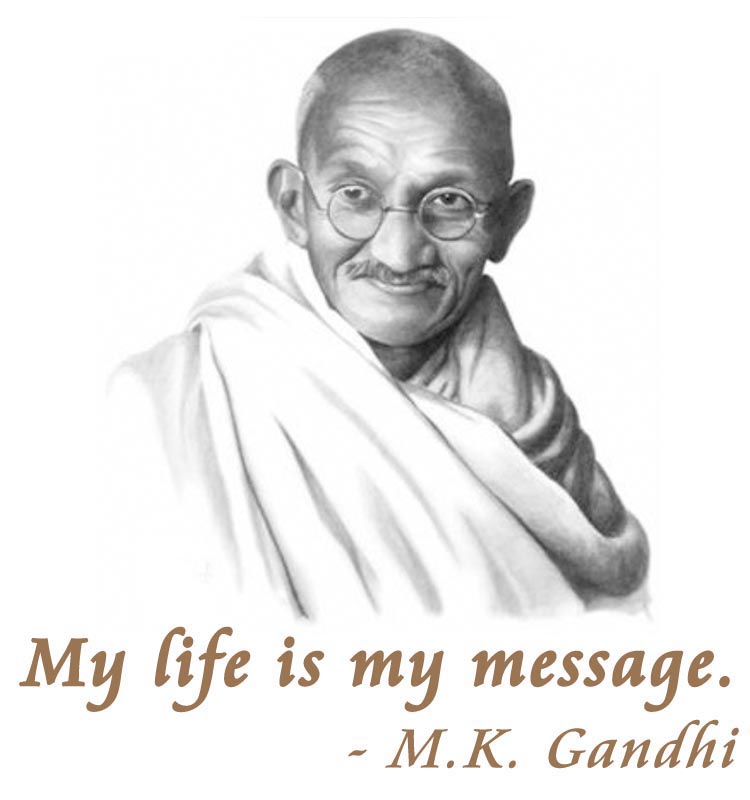
Gandhi’s Last Prayer Meetings: A Catharsis after Partition |
- By Sudarshan Iyengar*In a recent exchange among friends concerned with Gandhi and his legacy, Ela Gandhi raised three questions that appear simple but are, in fact, profoundly difficult. How easily can political leaders turn race, religion, ethnicity or nationality into phobias that produce violence? Could the violence accompanying the Partition of India have been prevented if India and Pakistan had provided an opportunity for people to relocate peacefully and in an organised manner? And, most importantly, how can societies prevent such phobias from spreading and producing violence in the future? The responses to these questions have brought out different dimensions of history. Partition cannot be placed entirely at the door of the British. Nor can it be understood simply as the inevitable consequence of Hindu-Muslim antagonism. British constitutional policies, the strategies of Indian political actors, communal mobilisation, administrative failure, rapidly changing circumstances and the terrible momentum of violence interacted with one another. To speculate retrospectively that a different decision by Mountbatten, or a different timing of the transfer of power, would certainly have prevented Partition is equally hazardous. We cannot know an alternative history. Yet there is another way of approaching these questions. We can ask what Gandhi was thinking and doing in Delhi in January 1948, when the consequences of Partition were before his eyes. His prayer meetings and his last fast were not abstract reflections on communalism. They were a kind of catharsis: a painful examination of what had happened to India, what had happened to its people, and what had happened to himself and his faith in nonviolence. The answer to Ela Gandhi’s questions may therefore be found less in Gandhi’s earlier arguments against Partition than in the extraordinary intensity of his final days. The problem was not merely PartitionBy January 1948, the political fact of Partition could no longer be reversed by Gandhi. Millions had crossed the new borders. Hundreds of thousands had been killed. Families had been separated, homes abandoned and memories violently uprooted. Refugees in Delhi had experienced immense suffering and understandably carried anger with them. But Gandhi refused to accept the proposition that the suffering of one community could justify making another community insecure. On 13 January, the second day of his final fast, he said: "I say I do not blame anyone".1 This is a remarkable statement, especially when made in the middle of such terrible communal violence. He did not mean that individuals and political organisations had no responsibility. He was refusing to make blame the centre of his response. He went on to say that if Hindus and Sikhs insisted on driving Muslims out of Delhi, they would be betraying India and their own faiths. He wanted Delhi to be safe even for Shaheed Suhrawardy, who was regarded by many Hindus as a principal instigator of the violence in Bengal. Gandhi insisted that Suhrawardy should be able to feel as safe in Delhi as anyone else. There is something profound here for the question of population exchange. Gandhi's response was not that the movement of populations could never be peaceful or orderly. His concern was deeper. If the solution to communal fear is simply to separate communities, we may prevent some immediate encounters, but we also institutionalise the belief that people of different faiths cannot live together. Gandhi was trying to restore the possibility of coexistence rather than perfecting separation. He therefore made Delhi the test. He said in the Prayer meeting on the 13th of January, “I shall terminate the fast only when peace has returned to Delhi. If peace is restored to Delhi, it will have effect not only on the whole of India but also on Pakistan, and when that happens, a Muslim can walk around in the city all by himself. I shall then terminate the fast. Delhi is the capital of India. It has always been the capital of India. So long as things do not return to normal in Delhi, they will not be normal.”2 His objective was not to save his own life but ‘to save India and her honour.’ That sentence deserves to be read carefully. Gandhi was not speaking of India's honour as national prestige. He meant something closer to its moral character. What kind of India had freedom produced if its minorities could not live safely in it? From blame to responsibilityGita Dharampal has rightly cautioned against asking only who was responsible for Partition. The British had created political and constitutional structures in which communal identities acquired increasing political significance. But by 1946–47 Indian political actors had their own strategies, constituencies and responsibilities. The Muslim League, Congress and others made choices within a rapidly deteriorating situation. The British were neither omnipotent puppeteers nor innocent bystanders. This distinction is important because history can easily become a search for a villain. Gandhi's final fast suggests another approach: responsibility begins where blame ends. He had opposed Partition. He had failed to prevent it. But once Partition had occurred, he did not spend his remaining days proving he was right. He turned to the question: what must we do now? That is perhaps why his January speeches have such an unusual quality. They are neither political speeches nor historical explanations. They are almost confessions. Gandhi seems to be asking whether the India for which he had struggled had retained any connection with the India he had imagined. On 16 January, the fourth day of his fast, he spoke of “self-purification”. On 17 January, he explained that a spiritual fast was intended for “cleansing of the heart”. He warned that an outward assurance obtained under pressure would have little value if the heart had not changed.3 This is the heart of Gandhi's catharsis. He was not asking merely, “How do we stop the riot?” He was asking, “What has happened within us that has made the riot possible?” When religion becomes the language of hatredEla Gandhi's first observation—that political leaders can turn race, religion, ethnicity and nationality into phobias—is not peculiar to South Africa or India. It is one of the recurring tragedies of human history. A migrant becomes a threat. A religious minority becomes a fifth column. A neighbour becomes an outsider. A political opponent becomes a traitor. Once the person disappears behind the category, violence becomes easier. Gandhi understood that religion itself could be appropriated for this purpose. On 18 January, when he broke his fast, Gandhi reflected with extraordinary anguish: “In the name of God we have indulged in lies, massacres of people, without caring whether they were innocent or guilty, men or women, children or infants.” This may be among the most searching statements Gandhi made about religious violence. The problem was not simply that people had abandoned religion. The deeper problem was that people had used the name of God while abandoning the humanity of those whom they killed. Gandhi's religious pluralism was therefore not merely a plea for tolerance. He was trying to prevent any community from converting God into the property of that community. This is also where the civilisational experience of India becomes relevant. The subcontinent has known invasions, conquest, migration, conversion, religious conflict and political domination. Yet its long history also contains extraordinary examples of cultural intermingling and accommodation. Those who came to conquer often became part of the culture of the soil; languages, food, music, architecture and ways of life developed through interaction. Iqbal expressed something of this civilisational resilience in his famous lines: "Kuchh baat hai ki hasti mitati nahin hamari; There is something in this civilisation that has enabled it to survive the hostility of the ages. We should not romanticise this history. India has known caste oppression, exclusion, persecution and terrible communal violence. Yet it has also possessed cultural resources for coexistence. Gandhi drew deeply from those resources. His Hinduism did not require the disappearance of Islam or Christianity. His faith became deeper, not narrower, as he encountered other traditions. He often quoted the first verse from the Ishavasya Upanishad, Ishavasyam idam sarvam I am certain that he also knew and believed in the sixth verse. It is quintessentially Advaita philosophy. Gandhi believed in it. Advaita philosophy teaches that Brahman alone is the ultimate reality. The individual self, or Atman, is not separate from Brahman but is identical with it. The apparent distinction between the individual self and the ultimate reality arises from ignorance. Yastu sarvani bhutani atmanyevanupashyati He who sees all living beings as existing within his own True Self, The wisdom is applicable to most religions of the world. His final prayer meetings were therefore not merely religious gatherings. They were a small experiment in the India he believed was possible. The power of standing between Ela Gandhi's account of South Africa offers a striking parallel. In 1949, when Indian-African violence threatened to spread, Chief Albert Luthuli and Dr G. M. Naicker went into the troubled townships and appealed to people to stop the carnage. Decades later, when African migrants were threatened, Ela Gandhi and others formed a human chain between the attackers and the migrants. They were fewer in number. Stones were thrown. They did not retaliate. Eventually the attackers withdrew. This is Gandhi's nonviolence in its most practical form. It is not merely refusing to strike another person. It is placing oneself between the victim and the aggressor. Gandhi had done something similar in Bengal and Delhi. He went where people were afraid to go. He lived with those whom others regarded with suspicion. He refused to allow Suhrawardy to become an abstraction called “enemy”. He insisted that Muslims must be able to walk safely in Delhi. On 20 January, a bomb was thrown at his prayer meeting. Gandhi continued with the prayers. The following day he spoke about the would-be assassin without hatred and asked that people not be angry with him, saying that the man did not know that he was doing wrong.4 This is not an insignificant detail surrounding his assassination. It reveals Gandhi's understanding of the psychology of fanaticism. The fanatic has already transformed his victim into an enemy. If the victim responds by transforming the attacker into an enemy in return, the cycle is complete. Gandhi tried to interrupt that cycle. Nonviolence begins before the violence. How do we prevent phobias from spreading and producing violence?This is the most important question facing all of us, especially when fear lingers in the environment, because the state also plays a part in creating it. Gandhi's answer was not simply that people should be preached to after violence begins. He understood that nonviolence must become a social capacity. Political leaders must refuse to exploit fear. The administration must act impartially. The media must resist inflammatory propaganda. Religious leaders must refuse to sanctify hostility. Civil society must establish relationships across communities before a crisis occurs. And ordinary citizens must learn to recognise the moment when a neighbour is being transformed into an enemy. Gandhi's prayer meetings were one such institution of prevention. They brought people together at a time when separation was becoming the norm. Different scriptures were read. Different communities were addressed. The prayer itself was a demonstration that India could contain difference without turning difference into enmity. His fast was similarly intended to turn the searchlight inward.5 This is why Gandhi's insistence on self-purification should not be dismissed as spiritual language irrelevant to politics. Political hatred is eventually lodged in individual hearts. Laws and police can restrain its outward expression, but they cannot by themselves remove the belief that another community is less human, less deserving or inherently dangerous. For Gandhi, nonviolence had to work at both levels: the structure of society and the conscience of the individual. For him, it was always vaykti and samashti - individual and society. The quote ‘be the change’ attributed to Gandhi is the beginning. Importantly, one has to be eternally vigilant about self. Community prayer was Gandhi’s instrument for the self and the community, wherever he was. The bomb and the bulletThe bomb of 20 January and the bullets of 30 January form a tragic bracket around Gandhi's final prayer meetings. After the bomb, Gandhi did not withdraw. He continued to attend the prayers. He did not turn his meetings into fortresses of security. He continued to speak about Hindu-Muslim unity and nonviolence. His response was not reckless indifference to danger. It was a refusal to allow fear to dictate the manner in which he lived. There is an extraordinary consistency here. It was the same man who said that Muslims must feel safe in Delhi who insisted on remaining accessible to those who came to his prayer meetings. The same man who asked communities to give up retaliation refused to retaliate against the man who tried to kill him. The same man who had opposed Partition accepted the political reality of Partition but refused to accept its moral logic of permanent communal hostility. And on 30 January, he went to his prayer meeting. His assassination does not prove the success of his experiment. Nor does it prove its failure. It shows the extremity of the struggle he had undertaken. What was Gandhi's catharsis? Perhaps the word “catharsis” is useful because Gandhi was not simply trying to persuade others in those final weeks. Aatma-virechana in Hindi or Tazkiya-e-nafs in Urdu is the expression. He was also confronting the possibility that his life's work had failed. India had become independent. Yet Gandhi was disillusioned. The country had freedom, but communal violence had corrupted its meaning. On 26 January, while the country celebrated its first Republic Day under the Constitution-to-be, Gandhi asked what there was to celebrate when violence, corruption and disorder remained.6 Yet he did not retreat into despair. On 27 January he was working on a new role for the Congress, imagining that it should cease to be primarily a political organisation and become an organisation dedicated to service.7 That movement is significant. Gandhi was already thinking beyond the State. Political independence was not enough. A society had to be reconstructed from below. This brings us back to Ela Gandhi's questions. The problem of communal violence cannot be solved simply by drawing better borders. Nor can it be solved by identifying a single historical culprit. Nor can it be solved by waiting for governments to act after violence has begun. The deeper task is to create a culture in which political manipulation of fear becomes difficult. Gandhi's final days suggest four elements of such a culture: truth, self-purification, fearlessness and constructive action. Truth prevents us from accepting propaganda merely because it confirms our prejudices. Self-purification requires us to ask what part of the problem lies within ourselves. Fearlessness enables us to stand with the vulnerable even when it is dangerous. Constructive action creates relationships across communities before the crisis comes. These are not sentimental virtues. They are political resources. A question that remains unfinishedNearly eighty years after Partition, the questions Ela Gandhi raised remain painfully relevant. Across the world, migrants are made scapegoats. Religious identities are politicised. Elections provide incentives to exaggerate fear. Social media can transform rumours into collective rage within hours. Political language can make a neighbour appear less human before a hand is ever raised against him. The historical circumstances are different, but the psychological mechanism is familiar. Perhaps this is why Gandhi's final prayer meetings deserve to be read again—not simply as records of the last days of a great man, but as a record of an unfinished experiment. Gandhi did not discover a method by which violence could be permanently abolished. He discovered something more modest and perhaps more demanding: that each generation has to prevent violence from becoming normal. The question is therefore not whether Gandhi could have prevented Partition. We cannot know. The more useful question is: what did Gandhi do when the catastrophe he had feared had already happened? He refused to hate. He refused to expel. He refused to reduce human beings to communities. He refused to turn suffering into revenge.8 He placed himself between the frightened and the powerful. He fasted so that people would search their own hearts. He continued praying after a bomb had been thrown at him. And when the bullet finally came, he was walking towards prayer. That may be the most important answer Gandhi gives to Ela Gandhi's three questions. History may explain how communities come to fear one another. Politics may explain how that fear is mobilised. Administration may sometimes contain the resulting violence. But only a transformation in the relationship between human beings can finally end the cycle. Gandhi spent the last eighteen days of his life trying to demonstrate that proposition. His experiment remains unfinished. And perhaps that is why his last prayer meeting still belongs not only to history, but to us. Notes:
References:
* Sudarshan Iyengar is a Former Vice-Chancellor of the Gujarat Vidyapith, Ahmedabad; Chair Professor, IIT-Powai (2016-18), an eminent Gandhian scholar and an expert in Environmental Economics. Email: sudarshan54@gmail.com |