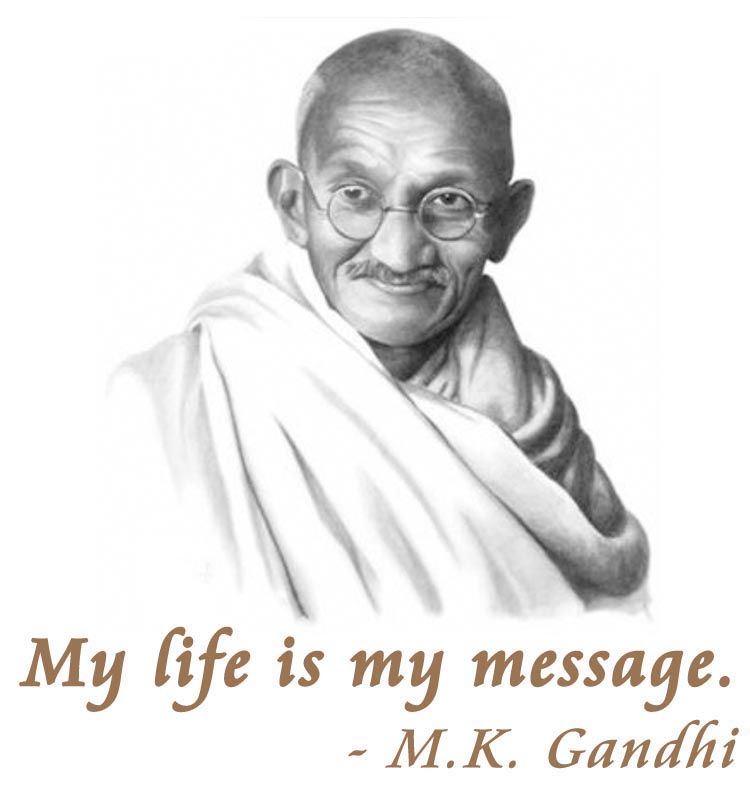
Gandhi’s Homespun Pluralism: Toward the Goal of Sarvodaya (Uplift of All) and Sustainable Peace |
- By Veena R. Howard*AbstractMohandas K. Gandhi (popularly known as Mahatma Gandhi) has primarily been recognized for his work in developing the theory and practice of nonviolence (ahimsa) for the purpose of building a culture of sustainable peace. Although Gandhi’s writings do not explicitly engage such categories as negative and positive peace, peace and international relations, or pacifism and nonviolence, scholars in peace studies have nonetheless assessed his contributions to the evolution of the field. This article advances the study of peace by emphasizing the dynamic nature of nonviolence (ahimsa), which is inextricably connected to Gandhi’s vision of sarvodaya (uplift of all). It further argues that his approach to peacebuilding, grounded in the upholding of pluralism across civic life, offers a conceptual framework for disrupting hegemonic monolithic systems. Gandhi lived in a time when the concept of pluralism had not gained currency; however, his vision, rooted in the values of diversity and tolerance, can appropriately be understood under the now widely accepted concept of pluralism. Gandhi thus uniquely connected nonviolence, peace, pluralism, and sarvodaya. For him, peaceful co-existence mandates attention to diversity—an approach that can enrich contemporary conversations in a divided political, social, and religious landscape. As a political leader and social reformer, he promoted indigenous languages, diverse village industries, local economies, and multi-faith religious education. In his later life, he also advocated for inter-caste and interreligious marriages in order to mitigate communal tensions. Such attention to diversity offers a promising path toward realizing the goal of sustainable peace and sarvodaya in a contemporary landscape increasingly prone to monolithic systems. Sarvodaya inherently requires a commitment to pluralistic, dialogical, dialectical, and nonviolent engagement in all spheres of life. By emphasizing shared humanity and committing to diversity, Gandhi offers a social philosophy of respect for all life as well as uplift of all trades, languages, and belief systems grounded in the vision of welfare of all. His practical methods of engaging diverse actors, along with his radical efforts to disrupt autocratic, authoritative, and centralized systems, affirm that the objectives of sarvodaya and sustainable peace can be realized only through a radical pluralism. 1. IntroductionThe question of whether the globally renowned nonviolent leader Mohandas K. Gandhi (popularly known as Mahatma Gandhi) impacted the field of modern peace studies arises because he has been primarily recognized for his contributions to the theory and practice of nonviolence. The concept of peace has often been defined as the absence of war and direct violence. In recent decades, however, peace studies scholars (e.g., Galtung, 1969; Weber, 2004; Howard, 2023; Fiala, 2023; Mahapatra, 2023) have developed more expansive analytic frameworks. Johan Galtung, often credited as a founding figure in the field, identifies various dimensions of peace: “negative peace” (the absence of direct violence), “positive peace” (the absence of structural violence), and, in later work, “cultural peace” (the cultivation of cultural conditions that legitimize nonviolence and enable interpersonal harmony). These conceptualizations have been widely debated in analyses of political stability and international relations, as well as in discussions of social cohesion and economic justice (Galtung, 1969, pp. 167–191, 183). Scholars like Thomas Weber seek to assess the influence of Gandhi’s philosophy and work on the evolution of this peace research (Weber, 2004, pp. 31–43). This article advances the dimensions of peace through emphasizing the dynamic and multifaceted nature of nonviolence (ahimsa). In addition to the scholarly frame of positive, negative, and cultural peace, Gandhi’s emphasis on building peace through comprehensive nonviolence offers a conceptual framework for disrupting the violence of hegemonic and monolithic systems through the development of the Constructive Program—an 18-step framework (including communal unity, village industries, and sanitation) to disrupt violence in all aspects of civic life. Gandhi emphasized sarvodaya1 by proposing pluralism in all aspects of life as the basis for sustainable, peaceful co-existence—a practice that can benefit the divided political, social, and religious landscape. Notably, Gandhi lived in a time when the concept of pluralism had not gained currency; however, his emphasis on diverse perspectives, religious thought, economies, language, and systems of governance can be appropriately placed under the widely accepted concept of “pluralism.” His efforts were oriented toward addressing insidious violence, as well as promoting individual and communal peace. Notably, limitations on diversity are also limitations of personal fulfillment, and, in this way, operate as a form of cultural violence as Galtung describes it. However, the relationship among pluralism, nonviolence, and peace has not been adequately explored. Although influenced by various intellectual thinkers and sources, Gandhi uniquely drew on Jain and Hindu philosophical systems and terminology in order to create a practical program for sustaining diversity. Various studies have begun to focus on different aspects of peacebuilding. For example, in “Peace: Negative and Positive,” David Boersema underscores this broader conception of violence: “Living in a state of poverty or prejudice or fear or degradation are forms of experiencing a life that is not peaceful” (Boersema, 2018, p. 116). Undoubtedly, violent social, economic, and political structures give rise to agitation, anger, and discontent, especially among the most marginalized, creating conditions for unrest. Gandhi’s goal of comprehensive nonviolence can only be accomplished through the practice of pluralism for universal uplift. Over the course of his long political career, Gandhi witnessed the violence of foreign regimes, international wars, and ethnic conflicts. He also encountered the rapid erosion of respect for religious diversity, along with assaults on diverse economic, linguistic, and local systems of governance under the forces of capitalism, industrialization, centralized political power, and religious dogmatism. Although Gandhi confronted the violence of colonialism through nonviolent resistance, he was equally attentive to the structural violence inflicted on individuals and communities, which often went unnoticed. Whereas peace studies often emphasize external drivers of conflict and institutional strategies for resolution, Gandhi traced discord to multiple forms of violence—moral, economic, political, cultural, and religious. For Gandhi, the work of peace required the relentless pursuit of nonviolence across personal conduct, social and economic relations, interfaith life, international law, and politics. Indeed, Gandhi often preferred “nonviolence” to “peace” as the more precise term for his aims. In 1947, during a prayer meeting, Gandhi admitted that his own Congress Party refused to make nonviolence its organizing principle: “I tried my best to have the term ‘peaceful’ replaced by the term ‘non-violence.’ But I was unsuccessful” (Gandhi, 1956–1994, The Collected Works of Mahatma Gandhi, 88: 336 [hereafter CWMG]). Gandhi was responding to the Congress Party’s anti-injustice and anti-colonial efforts, which retained the more conventional language of peace rather than foregrounding ahimsa as their normative core. Galtung, for his part, admired Gandhi’s uncompromising insistence on nonviolence, even as he made the causes and solutions of “peace,” rather than “nonviolence” the central object of his lifelong project. Gandhi’s critique of colonial rule was inseparable from his broader ethical and social vision of collective wellbeing. Deeply aware of the suffering of millions of Indians, he articulated this vision through the ideal of sarvodaya, a concept that he uniquely drew from Sanskrit vocabulary and developed into a program for the uplift of all, especially the marginalized. Through sarvodaya, he challenged the violent forces that divide communities in the name of rigid religious dogma, erase diverse indigenous cultures and languages in the name of development, suppress plurality under the banner of unified national identity, and destabilize local economies in pursuit of material growth. In this sense, sarvodaya implies not only a social ideal but a critique of hidden structures of violence in modern political, economic, and cultural systems. Because the notion of sarvodaya encompasses “all”—irrespective of differences in religion, caste, color, political orientation, and economic trade—it demands defense of pluralism in every domain of life. This paper focuses on what I call, “Gandhi’s homespun pluralism,” an original and applied pluralistic worldview, which he continued to refine in pursuit of sarvodaya. The term “homespun” suggests that pluralism is not a fixed or fully systematized plan, but a dynamic framework shaped by individuals, context, and circumstances. Gandhi recognized that the task of building a diverse and equitable society is always unfinished. It remains a project always in motion, requiring ingenuity, experimentation, and revision in response to changing conditions and new challenges. It is, therefore, not surprising that his own views on caste, marriage, religion, gender, and political and social organizations evolved over time in response to new demands and cultural shifts. Gandhi did not see them as inconsistencies on his part, but rather presented them as intricately bound up with his broader understanding of nonviolence and the vision of peace and universal uplift. Although Gandhi did not offer a systematic definition of peace, his theory and practice of nonviolence (ahimsa) provides an alternative to dominant paradigms of peacebuilding. As discussed earlier, peace theorists, such as Gultang, have shown that peacebuilding must go beyond a mere absence of direct violence to address structural and cultural violence. Gandhi’s philosophy and practice of pluralism for universal uplift offers a distinctive response to the systems oriented toward androcentrism and the benefit of only a privileged few. In today’s society, marked by the problems of ethnic and religious conflicts, the erasure of entire species, and the spread of mono-agricultural and mechanized economies, the task of envisioning a form of peace that extends to individuals and small communities is increasingly urgent. First, I provide a brief overview of Gandhi’s vision of peace as grounded in three interrelated commitments: nonviolence, pluralism, and sarvodaya. I will show that Gandhi’s conception of sarvodaya is inextricably connected with the pluralistic dimensions of the Indic principle of dharma and philosophical principles of Jain and Hindu traditions, both of which take into consideration the diversity of human commitments as they relate to the good of all. Second, I examine Gandhi’s commitment to religious diversity and argue that it demanded creative strategies for confronting sectarianism and prejudice, even within his cultural context, shaped by longstanding pluralist assumptions and tolerant sentiments of Hindu and Jain traditions. Third, I analyze that swadeshi—popularized by Gandhi as economic self-reliance and sustaining diverse indigenous handicrafts—was integral to Gandhi’s vision of sarvodaya. Therefore, it required revitalization of India’s village economies and native crafts, as well as preservation of vernacular languages and local systems of governance. The Section 6 emphasizes that Gandhi’s pursuit of sarvodaya was the motivating force in his efforts to defend religious diversity, confront dogmas, and cultivate communal peace, including his support for inter-caste/interreligious marriages. He held deep trust in dialogue and made space for dissenting voices as necessary conditions for building consensus and mutual understanding. An analysis of Gandhi’s distinctive efforts of upholding the diversity of religions, vernaculars, village industries, and localized governing structures demonstrates that his vision of sarvodaya and sustainable peace is achievable only through homespun pluralism. Such pluralism resists autocratic and centralized systems that increasingly threaten our true freedom, peace, and shared flourishing. 2. Nonviolence, Pluralism, and Sarvodaya: Threefold Scaffolding for Building PeaceFrom his early years, Gandhi cherished India’s rich ethnic, religious, and linguistic diversity of India and, as a leader, he sought ways to sustain its complex pluralistic systems. Raised within Hindu and Jain religious contexts, he encountered the multiplicity of perspectives found in ancient Indian philosophical and religious sources, including theological truths, dharma morality—understood as diverse moral principles informed by one’s duty and social commitment—and social organizations. He drew on select Hindu and Jain philosophical resources to address his fellow Indians’ fear of difference and diversity. Although India’s culture was woven by the threads of religious, cultural, and linguistic plurality, the twin forces of colonialism and modernity in the twentieth century intensified the yearning for unified religious, ethnic, and cultural identities. In the Indian context, this development also generated aspirations for a new national character along monolithic religious lines, especially Hindu and Muslim, as well as enthusiasm for rapid scientific and economic development. Gandhi, however, insisted on preserving the diverse eco-system of local economies, cultural and religious commitments, governing structures, and the vernacular languages that were increasingly threatened by industrialization, religious passion, capitalism, and modernization. Although Gandhi was driven by the mission of confronting the violence of the colonizers and securing peaceful democratic rule, he understood that true peace can only be realized by upholding diverse viewpoints and pluralistic religious, economic, and cultural systems. Such a commitment would disrupt the connection between political violence and more insidious violence of hegemonic worldviews. The goal of sarvodaya demanded attention to the values, aptitude, and interests of India’s people, especially of those in marginalized communities. Sarvodaya therefore inherently requires a commitment to dialogical, open, and nonviolent engagement in all aspects of personal, spiritual, social, and political life. Gandhi drew from the pluralistic cultural and philosophical ethos of ancient Indian traditions, and he uniquely interpreted metaphysical, ethical, and epistemic systems to confront the colonial worldview insisting on the monolithic at the expense of the pluralistic. The importance of pluralism in peacebuilding is now widely acknowledged by scholars and policymakers. Marwan Muasher, for example, emphasizes that “people need to roll up their sleeves and work on the ground...to create the institutions that are necessary for the evolving of pluralistic and democratic societies.”2 Gandhi had modeled such work more than a century earlier. Through his philosophy and actions, he developed methods for engaging religious difference, listening to dissenting voices, evaluating his own assumptions, and respect for diversity. Although Gandhi was committed to plurality in all aspects of life, he often used the term diversity, not pluralism, to express his belief in the multiplicity of conditional truths and diverse ways of realizing it. The term pluralism, which became an important category for understanding the social reality in the twentieth century, usually refers to both the political commitment to fostering diversity and a religious attitude that grants equal truth-value to religions other than one’s own. In Gandhi’s time, however, the term itself was not widely used. Gandhi philosophically affirmed the absoluteness of truth and nonviolence, yet he also acknowledged human fallibility and the difficulty of attaining them. Therefore, he asserted the multiplicity of approaches to realizing truth. Human beings cannot grasp the whole truth; therefore, it is important to uphold respect for diverse values through communion among citizens of different backgrounds. Many domestic, communal, and international conflicts arise from adhering to a single point of view, often at the cost of thousands of lives and regional unrest. Gandhi therefore held, at the pragmatic level, the conviction that the goal of sarvodaya necessitates a deep commitment to pluralism in every sphere of civic life—social, religious, economic, linguistic, and political. As Chris Thornton, in an article, “Pluralism in Peace Process (July 2021),” published by the Global Center for Pluralism, observes that “Pluralism offers a transformative approach, predicated on a valuing of diversity, as a foundation for a more durable, lasting peace.” For Gandhi, flourishing citizenry requires inclusive institutions in which all have the potential of thriving. Sarvodaya was based on the values of tolerance, equal respect, and care for all. Gandhi’s commitment to ahimsa—nonviolence in every dimension of life—necessitated a pluralistic weltanschauung not just for him but for his fellow Indians. Hence, Gandhi’s project included translating philosophical understanding into actionable items for his fellow Indians. By providing what was, a kind of roadmap, for sarvodaya, Gandhi focused on the flourishing for all people, especially the marginalized communities and minority groups. This goal required the preservation of diversity. Under Gandhi’s framework, nonviolence thus involved practical methods for resisting discrimination of all its forms and sustaining multiple cultures. 3. Indian Religious and Philosophical Thought: Gandhi’s Inspiration and Reinterpretation for SarvodayaAlthough Gandhi read widely across Eastern and Western sources in religion, ethics, history, social philosophy, and literature, he drew especially from the pluralistic philosophy and teachings of India’s religious and philosophical traditions, particularly Hinduism and Jainism. In 1935, S. Radhakrishnan, the eminent Indian philosopher of Gandhi’s time, posed three questions to Gandhi:
Gandhi’s response to Radhakrishnan’s questions offers a concise understanding of the philosophical foundations of his homespun pluralism for sarvodaya: My religion is Hinduism which, for me, is religion of humanity and includes the best of all the religions known to me. I am being led to my religion through Truth and Non-violence, i.e., Love in the broadest sense. I often describe my religion as the religion of Truth, of late, instead of saying God is Truth, I have been saying Truth is God, in order more fully to define my religion. I used at one time to know by heart the thousand names of God which a booklet in Hinduism gives in verse form and which perhaps tens of thousands recite every morning. But nowadays nothing so completely describes my God as Truth...The most ignorant among mankind have some truth in them. We are all sparks of Truth. The sum total of this spark is indescribable, as yet unknown Truth, which is God... To be true to such religion one has to lose oneself in continuous and continuing service of all life... Hence, for me there is no escape from social service; there is no happiness on earth beyond or apart from it. Social service here must be taken to include every department of life. In this scheme, there is nothing low, nothing high. For, all is one, though we seem to be many. (CWMG, 60: 106–107) Gandhi articulates a theoretical account of plurality and the basis of his commitment to the uplift of all. Gandhi identifies love and truth as the two guiding forces for his vision. On the one hand, Gandhi draws on the Advaitic (Indian philosophical thought adhering to a non-dualistic view of reality) notion of an all-pervasive divine unity to affirm the fundamental equality of all creation. On the other hand, through his practice of social service in “every department of life,” he seeks to preserve the plurality of divine expressions through sarvodaya. Philosopher B.K. Matilal draws attention to the commonly invoked ritual benediction in classical India: “Bahujana-sukhaya-bahujana hitay ca. For the sake of the happiness of many people, and for the sake of the good of many.” (Matilal, 2002, p. 68). This formula, Matilal suggests, expresses the broader Hindu ethical ethos and guides the human mind for working toward the well-being of many, including people across different social backgrounds. Drawing on this strand of Hindu philosophy of “unity,” Gandhi rejected the central utilitarian formula “of the greatest good for the greatest number.” He simultaneously improved on the Indian vision of “the happiness and wellbeing of many,” to “the happiness and wellbeing of all” (sarvodaya). Gandhi was acutely aware of the social stratifications embedded in Hindu varna ethics, often translated as caste. Throughout his life, he confronted inequity and discrimination, especially the practice of “untouchability,” which treated individuals born in this group inhumanely. He has nevertheless been criticized—most notably by B.R. Ambedkar—for failing to call for the abolition of caste. Although that debate is beyond the scope of this paper, it is important to note that toward the end of his life, Gandhi sharply condemned the oppression and corruption associated with “untouchability,” describing the practice as anti-Hindu. While Gandhi used the framework of classical Hindu thought to ground his commitment to sarvodaya, he also drew on the Jain doctrine of anekantavada (not-one-sidedness or non-absolutism) to disrupt dogmatic religious positions that deepen communal divisions. Gandhi deployed the epistemic insight of anekantavada to cultivate charitable attitudes toward people of other faiths. By emphasizing a shared humanity alongside a commitment to diversity, Gandhi shows that a genuinely pluralistic society depends on respect for differing perspectives and practices across spiritual paths. Gandhi uniquely draws on the philosophically illustrative Jain parable of “the blind men and an elephant” to alert his fellow Indians of their own blind spots in encounters with those who hold different views. Recent Jain scholars have analyzed the Jain non-absolute view of reality through the lens of “intellectual humility” and religious tolerance. Gandhi interpreted this concept in practical terms, arguing that other religions should be approached with equal regard, despite their conflicting belief systems. Whereas American scholars such as James E. Ford describe pluralism as a novel achievement made by twentieth-century philosophical thought, Gandhi, by contrast, suggests that Indian thinkers have long approached reality in pluralistic ways.3 Even within his Indian context, Gandhi developed distinctive and radical ways of putting his vision of multiplicity into practice. As mentioned earlier, his commitment to pluralism is linked to nonviolence—a practice that resists structural, religious, and social violence, through which authoritative forces seek to impose a contrived uniformity. Recent studies have also drawn increasing attention to the value of pluralistic systems. In her introduction to Radical Pluralism and Truth: David Tracy and Hermeneutics of Religion, Jennifer L. Rike writes: “One thing is certain: the age of modernity and its Western, monistic Eurocentrism are over... What should we call these times and how can we understand them? They are, without doubt, radically pluralistic, and the pluralism of the contemporary milieu perplexes us and confronts us with starkly unique challenges” (Rike, 1991, p. ix). Rike’s comments reflect a shift from largely philosophical inquiries to a concern with the practice of pluralism. Gandhi, too, faced the challenges of sustaining social commitment to diversity, which he regarded as a necessary condition for achieving the well-being of all and a lasting peace. His response was informed by the theory of “many-sidedness,” but it took shape primarily as a practical program for pluralistic thought. While various twentieth-century scholars approached pluralism through abstract metaphysical and scientific questions, Gandhi interpreted it in relation to sarvodaya through concrete actions: building inclusive ashrama communities, privileging native languages, promoting spinning cotton and other cottage industries, and disrupting social dogmas surrounding caste and gender by mixing people of different backgrounds. Gandhi thus shows that while theoretical pluralistic positions may be sorted into neat conceptual categories, the work of building a pluralistic society requires a more dynamic approach capable of sustaining diversity. In the face of entrenched dogmatic positions, he navigated difficult terrain marked with disagreements, conflicts, and setbacks. He was mocked by his fellow Indians for his spinning practices and his mingling with women and people of “lower” caste. Through his embodied pluralism, he shows that diversity depends on homegrown, non-dogmatic, dialogical, and contextually diverse practices. Such pluralism does not yield merely a negative peace—a simple lack of hostilities—but rather a shared struggle for individual fulfillment and social values of nonviolence, justice, and equity.4 Gandhi’s pluralistic thought and actions offer a holistic and interconnected understanding of religion, ethics, philosophy, and economics for his vision of nonviolent and peaceful societies. Nishikant Kolge writes, “Since Gandhi sees human life as a whole and not in isolable compartments, he, unlike most modern academic philosophers, does not maintain the division of different philosophical inquiries into metaphysical, epistemological, ethical, and logical questions” (Kolge, 2022, p. 64). Sarvodaya, moreover, requires attentiveness to the full range of human needs—religious, economic, social, and emotional. In the following sections, I elaborate on Gandhi’s distinctive methods for constructing a pluralistic framework in the midst of a very complex cultural landscape: competing religious and political interests, the coercive ideology of exclusive truth claims, and capitalistic economic and political systems. Philosopher John Kekes, who offers comprehensive theories of pluralism, rightly points out: “All forms of pluralism take the fact of diversity as their point of departure, and all take diversity to be real, rather than apparent.” (Kekes, 2000, p. 69). For Gandhi, diversity was such an inescapable reality. His homespun pluralism can therefore offer insights into our contemporary struggles against xenophobia; homogeneous capitalistic systems; mono-agricultural, political, and social hegemonies; and cultural and linguistic violence. 4. Gandhi’s Religious Pluralism in Practice: A Vision for a Peaceful SocietyGandhi’s writings make clear that achieving political freedom from the colonial regime was inseparable from his commitment to upholding religious pluralism in free India. His personal respect for all religions arose from his own understanding of Hindu and Jain thought, but the ideal of interfaith unity in twentieth-century India posed a practical challenge. His conviction in the underlying unity of all and the existential need to unite Indians divided by religion and social stratification led him to pursue innovative strategies for building a pluralistic society. The pursuit of interreligious harmony required dialogue with adherents of other religions as well as an evaluation of one’s own theological beliefs and social practices. 4.1. Communal HarmonyA number of studies examine Gandhi’s religious pluralism and his distinctive form of secularism that represented not irreligion but respect for all religions (e.g., Madan, 1997, pp. 176–202; Gier, 2014, pp. 319–339; Claerhout, 2014, pp. 53–82; Pande, 2010, pp. 1124–1133). Other studies analyze Gandhi’s encounters with various religious communities under the rubric of “interreligious dialogue” (Dabholkar, 1992, pp. 1–3; Dasgupta, 2000, pp. 854–948; Rambachan, 2013, pp. 325–345). Yet no study has adequately examined the practical methods by which Gandhi enacted pluralism in both personal and public life. Gandhi personally experienced firsthand the positive power of religion, but he also recognized the many ways in which religions could cause division, hatred, and violence. Conflicting religious views and practices, moreover, often gave rise to distrust among different faith communities. Because he was committed both to shared universal truths and to addressing religious fractures in India’s multireligious landscape—including people from different sects of Hinduism, Jainism, Buddhism, Sikhism, Islam, and Christianity—he made “communal harmony” a central component of sarvodaya. He therefore confronted, with great rigor, the fanaticism and violence caused by religious differences. Gandhi offered his life and practice as a model for commitment. He embraced an inclusive understanding of religion: “Mine is not a religion of the prison-house. It has room for the least among God’s creation. But it is proof against insolence, pride of race, religion or colour.”5 His religious vision sought to lift up the marginalized and defy the divisive elements. Indeed, Gandhi was not naive about irreconcilable elements among religions, whether metaphysical, doctrinal, or dietary. He was also acutely aware of the hegemonic elements in religions, including the oppressive customs of caste in Hinduism and the proselytizing practices of other faiths. He himself was sharply criticized for defending aspects of the caste system. He gradually came to realize the oppressive character of orthodoxy in any form, and he changed his position on caste.6 In his view, social transformation required acknowledging both the moral resources and the imperfections of religions. “Gandhi’s doctrine of the equality of religions affirmed also their shared fallibility,” writes Anantanand Rambachan (Rambachan, 2013, p. 339). Gandhi rejected Hindu norms and customs that perpetuated the practice of untouchability: “In my opinion, untouchability is a blot upon humanity and therefore upon Hinduism. It cannot stand the test of reason.”7 He likewise called on religious leaders to confront gender-based violence, divisive dogmas, and other social ills embedded in their religions. Scholars have noted that Gandhi himself held patriarchal views regarding women, though his thinking on women evolved over time, from a controlling husband to an acknowledgement of women as embodiments of strength. In 1921 Young India, Gandhi writes: “Of all the evils for which man has made himself responsible, none is so degrading, so shocking or so brutal as his abuse of the better half of humanity to me, the female sex, not the weaker sex. It is the nobler of the two, for it is even today the embodiment of sacrifice, silent suffering, humility, faith and knowledge” (CWMG, 21: 105). See also: (Kishwar, 1985; Howard, 2013; King, 2023; Presbey, 2023). This evolution underscores how difficult it is to recognize the blind spots in one’s own religious systems. Even though his positions were never without contradictions, his efforts to identify these practices as violence are steps toward the beginning of reform. 4.2. Anekantavada and the Reality of Religious Difference: Gandhi’s Confrontation of SectarianismGandhi recognized that despite India’s pluralistic and culturally diverse context, intolerance and bigotry had deeply penetrated its social and political life.8 This remained true despite the currents of the Jain philosophy of anekantavada and frequently cited Hindu aphorisms, such as the Rig Veda’s ekam sad vipra bahudha vadanti (“truth is one; the wise call it by various names”). Wendy Doniger writes, “The sort of pluralism that has prevailed in India was thus more of a multiplicity... than the mellow universalism that it has often claimed to be” (Doniger, 1991, p. 230). On the question of genuine pluralism, she adds, “... perhaps we can emulate some of India’s successes, some of the ways in which individuals like Akbar or Gandhi transcended the cultural agendas that had bred as much violence as nonviolence” (Doniger, 1991, p. 231). Doniger invokes the names of Gandhi and Emperor Akbar, who both regarded religious pluralism as an essential part of their vision. Notably, Gandhi, however, confronted religious fanaticism in distinctive ways and employed creative practices to uplift minority groups. He clearly saw that a merely pluralistic mindset did not, by itself, curb communal conflict arising from differences in diet, religious observance, and social customs. For his practice of pluralism, Gandhi drew on the Jain doctrine of anekantavada to cultivate, what might be called “intellectual empathy” toward the views of others. This approach requires one to consider a matter from one’s own perspective without losing sight of the perspective of the other.9 Moreover, the principle of sarvodaya does not distinguish between care for the religious and non-religious. Gandhi gave anekantavada a distinctly pragmatic interpretation: It is this doctrine that has taught me to judge a Musalman [Muslim] from his own standpoint and a Christian from his. Formerly I used to resent the ignorance of my opponents. Today I can love them because I am gifted with the eye to see myself as others see me and vice versa. I want to take the whole world in the embrace of my love. My anekantavada is the result of the twin doctrine of Satya and Ahimsa. (CWMG, 29: 411–412) Gandhi recognized that, even within traditions that espouse pluralistic philosophical or religious ideas, practitioners often continue to operate within exclusivist views. Jain scholar Anne Vallely, for example, recounts her encounters with Jain nuns who, despite affirming the doctrine of anekantavada, adhered closely and exclusively to Jain ethical and theological views. In exploring the question of the limits of pluralism, Vallely cites contemporary scholar Gavin D’Costa’s observation: “[T]here is no such thing as pluralism because pluralists are committed to holding some form of truth criteria and by virtue of this, anything that falls foul of such criteria is excluded from counting as truth (in doctrine and in practice)” (Vallely, 2004, pp. 106–107). Gandhi was keenly aware of this tension. For this reason, he argued for “heart unity” among Hindus and Muslims, a form of mutual goodwill that requires neither assimilation nor rejection of the irreducible difference (Howard, 2020). True anekantavada holds each view true according to their own perspectives. Concerned about communal violence, Gandhi offered a concrete example of co-existence among religious communities. In a 25 February 1920 Young India article, he warned, “We cannot live in peace if the Hindu will not tolerate the Mohammedan [a colloquial Indian term used for a Muslim in the early twentieth century] form of worship of God and his manners and customs or if the Mohammedans will be impatient of Hindu idolatry or cow-worship.”10 He thus acknowledged the human inability to fully grasp the truth as others understand it, and on that basis, he advocated for “mutual toleration” of doctrinal differences, even as he insisted on the dharma of nonviolence and compassion in the treatment of others. Gandhi’s commitment to nonviolence arises from his understanding of dharma morality as a commitment to universal uplift. Gandhi also invoked the Jain parable of the “seven blind men and the elephant” to affirm partial validity of different religious perspectives, however divergent and contradictory they might appear. In 1926, he wrote: “The seven blind men who gave seven different descriptions of the elephant were all right from their respective points of view, and wrong from the point of view of one another, and right and wrong from the point of view of the man who knew the elephant. I very much like this doctrine of the manyness of reality.”11 Intriguingly, Gandhi offered a practical adaptation of the Jain epistemic concept of anekantavada as the means for cultivating charitable understanding across religious difference, thereby addressing, at least in part, D’Costa’s concern about the limits of pluralism. He proposed openness to diverse viewpoints as integral to the freedom of thought, while refusing to abandon universal ethical principles, such as truth and nonviolence. As Philosopher Martha Nussbaum argues, “legitimate concern for diversity, pluralism, and personal freedom are not incompatible with the recognition of universal norms; indeed, universal norms are actually required if we are to protect diversity, pluralism, and freedom, treating each individual as an agent and an end” (Fiala & Mackinnon, 2012, p. 54). Respect for differing views, even when mutual understanding remains incomplete, can open a path for dialogue and peaceful co-existence. For Gandhi, such acceptance of multiple perspectives on truth was indispensable to sarvodaya. 4.3. Religious Pluralism in Practice: “Heart Unity”Gandhi was fully aware of the differences among religious ideologies and practices. He sought to create mutual goodwill among people of different faith traditions. When writing or speaking in English, Gandhi often used “faith” and “religion” interchangeably; in Gujarati and Hindi, however, he more often used the term dharma, a pan-Indian term that can encompass ritual practice, duty, virtue, and religion. In general, he tended to use the term “faith” when referring to lived practice and “religion” when referring to distinct traditions. Gandhi understood that Hindus and Muslims held some beliefs that were in some respects incommensurable, yet he appealed to the shared humanity that underlay both communities. Thus, while Gandhi defended the value of diverse philosophical, theological, and ethical systems embedded in religions, he also advocated for practical means of understanding and strengthening harmony among people of faith. The idea of “heart unity” did not require agreement on particular beliefs and practices, but rather it called for respect toward the religious views of the other. Gandhi was cognizant that followers of different religions were often zealously deeply attached to their own respective faiths. At the same time, his own experience convinced him that studying scriptures outside of one’s own faith could yield fresh insight into the fundamental questions of life. It could also help create understanding among people of differing religions. In 1928, he wrote an article, “Religious Education,” in Young India: A curriculum of religious instruction must include a study of the tenets of faiths other than one’s own. For this purpose the students should be trained to cultivate the habit of understanding and appreciating the doctrines of various great religions of the world in a spirit of reverence and broad-minded tolerance.12 Whereas most religious adherents focus only on reading the scriptures of their faiths, Gandhi encouraged them to study scriptures outside of their tradition to avoid misunderstandings based on isolated or decontextualized quotes.13 Even when individuals remain deeply committed to their own religions, “heart unity” with followers of other traditions can sustain social cohesion and mutual understanding. Such reciprocal respect, for Gandhi, supports the shared goal of the well-being of all—sarvodaya. The eleven ashram vows of Gandhi’s ashrams included the vow of “equality of all religions” (sarva- dharma- samantva) alongside commitments to truth, nonviolence, non-hoarding, and other disciplines. For Gandhi, a vow signified “unflinching determination.” In an October 1930 letter to Narandas, he wrote, “Determination is worth nothing, if it bends before discomfort” (CWMG, 44: 219). The equality of religions therefore required more than passive tolerance; it demanded an active respect for other traditions and a willingness to integrate their genuine insights into a free and democratic society. In 1935, Gandhi explained his distinctive understanding of the many-sidedness of reality in these terms: “Looking at all religions with an equal eye, we would not only not hesitate, but would think it our duty, to blend into our faith every acceptable feature of other faiths.”14 Gandhi himself drew from multiple traditions and incorporated their insights into his life and thought. Jesus’s teaching of turning the other cheek, Islam’s emphasis on radical equality, and the Jain commitments to ahimsa and anekantavada all enriched his understanding of Hindu philosophy and practice. For Gandhi, then, the equality of religions meant not only recognizing the validity of different traditions but also learning from what is best in each of them. For this reason, Gandhi expressed deep concern about religious conversion, especially when it was driven by persuasion or pressure from zealous adherents. Such proselytization, in his view, ran counter to his belief in the equality of religions. He publicly honored different faiths through his prayer meetings, which included readings from multiple scriptures. In the final days of his life, as the newly independent nation faced intense interreligious violence, Gandhi articulated his hope for India in a prayer meeting shortly before his assassination on 13 January 1948: “So my wish is that Hindus, Sikhs, Parsis, Christians, and Muslims who are in India should continue to live in India and India should become a country where everyone’s life and property are safe. Only then will India progress.”15 Gandhi thus put his pluralism into practice as a direct response to sectarian sentiments. Toward the end of his life, he repeatedly invoked the teachings of different traditions in an effort to guide warring groups toward reconciliation, halt the tide of violence, and create “heart unity.” Whereas twentieth century philosopher and theologian, John Hick, would later theorize pluralism through the idea that the “world is religiously ambiguous,” Gandhi responded to the less ambiguous reality of religious conflict through his arguments for respect for diversity (Sugirtharajah, 2000). His commitment to sarvodaya also extended to atheists. After encountering atheists whose lives were marked by integrity and care for others, Gandhi revised his formulation from “God is Truth” to “Truth is God.” In a 1931 speech in Lausanne, Switzerland, Gandhi explained the significance of this inversion: “In their passion for discovering Truth, they [atheists] have not hesitated even to deny the very existence of God—from their own point of view, rightly. And it was because of this reasoning that I saw that I was not going to say ‘God is Truth,’ but ‘Truth is God.’”16 Furthermore, Jainism, Buddhism, and other Indian religio-philosophical schools reject theistic beliefs. For these traditions, disbelief in God is not the negation of religion, but one feature of their religion. Gandhi’s philosophy, while pluralistic, remained grounded in nonviolence and Truth, the ultimate reality encompassing all. Yet he also reworked his own position to include both believers and nonbelievers within his horizon of respect for all viewpoints. On this basis, he developed strategies for building a society in which “heart unity” might be achieved by honoring differences. 5. Swadeshi: A Pluralistic Economic Paradigm and the Practice for SarvodayaGenerally, scholars only focus on Gandhi’s attention to religious pluralism. However, his commitment to diversity extended beyond upholding religious diversity, which is an important component to his vision of sarvodaya. If pluralistic thought supplied the philosophical foundation for the well-being of all, the fulfillment of everyday material needs required swadeshi—the principle of the local, the home-grown, or one’s own region.17 Gandhi did not invent the concept; the broader swadeshi movement had emerged in the 1850s, when Indians began rejecting foreign goods. In 1916, Gandhi defined it in these terms: “Swadeshi is that spirit in us which restricts us to the use and service of our immediate surroundings to the exclusion of the more remote.”18 Through this principle, Gandhi called on communities to build economic, social, religious, and political institutions from local resources. He also emphasized the preservation of regional languages and local forms of self-governance through his Constructive Programme. Swadeshi, then, was not merely an economic doctrine. It was a way of sustaining plural social and economic forms against the homogenizing tendencies of modern capitalist systems of power and control. Driven by efficiency and mass production, capitalist corporations generate standardized goods at the expense of diverse, locally crafted, and indigenous forms of production. Political Scientist Mary Elizabeth King underscores the adaptation of Gandhi’s program by the Civil Rights Movement in the United States and by activists of various global nonviolent movements. In his comparative study of the pluralisms of Mahatma Gandhi and Isaiah Berlin, Ramin Jahanbegloo observes that “Gandhi’s commitment to pluralism was not only spiritual and metaphysical, but also social and political. His desire for economic and political inclusiveness is met in his confrontation with the structural violence implicit in power relationships” (Jahanbegloo, 2015, p. 386). Although Jahanbegloo does not examine the role of swadeshi in his construction of plural and inclusive systems, Gandhi himself was acutely aware of the structural violence produced both by personal greed and conglomerate economic structures, and he sought to confront both through a program that linked a nonviolent mindset with local production and social inclusion. While scholars have only recently begun to give sustained attention to the pluralistic values of diversity, inclusion, and equity in everyday life, Gandhi was already grappling with these concerns several decades earlier. In The Morality of Pluralism, Kekes, a contemporary of Gandhi, presents pluralism as an evaluative theory concerned with those features of life that are “relevant to good lives.” He writes: “...[P]luralism is an evaluative theory, because it is not an uncommitted analysis of the relations among various types of values involved in good lives but a theory motivated by a concern for human beings actually living good lives... [It] proceeds from a point of view that is centrally concerned with enhancing the chances of human beings to live good lives”. (Kekes, 1996, p. 10) Kekes’s concern with creating the conditions in which human beings may “live good lives” is deeply consonant with Gandhi’s understanding of swadeshi. For Gandhi, swadeshi was not limited to the sphere of local economies. It also included the preservation of indigenous languages, local forms of governance, and the social conditions necessary for human flourishing. In this sense, swadeshi was Gandhi’s practical expression of pluralism: a way of sustaining diverse forms of life rather than reducing them to a single economic system or political order. The following section analyzes various elements of Gandhi’s swadeshi that are oriented toward sustaining diversity. 5.1. Diverse Economic Systems: Pluralism Through Home-Grown GoodsDiversity lies at the core practice of swadeshi. Gandhi believed that the goal of sarvodaya necessarily included the economic uplift of all. He therefore advocated swadeshi—locally produced or home-grown goods—so that rural communities could sustain inherited trades and earn a livelihood. The term is also often rendered as self-sufficiency. In this sense, each community should be economically self-reliant, and each person should have the opportunity to live by means of his or her own distinctive skills. Gandhi also witnessed the destructive effects of industrial mass production, which displaced rural artisans—weavers, tailors, cobblers, painters, and others—and drove them into cities in search of work. Home-grown production resists the logic of mass-produced, standardized, and disposable goods. Gandhi upheld the spirit of swadeshi through his own practice of simplicity, through the economic self-sustainability in his ashrams, and through his support for indigenous trades such as weaving, spinning, and other cottage industries. He embraced voluntary poverty to align himself with the impoverished masses of India. At the same time, he envisioned a politically independent India freed not only from colonial rule but also from the poverty he believed persisted even in wealthy parliamentary democracies. In 1947, Gandhi told a group of volunteers: Real hard work will have to be done only after independence. Unless poverty and unemployment are wiped out from India, I would not agree that we have attained freedom. Real wealth does not consist in jewelry and money, but in providing for proper food, clothes, education, and creating healthy conditions of living for every one of us.19 For Gandhi, freedom for India meant reclaiming the dignity of all forms of labor. Although he initially placed great confidence in the moral transformation of people in power, he eventually came to recognize the importance of legislative measures and local governing institutions for addressing socioeconomic inequality. Gandhi witnessed the rise of rapidly expanding anthropocentric, multinational corporate economies that generated widespread economic disparity and unemployment. Although modern states in industrialized nations responded through welfare policies and subsidies, Gandhi regarded such measures as inadequate to the deeper aims of sarvodaya. He rejected both capitalist and welfare-state models, proposing instead a pluralistic and sustainable alternative that would minimize violence toward human beings, nonhuman animals, and plants. To that end, he emphasized the revival of diverse village industries—including spinning, soap-making, tanning, match production, and paper-making—and the cultivation of self-sufficient villages. His prescient call for “every village [is] to produce all its necessaries and a certain percentage in addition for the requirements of the cities” points toward an economy that values an artisan’s skills, local growth, and self-sufficiency (Gandhi, 1945, p. 6). In 1920, Gandhi argued for the support of village economies: “We should get cloth woven by our weavers and wear only that. I tell all my brothers and sisters of India: Swadeshi is your duty. Wear khaddar” (CWMG, 19: 33). Each piece of khaddar (homespun cotton cloth) carried its own unique texture, color, and design. No two handwoven fabrics were the same. Even though Gandhi endured mockery from his Indian associates for denying machine-made textiles, khaddar became for Gandhi a concrete expression of economic pluralism, preserving the individuality of artisanal labor against the standardizing force of industrial production. For Gandhi, the decentralization of economic structures was essential to the creation of a diverse, democratic, and decolonized society. Colonialism had long depended on economic exploitation and cheap labor. Although the fascination for machine-made goods had gripped the Indian masses, Gandhi believed that genuine sarvodaya required the revival of plural village industries, which embodied the dignity of family-based arts and crafts. Such industries would also preserve indigenous knowledge systems rather than allow them to be absorbed into large corporate enterprises. In this respect, Gandhi departed from the views of social philosophers, like Karl Marx, who regarded mechanization as the path to overcoming the burdens of physical labor. Unlike some Western thinkers, he did not define equality in terms of uniform affluence, but in terms of the opportunity for each person to find fulfillment through the exercise of distinct skills and trades. American philosopher Harry Frankfurt argues that “morality is not that everyone should have the same, but that each should have enough” (Frankfurt, 1988, p. 21). Gandhi similarly affirmed the dignity of all labor and responded to critics who accused him of wanting to return India to a primitive past: “I have no partiality for return to the primitive methods of grinding and husking for the sake of them. I suggest the return, because there is no other way of giving employment to the millions of villagers who are living in idleness” (Datta, 1970, p. 254). Gandhi’s vision of village economies thus served two related ends: it sought to provide meaningful employment to those displaced by mechanized production while also preserving traditional rural arts, crafts, and forms of traditional knowledge. Gandhi argued for the revival of declining indigenous industries that not only provided material sufficiency but also embodied regional knowledge systems in art, agriculture, and craft. In doing so, he challenged hierarchical economic structures that devalued physical labor and stigmatized particular trades and occupations. Gandhi envisioned a pluralist economy in which each member of society could find both fulfillment and dignified compensation. The following statement directly challenges the assumption that white-collar occupations alone are worthy of respect, while handicraft and manual labor are somehow undignified: Earning of livelihood is the necessary result. But the law has to be fulfilled for its own sake. Its due observance by a large part of mankind will end the conflicting inequalities and give place to an equality in diversity. All callings would be equally reputable—whether that of the minister or of the lawyer, of the doctor or the leatherworker, of the carpenter or the scavenger, of the soldier or the trader, of the farmer or the spiritual teacher.20 Gandhi’s call to accord equal honor to all trades testifies to his commitment to economic diversity. His idea of swadeshi did not amount to a simple war against capitalism; rather, it was driven by a desire to preserve the diversity of arts, crafts, and forms of labor. In this sense, swadeshi became a crucial expression of building sustainable peaceful existence through pluralism and sarvodaya. As mechanization spread into village life, it caused unrest and anxiety among village communities. Gandhi emphasized the need to protect the interests of farmers and to organize labor unions. In a written speech from 1944, he offered a more specific account of labor unions as institutions that should be devoted to the well-being of workers who chose factory labor.
Such constructive guidance was intended to support workers entering emerging capitalist markets and to protect them from exploitation by wealthy stakeholders. Gandhi’s vision of the ideal village preserved a plurality of languages, arts, and cultures rather than allowing them to disappear under the pressure of mechanization and mass production. Swadeshi is thus inextricably linked to sarvodaya and sustainable peace, since it creates the conditions in which each person may find dignity, meaning, and fulfillment through the exercise of distinct capacities and strengths. 5.2. Protecting Plural Native Knowledge Systems: Provincial LanguageAlongside his commitment to swadeshi economics, Gandhi also campaigned for the preservation of indigenous languages and local governing bodies that safeguarded the distinct character of each village and region. Various surveys assert the fact that many minority and indigenous languages have already disappeared, while others remain on the brink of extinction.21 Although substantial resources are devoted to the preservation of biodiversity, far less attention has been given to sustaining linguistic diversity. Each language carries distinctive structures of thought that shape a community’s way of being in the world.22 Gandhi may not have framed the issue in the terms of modern linguistics, but he was deeply committed to preserving the vernaculars of rural India. In his Constructive Programme, Gandhi insisted both on preserving native languages as a means of continuing cultural knowledge systems and on cultivating a national language for the conduct of public affairs. He was troubled by educated Indians’ fascination with English, as well as by the absence of scientific vocabulary in many Indian languages. As he wrote: “The languages of India have suffered impoverishment. We flounder when we make the vain attempt to express abstruse thought in the mother tongue. There are no equivalents for scientific terms. The result has been disastrous. The masses remain cut off from the modern mind” (Gandhi, 1945, p. 13). Gandhi therefore sought both to break what he saw as the “spell” of English over elite politicians and administrators and to enrich Indian languages with vocabulary adequate to new intellectual and scientific developments. While many of his contemporary leaders took pride in speaking the language of the colonizer, Gandhi insisted that the decolonization of India’s knowledge systems required a renewed embrace of indigenous languages. Gandhi himself was a polyglot, learning at least eleven languages, yet he consistently preferred to speak in his native Gujarati or Hindustani. India’s many vernaculars are bound to regional cultures, arts, poetry, and literature, and they help constitute the distinctive character of each region. In Gandhi’s time, however, most political leaders communicated in English, thereby excluding the masses from debate on national questions. Gandhi therefore urged his fellow leaders to use the vernacular: “We have laboured under a terrible handicap owing to an almost fatal departure from the swadeshi spirit. We the educated classes have received our education through a foreign tongue. We have therefore not reacted upon the masses. We want to represent the masses, but we fail.”23 For Gandhi, the preservation of native traditions and indigenous knowledge required the preservation of regional languages. English, as the lingua franca of higher education and science, contributed to the alienation of students from their mother tongues. As Gandhi reflected: “Had instruction in all the branches of learning been given through the vernaculars, I make bold to say that they would have been enriched wonderfully,” Gandhi ruminates.24 He lamented the prestige attached to English at the expense of native languages: Hundreds of youths believe that without a knowledge of English, freedom for India is practically impossible. The canker has so eaten into the society that, in many cases, the only meaning of education is a knowledge of English. All these are for me signs of our slavery and degradation. It is unbearable to me that the vernaculars should be crushed and starved as they have been. I cannot tolerate the idea of parents writing to their children, or husbands writing to their wives, not in their own vernaculars but in English.25 In 1917, Gandhi expressed concern that the Indian education system introduced by the British was in English. He suggested changes to the system: “Education in the school will be entirely through the mother tongue. It is surprising that, while among other nations the mother tongue enjoys pride of place, among us this place belongs to English.”26 Language reflects plural ways of being, thinking, and acting. At a time when English had become a marker of progress and refinement, Gandhi argued for education in vernacular dialects, insisting that “our language is the reflection of ourselves.”27 In a speech at Banaras Hindu University in 1916, he rejected the use of English as the primary medium for research and learning because it served mainly the educated elite. Vernacular dialects, by contrast, help maintain plural knowledge systems and preserve distinctive structures of thought—structures that too often have become victims of the global use of English. 5.3. Panchayat Raj: Local Governing Bodies to Maintain a Pluralistic India“In the domain of politics, I should make use of the indigenous institutions,” declared Gandhi in a 12 February 1916 speech at a conference in Madras, affirming his trust in swadeshi.28 To sustain a genuinely swadeshi society grounded in pluralistic principles, he advocated Panchayat Raj (the rule of the five democratically elected public servants), a decentralized form of local governance in which each village community would attend to its own needs. These local bodies, in his view, formed the true foundation of India’s political order. The broader ideal was Gram Swaraj—village self-rule or village self-governance. In 1916, Gandhi explicitly linked swadeshi to diverse governing structures, often referred to as panchayats (literally, councils of five), which represented the traditional rural system of self-governance: “Following out the swadeshi spirit, I observe the indigenous institutions and the village panchayats hold me. India is really a republican country, and it is because it is that it has survived every shock hitherto delivered.”29 For Gandhi, local, decentralized, plural governing structures kept the power within local communities, and checked its concentration on distant rulers or outside authorities. In 1947, a month before India gained its independence, Gandhi wrote: When Panchayat Raj is established, public opinion will do what violence can never do. The present power of the zamindars, the capitalists and the rajas can hold sway only so long as the common people do not realize their own strength. If the people non-co-operate [sic], what can a raja, a zamindar or a capitalist do? In a Panchayat Raj only the Panchayat will be obeyed and a Panchayat can work only through the law of its making.30 As India stood on the threshold of political independence and the long-sought possibility of joining other free nations, Gandhi remained deeply concerned with preserving the autonomy of rural communities through their own governing institutions. On 18 January 1948, only a couple of weeks before his assassination, he articulated a vision of India freed from social and economic hierarchy, grounded in swadeshi forms of economic and political life: If we would see Panchayat Raj, i.e., democracy established, we would regard the humblest and the lowliest Indian as being equally the ruler of India with the tallest in the land. For this everyone should be pure. If they are not they should become so. He who is pure will also be wise. He will observe no distinctions between caste and caste, between touchable and untouchable, but will consider everyone equal with himself. He will bind others to himself with love. To him no one would be an untouchable. He would treat the labourers the same as he would the capitalists. He will, like the millions of toilers, earn his living from service of others and will make no distinction between intellectual and manual work.31 This pluralistic social vision is directed toward the care of each member of society. Gandhi believed that Panchayat Raj, rather than centralized democracy alone, was better suited to meeting the distinctive needs of each village and community through locally elected forms of governance. Admittedly, in today’s world, many rural communities find their voices unheard, leading to dissatisfaction and unrest. Gandhi’s advocacy of Panchayat Raj was motivated to meet the unique needs of each community for sustainable personal satisfaction and sustainable community peace. 6. Concluding InsightsGandhi envisioned a peaceful and plural India through his commitment to sustaining the nation’s diverse philosophical, religious, linguistic, economic, political, and cultural traditions. His dharma-based ethic of respect for diversity, together with his ideal of sarvodaya, depended on plural religious, social, and political forms of life. This vision required resistance to religious fanaticism, capitalist economic systems, and Western democratic paradigms that entrust concentrated power in the hands of dominant actors. It also required ongoing self-scrutiny and a willingness to engage critics and dissenters. Gandhi’s commitment to treating his critics with dignity offers a particularly instructive example of anekantavada in practice. He frequently invited opponents into dialogue rather than dismissing them. In a 1940 letter to Abdul Ghaffar Khan, famously known as the Frontier Gandhi, Gandhi wrote: “We have to see and approach the viewpoints of those who differ from us. We have to be patient with them and convince them of their errors and be convinced of our own.”32 For Gandhi, the pursuit of sarvodaya requires intellectual empathy and humility toward one’s opponents, an insight that remains pressing in the contemporary world. In a 2018 Havana Times article, “Gandhi’s Thinking Can be Useful to Cubans,” published to mark the 70th anniversary of Gandhi’s assassination, Osmel Ramirez Alvarez cited this quote by Gandhi: “Difference of opinion should never mean hostility... I do not know two persons in the world who had no difference of opinion... I have always attempted to regard those who differ from me with the same affection as I have for my nearest and dearest.”33 In the same article, Ramirez Alvarez reflects on Gandhi’s legacy in relation to Cubans: “For us Cubans who find ourselves at a crossroads for the country, of looking for new paths forward, learning a little more about [Gandhi’s] legacy and his ideas would be of help to us” (see Note 33). More broadly, a number of scholars and thinkers regard pluralism as a necessary condition for building a sustainable peace. In the contemporary context of peace in the Middle East, and a manner consistent with the Gandhian insistence on pluralism and tolerance, scholar Marwan Muasher emphasizes pluralism as a necessary condition for achieving lasting stability in the region. He writes: “In the end, the battle is not solely against the older powers—for new ones may be animated by the same drives. More importantly, it is a battle for pluralism. Only when societies and their elected leaders truly embrace tolerance, diversity, the peaceful rotation of war and inclusive economic growth will the promise of a new Arab world be realized” (Muasher, 2014, p. 4). Gandhi likewise warned against the persistence, in independent India, of elites who continued to think within the British ideological framework. Although Muasher does not explicitly invoke Gandhi, the affinity is nevertheless suggestive, especially in light of his broader reflections elsewhere. Yet Gandhi envisioned pluralism in an even more expansive and comprehensive sense. Gandhi’s thought and practice challenges our generation to take sarvodaya—concern for all, beyond a merely utilitarian ethic—together with respect for difference, dialogue, diversity, and the underlying unity of all life, as indispensable conditions for healthy human relations and lasting peace. Throughout his life, he reimagined elements of Jain and Hindu thought, along with his own philosophical commitments, in order to preserve diversity while sustaining individual beliefs and practices. His pluralistic vision is perhaps best captured in the 1921 statement: I want the cultures of all the lands to be blown about my house as freely as possible. But I refuse to be blown off my feet by any. I refuse to live in other people’s houses as an interloper, a beggar or a slave.34 This outlook is grounded in the generative power of diversity and in the strength of indigeneity. Gandhi’s vision may appear utopian and is certainly fraught with practical difficulties. Yet the absence of pluralistic systems poses a grave danger, as evidenced by corporate monocultures, dominant languages, environmental crises, religious extremism, and pseudo-democratic political forms. After all, “nature abhors lifeless unity. She conceals unity behind sympathetic diversity,” wrote Gandhi in a 4 July 1931, letter to Motilal Roy.35 Hence, Gandhi’s homespun pluralism offers a compelling paradigm for defying these forces and reclaiming the diversity on which existence of life and hope for peace depend. While many scholars in peace studies emphasize external drivers of conflict and institutional mechanisms for resolution, Gandhi located the roots of discord in multiple forms of violence—moral, economic, political, cultural, and religious. Such violence may be overt or covert, but in either case it gives rise to economic injustice, religious violence, international conflict, social inequality, and even personal alienation. Although Gandhi was deeply troubled by the violence of war, displacement, and political oppression, he was equally concerned with the economic, social, religious, and cultural injuries inflicted upon individuals and communities. This concern was echoed in a recent message (28 January 2026) by the United Nations Secretary-General António Guterres. In his article, “Promote Tolerance, Respect for Diversity to Build Peace as ‘One Human Family,” he pleads: “Too often, cultural and religious differences are exploited to fuel the fires of war, or to scapegoat others for political and economic challenges. At the same time, technology is increasingly used to stoke hatred and spread fear. We must work harder to find common ground. ...Together, we can build a world based on equal rights for all and compassion—and live in peace as one human family.”36 Gandhi’s vision of sarvodaya directly speaks to this challenge offering practical means for uplifting both individuals and the societies. The ideal of sarvodaya, woven with the practice of pluralism, offers a way forward for sustaining diversity and human dignity as the basis of peace. Notes:
References:
Courtesy: Howard, V.R. (2026). Gandhi’s Homespun Pluralism: Toward the Goal of Sarvodaya (Uplift of All) and Sustainable Peace. Peace Studies, 1(2), 6. * Veena R Howard, Department of Philosophy, College of Arts and Humanities, California State University, Fresno, CA 93740, USA. Email: vehoward@mail.fresnostate.edu |