When a Civilisation was asked to Choose: Gandhi, Faith, and the Unfinished Battle of India’s Soul |
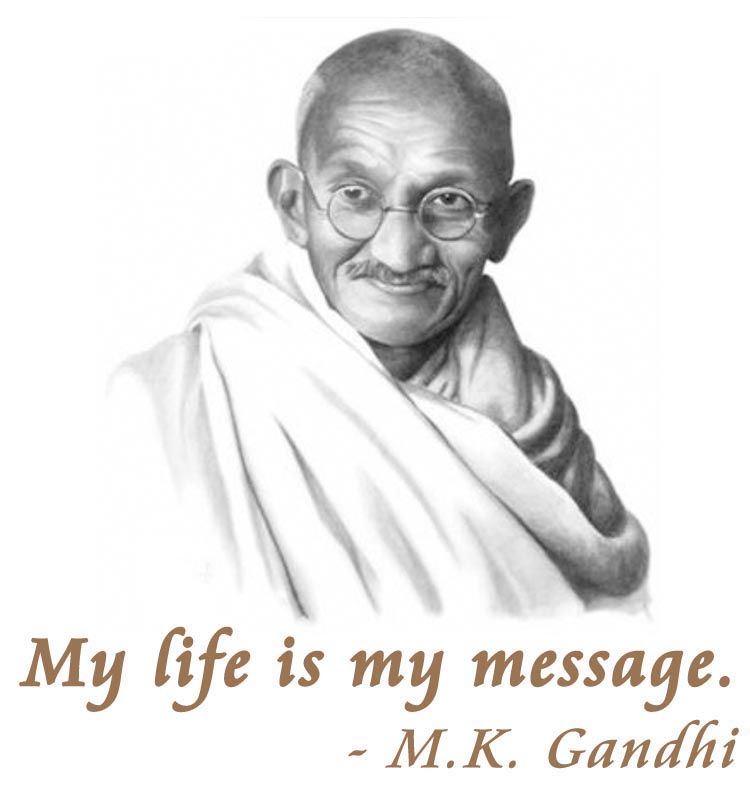
- By Buddhdev Pandya MBE*“We believed we had killed Gandhiji, yet we missed the real target - the Mahatma himself and the ideology that had begun to shape a - सिद्ध पुरुष- Siddha-purush of our pre-independence era. The weapon used was the emotional commitment of the people to Sanatan Hindu faith, while the shoulder upon which it was fired belonged to an imported and distorted ideology of racial supremacy - Hindutvavadi thought. Its purpose was not merely to remove a man, but to eliminate an obstacle: the true moral values of Hinduism - its spirit of compassion, humanity, and coexistence.” Says Buddhdev Pandya on the anniversary of a brutal cowardly murder of a 78 years old, unarmed yeas Hindu while he, the Mahatma, was going to his daily prayers by a fanatic Hindutvavadi Hindu on 30th January 1948 Birla House, New Delhi. These words do not belong merely to reflection; they belong to history itself. The assassination of Mahatma Gandhi cannot be understood as the silencing of an individual alone. It was the violent eruption of a deeper ideological rupture - a moment when India stood at a crossroads between conscience and control, between civilisation and supremacy. Gandhi rose at a time when India was not only struggling against colonial domination but also searching inwardly for its moral direction. His leadership did not emerge from ambition or authority. He sought neither office nor power. Instead, his influence grew from an uncompromising insistence that political freedom must be guided by ethical responsibility. Independence achieved without compassion, he warned, would merely replace foreign rule with domestic injustice. To millions, he became more than a political leader. He emerged as a living moral force — a man gradually shaping the character of a Siddha-purush, not withdrawn from society, but deeply immersed in its suffering, contradictions, and responsibilities. Alongside the fight against imperial power, Gandhiji recognised another, deeper battle - the need to liberate Hindu society itself from centuries of internal oppression. He confronted the medieval distortions that had taken root through rigid interpretations of Manusmriti, which reduced human worth to birth and ancestry. These practices imposed artificial rankings among Hindus, dividing society into hierarchies that denied dignity, education, and economic opportunity to millions, particularly those relegated by accident of birth. For Gandhiji, this was not Hinduism; it was its moral betrayal. He believed that any religious practice that justified inequality at birth violated the very soul of Sanatan Dharma. True religion, he argued, must elevate the human spirit - not imprison it within inherited status. His campaign against untouchability was therefore not merely social reform; it was moral resistance against injustice committed in the name of scripture. In challenging caste hierarchy, Gandhiji invited fierce opposition. Yet he remained unwavering in his conviction that a nation built upon graded inequality could never be truly free. Swaraj, in his vision, meant not merely the transfer of power from British hands to Indian rulers, but the moral reconstruction of society itself - so that every Indian could walk with dignity, unburdened by the accident of birth. Gandhiji stood as a living conscience against distortion - political, religious, and social. He envisioned a nation rooted in spiritual ethics yet rising through democratic values: a republic built not on fear or supremacy, but on harmony, moral restraint, and respect for India’s civilisational inheritance. Central to this vision was his lifelong vow to wipe the tears from every eye - a belief that every human life matters equally, and that every individual, irrespective of caste, creed, faith, or birth, holds an equal right to shape their own destiny. For Gandhiji, freedom that failed to reach the poorest, the weakest, and the most forgotten was not freedom at all. His understanding of Sanatan Dharma was neither ritualistic nor confrontational. It was philosophical and humane. Satya -truth was accountability, not convenience. Ahimsa – nonviolence was moral courage, not passivity. Prayer, for him, was self-examination - not performance. He drew wisdom not only from the Bhagavad Gita, but also from the Bible, the Quran, the teachings of Buddha, and the ethical traditions of humanity. This was not dilution of faith; it was its elevation. Any religion that ignored human suffering, he believed, stood spiritually empty. It was precisely this moral interpretation of Hinduism that unsettled those who sought to transform faith into political dominance. As the twentieth century unfolded with Gandhiji began his experiment with truth and nonviolence - a freedom struggle, another ideological current began to surface - shaped not by India’s plural civilisation, but by the racial nationalisms spreading across Europe. In an age when line the authoritarian -likes of the Nazi Germany - movements glorified cultural purity, obedience, and uniform identity, similar ideas quietly entered the Indian political imagination. This ideology sought to redefine the nation not through shared citizenship, but through cultural lineage. Belonging became inherited rather than ethical. Faith was converted into political loyalty. The nation was imagined not as a democratic home for all, but as a civilisational fortress guarded by exclusion. It was a legacy an era when Gandhiji stood immovably in its path. He rejected the notion that religion could justify hierarchy. He challenged caste not as tradition, but as moral violence against the soul of Hinduism itself. He insisted that the dignity of the weakest Indian must stand equal to that of the strongest - before society, before the state, and before conscience. Such a presence could not be accommodated by ideologies such as the Hindutvavadi aspirations that thrived on division. To those who sought power through emotional mobilisation, Gandhiji was not merely inconvenient - he was dangerous. Not because he attacked them, but because his life exposed the emptiness of supremacy. He reminded the nation that strength without humanity is not strength at all. Thus, when the bullets were fired in January 1948, they were aimed not only at a frail body, but at a moral direction India had chosen - and which some wished to reverse. Yet history did not end with the gunshots. In the immediate aftermath, the nation mourned - and its institutions paused. Legislative proceedings were suspended; public discourse was redirected toward calm and unity. Officially, this was necessary for stability in a country still traumatised by Partition. Politically, however, the consequence was deeper. The moment passed without sustained constitutional reckoning. No prolonged parliamentary interrogation followed into the ideological climate that had legitimised hatred, nor into doctrines that portrayed moral restraint as weakness. Grief was allowed expression; examination was deferred. This institutional silence established a precedent. From that moment onward, remembrance of Gandhi became ceremonial rather than interrogative. Anniversaries were observed, tributes were paid, yet the deeper ideological conflict he embodied remained largely unexamined within the democratic chamber. Such silence was not suppression - it was containment. In democratic systems, uncomfortable history is rarely erased. It is managed. Parliamentary rhythm moves forward, attention is redirected, and memory is ritualised so that it does not interrupt political continuity. Over time, this absence of reckoning created a vacuum. When ideology is not confronted openly, it does not disappear; it reorganises. What is not debated becomes vulnerable to reinterpretation. Moral clarity blurs. Historical responsibility fragments. The Republic survived - but its moral conversation was interrupted. Though Gandhiji fell, the constitutional vision he inspired rose. Jawaharlal Nehru’s Objective Resolution of December 1946 laid the ethical foundation of the Republic. Under Dr Bhimrao Ramji Ambedkar, these ideals became enforceable constitutional guarantees. The Constitution rejected racial hierarchy, religious supremacy, and inherited privilege. It affirmed that citizenship - not belief - defines belonging, and that democracy must rest upon fraternity. It spoke for an enabler measure for those who were socially and economically excluded because of the race, religion or castes. Yet ideological struggles do not end with constitutions. They evolve. In later decades, the conflict returned not through violence, but through narrative - through selective memory, symbolic politics, and the gradual redefinition of nationalism itself. Faith once again risked being reshaped into identity, and identity into instrument. The danger was never debate. The danger was forgetting. India’s civilisation endured for millennia not because it enforced sameness, but because it restrained power with conscience. Civilisations do not collapse when challenged from outside; they collapse when conscience erodes within. This is why Gandhiji remains unsettling even today. Not because he belongs to the past, but because his life continues to measure the present. He cannot be reduced to memory - for memory asks nothing. His ideas demand response. The question he forced upon the nation has never been fully resolved: whether India would remain a moral republic grounded in dignity, or drift toward dominance clothed in identity. That choice, postponed in 1948, has not disappeared. It has returned - quietly, institutionally, and persistently. And history will not judge India by the power it accumulated, or the slogans it proclaimed, but by whether it preserved its conscience when that conscience became inconvenient. Gandhiji warned that violence can eliminate a body, but never the truth it seeks to suppress. His assassination silenced a voice, not the values that challenged power. Even in death, his ideals continued to confront the nation - a reminder that conscience cannot be executed, and moral responsibility cannot be erased by force. Notes & References:
* Buddhdev Pandya MBE is a UK-based writer, socio-economic and political commentator, publisher, and human rights advocate, with a long-standing engagement in Gandhian philosophy, democratic values, and ethical public life. A recipient of the Queen’s honour for public service, Buddhdev Pandya’s writings seek to encourage informed dialogue across generations and cultures, reaffirming the enduring relevance of Gandhiji’s ideals in guiding societies towards equality, dignity, and peaceful coexistence Email: buddhdev.pandya@gmail.com |