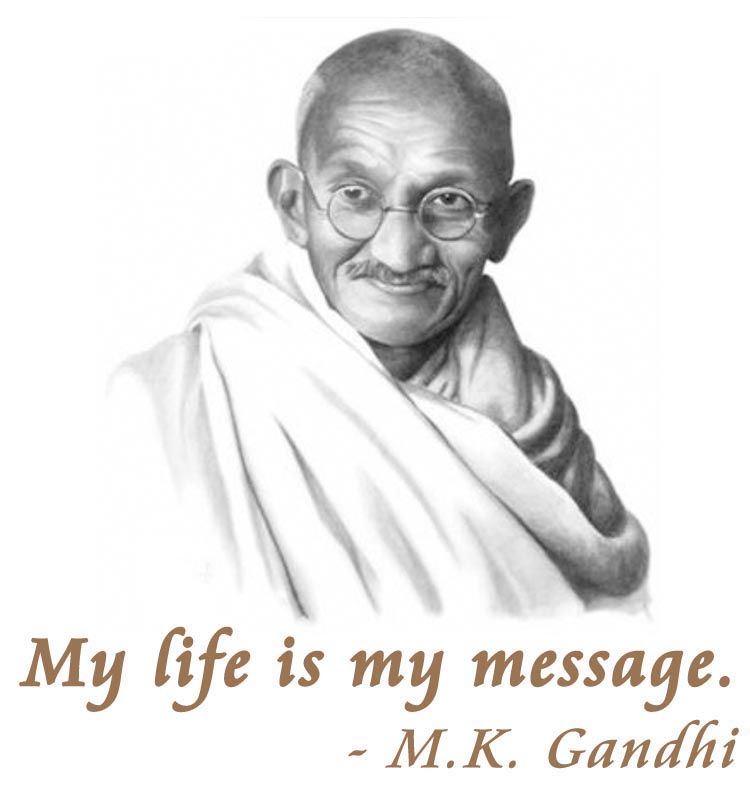
Turban or Topi: A Study of Gandhi's Casteless Khadi in Kathiyawad |
- By Nidhi J. Makwana*AbstractThe paper proposes studying the relationship between clothing and identity, particularly between headgear and caste identity in Kathiyawad, Gujarat. Gandhi's khadi left a remarkable impact on fashion and visual communication in India and abroad, becoming a symbol of the nationalist agenda. This paper explores and discusses the historical role of Gandhi topi in the social movement where caste-based headdresses were replaced with casteless topi. Fashion in social movements stands against clothing that marginalises groups based on hierarchical distinctions; Gandhi's khadi became a political symbol against colonialism, as did the feminist movement, which challenged stereotypes about gender-based dress. The paper concludes that the Khadi and Gandhi topi replaced Kathiyawad's caste-based headdress with the casteless Gandhi topi. IntroductionIndia has long been a multicultural and multilingual nation celebrated for its unity in diversity. It has preserved a rich heritage of unique artefacts, art, handlooms, embroideries, and spices for centuries, influenced by numerous external forces that have contributed to a diverse and prosperous society. Despite this unity in diversity, societal vices such as caste pride, discrimination, and untouchability persist. Mohandas Karamchand Gandhi recognised the need to confront both the British Empire and the vices within his society. He undertook significant initiatives for the abolition of caste, from the Kochrab Ashram and the Poona Pact to the Vaikom Satyagraha, fighting personally and publicly for this cause. He edited four newspapers, wrote several books, and replied to nearly every letter he received during his lifetime; he was an exceptional communicator. However, his communication transcended verbal or linguistic forms, encompassing symbols and signs. Each of these symbols carries a deeper connotation. This paper examines one such symbol, the Gandhi topi, which ultimately became a visual representation of nationalist politics and, in some cases, a casteless headdress. Gandhi’s fashion evolved significantly over the years. While studying in London, he wore a European cap, tie, and coat; however, in South Africa, he started with a tie, coat, and turban before gradually transitioning to a shirt and trousers. Upon his return to India in January 1915, Gandhi intentionally exchanged his pants and shirts for a Kathiyawadi peasant dress (Tarlo 1996, pp. 83-92). In 1920, Gandhi exchanged his Kathiyawadi turban for the Gandhi topi, which he wore for a year or two. Gandhi’s khadi and fashion redefined Indian attire, embodying nationalism through visual communication. Therefore, the relationship between dress and people is significant as a symbol of self- and collective identity, conveying essential information about culture, class, and caste (Flugel 1950). Roland Barthes and Lisa Trivedi explore the relationship between dress and individuals, analysing clothing as a socio-political symbol. In his work, Barthes suggests that activist groups employ fashion as a symbolic tool (Barthes 2006). Historically, fashion within social movements has opposed clothing that marginalises groups based on hierarchical distinctions. Revolutionaries adopted red, black, and white costumes and ankle-length trousers during the French Revolution, reflecting their working-class status. Aristocrats were easily identifiable by their attire during the revolution (Harris 1981). Furthermore, the feminist movement of the 1960s rejected the restrictions and objectification associated with gender-based fashion in favour of styles that promote empowerment, performativity, and self-expression (Crane 1999). Similarly, Gandhi’s khadi served as a political and social symbol of resistance against an oppressive state and administration. A substantial body of literature exists on Gandhi’s khadi, commencing with its emergence as a political symbol and a tool for the Indian independence movement. For instance, Rahul Ramagundam’s work on Gandhi’s khadi explores its socio-political and socio-economic dimensions, as well as its impact on rural development and self-reliance (Ramagundam 2008). Similarly, Lisa Trivedi’s work explores khadi as an ideological pivot for an illiterate South Asian society, providing a visual means of communication (Trivedi 2007). Emma Tarlo’s book explores Gandhi’s fashion, from his childhood in Kathiyawad to his time as a European gentleman, culminating in the half-dressed Gandhi known to all (Tarlo 1996). Gandhi observes in Satyagraha in South Africa that he was asked to remove his turban in the Durban courtroom; he subsequently left the courtroom and wrote a note about fashion-based discrimination for the city’s newspaper, the Natal Mercury (Gandhi and Desai 1995). Gandhi’s personal and political experiences with clothing and discrimination led him to embrace the Khadi movement as a crucial element of the Independence movement. This paper explores the role of Gandhi’s khadi topi as a casteless element in Kathiyawad, a region in western India comprising 193 princely states, each distinguished by its unique dialect, attire, and cultural identity. Consequently, considerable importance was placed on a visual communication medium that enabled straightforward interpretation of an individual’s area and caste identities. Notably, this region boasted a rich textile heritage, showcasing rural handicrafts, dyeing, and distinctive designs informed by caste, class, and locality. The community adopted the Gandhi topi during the Dandi March of 1930, symbolising castelessness and classlessness; it enabled people to transcend the authority of the princely states, unequal cultural norms, and British administration. The paper examines Gandhi and the significance of his topi in the social movement in Kathiyawad, viewing the topi as a symbol of banal nationalism, as Michael Billing suggests. This concept pertains to unnoticed practices that sustain national identity. Within Billing’s framework, the Gandhi topi emerged as a powerful symbol of resistance and national belonging (Billig 2017). Similarly, Alexander Maxwell contends that nationalised clothing enforces imagined boundaries of citizenship; however, Maxwell’s model FOP emphasises forbidden, obliged, and permitted clothing, which was not the case with the Gandhi topi (Maxwell 2010). Dipesh Chakrabarty, in his work, observes khadi as a political language embodying moral purity (Chakrabarty 2001). Clothing in Indian society is associated with caste (social position), class (economic position), and area (geographical position). The Gandhi topi emerged as a breaker of caste and geographical identities, establishing a single identity for one nation, and served as a political and social symbol of banal nationalism in united India through visual communication. Clothing as an IdentityHumans are the only rational animals, and we do not know whether that is why they are the only ones who wear clothes. It could also be because of the subjective consciousness of being different from the rest of the world’s species. After all, rationality is a realisation of self-identity. One way people assert their identities is through the attire they wear. All societies have specific laws, and some are very strict about how men, women and children should dress. Notably, collective identities such as caste, age, race, class, religion, and political opinion affect an individual’s clothing (Kuper 1973). These norms about clothing define people’s identity, how they see themselves, and how they want others to see them. If you ask someone to tell you about what they are wearing, wish they were wearing, or are glad they are not wearing, you will receive surprising insights into identity, body, and culture. The connection between dress and people is significant both individually and collectively. Recent studies in psychology even indicate that clothing can have psychological and behavioural consequences for wearers (Johnson et al. 2014). This medium creates cultural meaning beyond linguistic signs and their associated connotations. As a symbol of personal and collective identity, a dress is a visual means of communication. It conveys valuable information such as culture, class, and caste. Hindu society assigns strict connotations to dresses according to caste. These dress codes have persisted since the Vedic period, propagated by Brahmin teachers (Gopal 1961). Several Vedic texts advocate clothing norms based on one’s varna or caste; among these, Apastamba’s Dharmasutra states that Brahmins wear cotton for upper shoulder garments, Kshatriyas wear hemp, and Vaishyas wear wool (Apastamba 2000). Even in the Manusmriti, it is noted that untouchables should wear the clothes of the dead (Arie 2021). As a result, Hindu society has remained strict about its clothing norms based on caste for millennia, leading to the visual representation of one’s caste. Throughout history, their attire has been influenced by the continent’s rulers, as Mughal fashion intersected with Hindu clothing, giving rise to new fashion trends (Agarwal 2025). However, caste-based clothing persisted in practice; B.R. Ambedkar writes that untouchables in the Maratha state wore black threads around their necks and wrists to visually mark their identity (Ambedkar 2014). One’s identity is shaped by culture; thus, the cultural connotation assigned to clothing is hierarchical. Clothing represents a social hierarchy and conveys information about an individual’s position. As mentioned previously, the role of fashion in social movements such as the French Revolution demonstrated how clothing created symbolic distinctions between classes, social groups, and the public and private spheres, playing a crucial role in signaling significant political and cultural changes (Gupta 2012). Additionally, in feminist movements, unisex clothing was introduced to counter the notion of fashion that reinforces affective gender stereotypes (Salah et al. 2023). Fashion in social activities emphasises clothing, marginalising groups based on hierarchical distinctions. Similarly, Gandhi's khadi played a vital role in dismantling India's hierarchical caste-based clothing system. Gandhi's KhadiGandhi's khadi is regarded as a symbol of nationalist fashion that opposed Imperialist Britain and addressed social issues in India, such as illiteracy, the caste system, and poverty. During the British Empire, clothing associated with caste evolved alongside English education, as the British fostered the concept of being civilised. A metropolitan urban middle class began to adopt coats and hats typical of English attire during British rule, which did not reflect their traditional caste dress code. English education, combined with the middle class's ties to British administration, gave rise to a new Indian class in appearance, yet in a British manner (Joshi 1994). Clothing became an essential part of this new India; Gandhi offered an alternative to the educated middle class's desire to embrace progressive fashion by introducing casteless khadi. Gandhi employed various forms of nonverbal communication, including silence (maun), fasting (upavas), and clothing (Merriam 1975). Gandhi's khadi symbolises cultural self-identity, the historiography of the nationalist movement, and the significance of a constructive agenda; khadi played a vital role in building the social and political movement. Gandhi believed that one should wear minimal clothing, as the general climate of India necessitated very little clothing, rather than English attire or heavy coats. The economic rationale behind khadi was to oppose the British textile industry, which severely threatened India's once-flourishing cloth industry (Choudhury and Ghosh 2016). The introduction of machines systematically degraded India's craft-based cloth industry, resulting in economic hardship. Weavers operating from a pit crafted Gandhi's khadi from handspun cotton yarn, creating an ideological focal point that allowed individuals to affirm their political and personal beliefs, with clothing as a marker of their affiliations. Trivedi wrote that khadi was a visual medium of expression to disseminate. Nationalism in South Asia arose without the benefits of a common written language and rising literacy, as visual communication was the sole preserve of oral tradition and illiterate societies (Trivedi 2007). Khadi became a symbol of resistance against the British Raj; there were three freedom struggles: the Swadeshi Movement, the Khilafat Movement, and the Non-Cooperation Movement, which involved and influenced khadi (Gupta 2012). In the early stages of khadi during the 1920s, Gandhi promoted khadi among the metropolitan middle class and educated Indians, who adopted it as a visual medium to express their protest against British authority. Later, the non-cooperation movement was divided into five phases, with two phases playing an essential role in establishing khadi as a political symbol. The first phase occurred in the 1920s, when the Congress, the educated middle class, and urban areas embraced khadi. The second phase unfolded during the 1930s, when the masses connected with Gandhi and the freedom movement through khadi. Additionally, the Dandi March played a pivotal role in spreading khadi, as news reporters worldwide captured photographs of the March and disseminated images of people wearing khadi to symbolize their nationalism (Sriram 2023). Billig also argues that banal national signifiers are frequently solidified through exposure to media and the repetition of images circulated through mass media (Billig 2017). In later phases, Gandhi established mobile khadi shops in rural areas, making khadi more accessible to the broader public. In 1921, Gandhi burnt a pile of foreign clothes in support of the Swadeshi movement; in response, in parts of India, people started burning their topis or caps made of foreign fabric (Ramagundam 2008). Gandhi refers to these responses as telepathic communication (Gonsalves 2010). In contrast, C.F. Andrews refers to this movement as violent, distorted, and unnatural, which evoked a racial feeling of selfish nationalism (Bakshi 1990). The purpose of khadi was to boycott imported fabric and embrace Swadeshi materials and products. Gandhi believed this would alleviate poverty in India and provide employment for local communities. Another aspect of khadi was to unite people through visual communication. Nevertheless, many elements of the promising Gandhian fabric, khadi, could be improved. However, it fails to serve all, as thousands of people in India lack clothing or cannot afford it. In such situations, how can Khadi represent their freedom? Another limitation of khadi concerned the participation of women in the khadi movement. Kasturba Gandhi noted in her diary that khadi sarees were too heavy for household tasks (Adhar 2016). Secondly, white khadi became problematic for Indian women as it symbolized widowhood in Indian culture, and there was a scarcity of coloured khadi. In response, Gandhi redefined the colourless khadi as a symbol of purity and simplicity. Similarly, Dipesh Chakrabarty suggested that khadi is a political language of moral purity and signifies simplicity and voluntary poverty (Chakrabarty 2001). Gandhi sought to connect women by establishing the Khadi Bhawan, where they worked to collect cotton, deliver self-spun yarn, and receive remuneration. Thereafter, Gandhi, in his self-edited newspaper Navjivan, wrote on 'the use of khadi and khaddar' about the role of women in khadi, stating that as long as women in India do not participate equally with men in the affairs of the world and religious and political matters, India shall not be a rising star (CWMG 17, p.16). Furthermore, he argues that, as it is a peaceful struggle, women can surpass men by many miles. Gandhi also stated that our fight is not solely against the British Empire, but also against our divided India and the caste system (Torchia 1997). In this article, he discussed the uses and benefits of wearing khadi, as well as the newly developed khaddar saree for women by Sarladevi Choudhrani (Kumar 2011). Thus, Gandhi's khadi was seen as a fabric that anyone could wear, regardless of gender or caste. As Gandhi wrote in Young India in 1928, Khadi is not a threat. It is the breath of national life, like swaraj (CWMG 35, p. 478). Furthermore, Gandhi, in the Congress resolution on khadi, asserted that it would promote Hindu-Muslim unity and eliminate untouchability (CWMG 26, p.9). Upon arriving on Indian shores in 1914, Gandhi advised Maganlal that specific attire should be worn in India, suggesting that men don a lungi, a shirt, and a topi (Gandhi 1996). Gandhi launched his Swadeshi khadi project in opposition to British polyester upon his return to India. However, the production of hand-spun khadi is insufficient to meet India's population's needs. Gradually, khadi gained popularity throughout India, and people incorporated the nationalist fabric with or alongside their traditional attire. Gandhi's birthplace, Kathiyawad, embraced the nationalist spirit through its traditional garments. In this context, examining the origin and emergence of the Gandhi topi is essential. Gandhi TopiMuch literature explores Gandhi's semiotics, the study of signs and signifiers (Anish 2020). Gandhi, in the words of Bikhu Parekh, certainly created a dictionary of political philosophy in indigenous languages, literature, and culture (Parekh 1989). Among these visual representations, the Gandhi topi remained a profound symbol of Gandhian ideology in colonial and postcolonial India. It is a banal signifier of nationalism, transforming an abstract equaliser into a tangible and observable identity beyond linguistic references. There are ongoing debates about the origin of the Gandhi topi, and each discussion yields different narratives. For instance, Paul John states in his article that the topi was invented in 1908 in South Africa, where Gandhi organised passive resistance against the Asiatic Registration Act and was imprisoned (John 2014). The prison cap resembled the present-day Gandhi topi. Meanwhile, renowned Gandhian and Gujarati writer Kaka Kalekar states that the topi is closer to the Kashmiri cap (Tarlo 1996). Interestingly, some references note that Abadi Bano Begum first sewed and invented the Gandhi topi, popularly known as Bi Amma (Fredrick 2024). Rohit Ghosh narrates the origin of the Gandhi topi in Rampur, Uttar Pradesh, during the 1920s. Furthermore, Ghosh notes that the cap was made from gara, not khadi; gara is thicker and rougher than khadi. Gandhi attended a wedding near Rampur and subsequently decided to meet Nawab Sayyid Hamid Ali Khan Bahadur of the Rampur princely state (Ghosh 2021). However, wearing headgear before the Nawab’s court was a custom; nonetheless, Gandhi discarded his Kathiyawadi headgear upon returning to India. Consequently, some of his companions visited the market to find suitable headwear for the meeting but could not find any suitable options. Thus, Ali Brothers Jauhar and Shauqat’s mother, Abadi Bano, sewed the first Gandhi topi. Eventually, the Gandhi topi became a significant part of fashion in Western India, particularly in Maharashtra and Gujarat. The anthropological report on Maharashtra explains and discusses the clothing of each caste; it notes that the Kirad, Kohli, and other castes incorporated the Gandhi topi into their attire (Singh and Bhanu 2004). Similarly, the western region of Gujarat also embraced the Gandhi topi as part of its fashion. Notably, the Gandhi topi is distinguished by its shape and fabric, which serve as an understood, shared, and unspoken element. Kathiyawad and clothingFrom an archaeological perspective, Gujarat is recognised as a Harappan settlement with intricate connections to the Indus Valley civilisation. Historically, Gujarat is renowned for its flourishing trade, commerce, architectural development, art, and textiles (Wilberforce-Bell 1980). Commerce and trade thrived and proved profitable due to excellent access to the Arabian Sea, which linked it to Southeast Asia, Persia, and European nations, primarily for the exchange of Indian spices and textiles (Chakravarti 2021). Kathiyawad is part of the modern state of Gujarat, located on the state’s larger coastal belt. Notably, this region is agriculturally rich and yields a substantial cotton crop. Kathiyawad is named after the Kathi community of the 7th and 8th centuries, suggesting a territory marked by communal unity. It is a place where the caste system is firmly entrenched and rigid in shaping society. The community has specific connotations for dresses associated with castes and regions. The area was divided into 193 princely states; each had its dialect, language, and attire. These states of Kathiyawad were geographically separated into four parts: Zalawad, Halar, Sorath, and Gohilwad (Wilberforce-Bell 1980). Numerous castes populated Kathiyawad in these four regions, including Jethwas, Walas, Ahirs, Rabari, Mer, Bhil, Koli, and Memon. It is important to note that clothing in Kathiyawad depended on an individual's caste class. The upper class in these princely states was well-dressed, and their garments were made from various materials such as wool, cotton, and silk. The painting, printing, and colouring techniques showcased these rich and artistic materials. Other classes of society used to wear dhotis, dupattas, and turbans; all of these were unstitched in the past. Women generally wore sarees, chadars, and dresses, which were equally relaxed and comfortable as a dhoti, to counter the hot climate of India (Ranavaade 2024). The women's clothing featured intricate patterns with various styles and materials. Each region was renowned for its artistic craftsmanship in apparel, including tie-dyed garments known as bandhani and striped designs called leheriya. An individual donning a bandhani as their attire indicates their regional identity, such as Halari or Jamnagari (Acharya and Samani 2017). The design and colours of clothing often indicate one's caste. For instance, the Ahir community can be recognised by the Peran and Rabari communities by their Kediyyu attire. Turban or TopiIn the Vedas, a turban is described as an unstitched garment used to cover the head. In Indian culture, the turban is significant for identity, modesty, and honour. For centuries in South Asia, the higher classes and elites wore the turban exclusively (Cohen 2007). Traditionally, men have worn turbans, while women have covered their heads with a long scarf known as a chunni, dupatta, or ghoonghat. A turban or pagri is a headdress worn by men. It signifies the wearer's social status, religion, ethnicity, and, in some instances, a profession, as suggested by the material's type of fabric, colour or design, length, and shape (Legrand 2012). Headdresses held particular significance in Kathiyawadi culture, much as turbans do. Numerous literary references to pagri exist in paintings, folk songs, and proverbs (ibid). Several works of folklore literature elucidate significant details about the headdress for men in Kathiyawad, where the turban was more closely tied to a person's caste, region, and class. Women wore the chadar as their headdress, which also varied in colour, style, and pattern by caste region. This region possesses numerous anthropological and archaeological documents, as well as Barot’s traditional genealogical records. It is also referenced in Persian trade and shipment documents. Known for its unique folklore, much oral literature recounts Kathiyawad’s diverse dresses. Within this oral tradition, Charani sahitya poet and songwriter Pingalsingh Gadhavi (1914-1998) wrote a poem that describes the types, patterns, and colours of Kathiyawadi turbans and how they convey an important message about each wearer’s identity (Sangeet Natak Akademi 2011). Since the poem is written in Gujarati, this paper describes it in English. The poet makes two distinctions based on caste and regional identity to narrate the turbans of Kathiyawad; Gadhavi elaborates on how each of these turbans differs through linguistic narration. A person from Halari (Jamnagar), a part of Sorath (Junagadh), can be identified by his long pagri. The area-based pagri discussed in Gadhavi’s poem are Morbi, Gondal, Jamnagar, Baradi, Bardo, Sorath, Gir, Gohilwad, Junagadh, and Zalawad; for the convenience of the readers, the names of these areas are presented according to the current district division. Morbi’s pagri is a circular, twisted cloth worn overhead, and its surface can hold a pitcher. The Gondal turban partially covers the forehead, resembling a bird’s beak or nabla symbol. The Jamnagar turban is a tapered cylindrical headdress made of five-colour cloth, while the nearby area’s Jodiya turban is meticulously folded from multiple pleats. The larger area of Zalawad features a knotted pagri made of polka-dot fabric. The area near Junagadh, Sorath’s headdress is a traditionally shaped turban, a loose turban requiring no specific artistic talent. Gir’s headwear consists of a thick white wool cap designed to combat the weather in the land of Asiatic lions. The state governed by the Gohil community near Bhavnagar, known as Gohilwad, has an oval-shaped turban worn at a slant over the head. The Kathiyawadi pagri is cylindrically knotted in colourful fabrics adorned with artefacts. The poet narrates that the headdresses of the Rajput, Kathi, Mer, Ahir, Bharwad, Charan, Rabari, Brahman, Sadhu, Vaniya-Vepari, and even Meman communities are significant to one’s identity. Bharwad wear a wine-coloured turban within the shepherd communities, while Rabari don a deep-coloured turban with a knot. The Soni community, known for selling gold and jewellery, wears a thick turban covering one ear to the other. The Muslim ruler of the Junagadh community, Batti, is adorned with a green turban made from serpentine-twisted cloth. The warrior community, the Sipahi, wears a turban with a long tail called a Safo. The Sufi Muslim saints, Fakir and Mujawar, wear green turbans with short tails. Gadhavi provides a detailed account of Kathiyawadi pagris, highlighting their association with caste and regional identities. Additionally, it illustrates the significance of headdresses within the caste system. These visual representations undeniably evoke a sense of belonging to both caste and the princely state, yet they also marginalise individuals based on their visual vocation (Tomar 2019). A hierarchical structure based on clothing can create divisions within society. An individual's treatment is not only a reflection of their subjective self but also of the objective group to which they belong. Kathiyawad faced numerous economic hardships during the British Raj. It was part of the Gaikwar of Baroda and later became a part of the Bombay Presidency in 1882. Several factors contributed to these hardships. Firstly, the growing prominence of British-manufactured goods led to a decline in the Indian craft industries, as this region relied heavily on its cotton and textile sectors. The princely states had no trading agreements with the East India Company, resulting in an open and oppressive market; the conflict between the princely states and the British negatively impacted the region's development (Jhala 2019). It is important to note that starvation and poverty were also caused by unmanageable taxes imposed by the British Raj and Princely states. Despite the high taxes and oppressive rule, the Kathiyawad region during the colonial period often faced drought and farming-related issues, contributing to the high poverty rate. Literacy in the region became accessible to all after Independence; previously, much of Kathiyawad's population remained illiterate. Consequently, the literature of this region will remain in oral form until Zaverchand Meghani compiles it in written form (Kapadia 2022). The rise of literacy in this region began with the establishment of Raj Kumar College in Rajkot in 1870, which became an educational institution for the upper class and the Princely states. Additionally, the progressive Princely state of Gondal established a school, library, and public sector during 1930-33; this development in Gondal indicates governance in a true sense. The subsequent literacy phase in Kathiyawad was based on Ashramshalas and Buniyadi education, an educational concept proposed by Gandhi. Therefore, according to Trivedi's argument, visual communication plays a pivotal role in the rise of nationalism in an illiterate society. Similarly, Billing argues that a banal signifier such as the Gandhi topi served as a subtle yet powerful shift in public semiotics through daily repetition; this slight shift in nationalised clothing not only operates during the exceptional moment of revolution but also accompanies the changing hearts and minds of the people. The oppression of the British Raj was similar across colonies, whether in Bengal, Gujarat, Kerala, Kashmir, or South Africa. Similarly, Kathiyawad faced hardships akin to those of the Raj and the princely states; the population was divided along caste and regional lines. Therefore, the adoption of Indian nationalism and Gandhian idealism served as a means to escape from the multiple identities of this diverse region. Their identities, rooted in caste and state, were expressed through attire and turbans; to achieve a sense of visual equality, individuals would break the visual associations of their identities as Ahirs of Junagadh or Patels of Morbi. The villages and states of Kathiyawad had limited access to education during the early phase of nationalism; hence, they were only partially aware of democratic ideas and nationalist movements, as reading was challenging for them. However, Gandhi’s khadi served as a visual medium for them. This region’s young, educated class adopted English clothing or hats to distinguish themselves from their Indigenous identities, effectively erasing the visual markers of belonging. Upon returning to India, Gandhi aimed to combat the British and promote Swaraj, civilizational progress, and societal change, as discussed in his Hind Swaraj (Gandhi 1909). Gandhi provided an alternative to traditional caste attire and heavy Western clothing through khadi for people in this region and across India. Gandhi emphasised that this alternative should be casteless and classless. Gandhi’s khadi and his topi were a third space for people to escape the authority of the Princely states, unequal cultural norms, and the coloniser’s identity. Gandhi topi, a reframed instrument of banal nationalism, allows us to recognise its power, not limited to political protests, but shaping a new identity. The elite class adopted khadi earlier, including those who were politically progressive and part of the Congress. As mentioned earlier, khadi was inaccessible; people could neither buy it nor wear it; therefore, this class was the first to adopt it. Those who could afford to wear khadi attire adapted the entire khadi attire with a shirt, trousers, and topi, and some adapted only the khadi topi along with their traditional attire. In the early 1920s, khadi production was insufficient to meet the needs of the entire Indian population, as it was handspun and required greater attention and time. Consequently, in the early stages of khadi, people in Kathiyawad adopted Gandhi’s khadi topi, which requires less material. Gradually, this topi became an important political symbol of the Indian Independence movement and a sign of a casteless element in many societies, such as Kathiyawad. In a later phase, during the 1930s, Gandhi played an active role in the freedom struggle, marking ten years since the introduction of khadi in India for the Indian freedom movement. In rural areas, the masses connected with Gandhi through the Gandhi topi, and the Dandi March was essential in its spread. Interestingly, the Dandi March received worldwide coverage from national and international press; in those images, people wore khadi as a symbol of nationalism, which recognised the Gandhi topi beyond its cultural and political borders. It is also essential to note that mobile khadi shops in rural areas have made khadi accessible to a larger number of people (Hempson 2018). The people of Kathiyawad suffered under the heavy taxation imposed by the Princely states and the British Raj. However, the feeling of nationalism in Kathiyawad was not on the roads or in mass rallies. Nevertheless, they communicated their support for Indian nationalism, democracy, and Gandhi’s ideology by adopting Gandhi’s topi with their caste attire. The significance of Gandhi topi can be understood by the number of diverse castes that adopted this headdress as a political and fashion symbol. Among these castes, Patels, Ahirs, and Dalits were the first to adopt Gandhi topi as their headdress. Also, the dress of Ahir and Patel changed from their caste attire to simple white clothes, such as trousers, shirts, and a topi. These communities move away from caste attire, communicating their identities as Ahir or Patel. Eventually, it creates a new identity as equal and Indian, in the words of Billig, a powerful visual banality of national belonging (Billig 2017). Even the Dalits of the region primarily adopted it, as this was the first time they could access a similar fashion and attain equal status with upper-caste or class people. Altogether, a Gandhi topi breaks the identities of the area and caste attached to Kathiyawad’s turbans. It also communicates essential messages on equality, unity, and nationalism. The present-day Kathiyawadis do not express their caste identities through their attire, as most of the population has adopted modern clothing influenced by traditional or Western fashion; They do not include headwear as part of their garments. However, the older generation still wears caste-based dress and headwear, primarily in rural areas. Unfortunately, they have found various ways to communicate their societal standing by displaying symbols or slogans on their vehicles, thereby conveying their identity. Additionally, they have begun naming their houses and businesses after their caste or surname to represent their caste identity. ConclusionGandhi topi became a political symbol of India through visual communication, despite India’s multicultural and multilingual nature. Khadi provided the two main elements of honesty and self-identity. Gandhi did not focus solely on khadi as a product but also engaged with the production process, where weaving khadi could be seen as a casteless vocation. The spinning of the gharkha was also a political symbol, and collective spinning became one of the most visible features of a community. Khadi’s language and symbolism had politically charged significance and moral meanings. Khadi tried to mould the latent ‘moral’ beliefs of Indian society, and its purpose was very much secular, as Dipesh Chakraborty suggests. Gradually, Gandhi topi became merely a political symbol representing morality and nationalism in contemporary Indian politics. It also means that banal nationalism’s disappearance has slowly lost its silent authority and stands simply as a political uniform of morality, purity, and nationalism. Even during the Nehruvian era, people who wore a topi as their headdress continued to do so, and eventually it became part of their traditional attire. Gandhi topi reemerged in Indian politics with Anna Hazare’s satyagraha against corruption in 2011, representing Gandhian ideals. Sequentially, many political parties adopted it for their politics and sign of righteousness; the Aam Adami Party of Delhi adopted the white topi, the Samajwadi Party of Uttar Pradesh adopted the red topi, whereas Bihar’s Rashtriya Janta Dal adopted the green colour, and the Bharatiya Janta Party in saffron colour and many more adopted topi in different way to suggest their honesty, virtue and honour. Once a casteless element, a symbol of nationalism and self-reliance, it becomes merely a political costume. This case study is a modest attempt to narrate the political, social, and cultural importance of Gandhi topi becoming a banal nationalist object that reproduces nationalist consciousness and daily life, particularly in Kathiyawad. As a political symbol, Gandhi topi connected people to the experience of oppression and provided an identity that could serve as a medium for their shared experience. Gandhi topi symbolised a democratic idea: everyone is equal before the law and cannot be marginalised based on caste or class; citizens have equal rights and duties. References:
Courtesy: Gandhi Marg, Volume 47, Number 3, October–December 2025 * Nidhi J. Makwana is a doctoral candidate at the School of Liberal Studies, Pandit Deendayal Energy University, Gandhinagar, Gujarat. Her PhD research is titled ‘Translations within Satyagraha: A Critical Study of M.K. Gandhi as a Translator’, Email: nidhijanak@gmail.com |