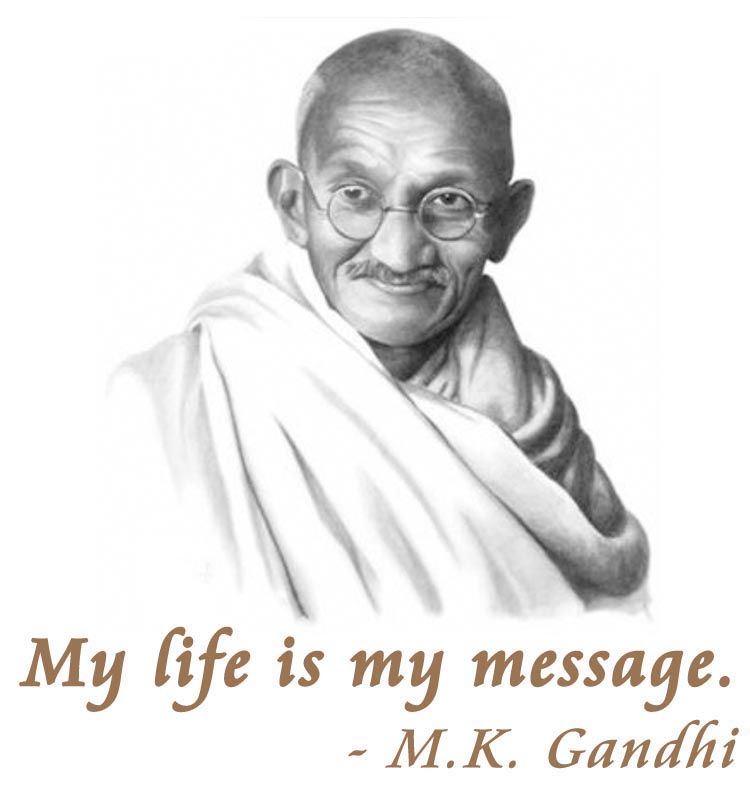
Civil disobedience as a technique for fighting injustice: A tale of 'Salt Satyagraha' |
- By Ananda. S*AbstractSatyagraha was a powerful non-violent tool of protest popularised by Mahatma Gandhi. In fact, the term 'Satyagraha' is derived from two Sanskrit words namely: Satya, meaning the "truth", and Agraha, meaning 'insistence'. So, in common parlance, Satyagraha is defined as "truthful demand". The Salt March (also known as the Dandi March, Salt Satyagraha) was an act of civil disobedience in the form of a nonviolent protest, which took place in colonial India on 12th March 1930 to protest against British Salt Monopoly. In order to allow the extraction and production of salt from seawater and as a direct action of tax resistance, Salt Satyagraha was started by Mahatma Gandhi. In early 1930, the Indian National Congress chose 'Satyagraha' as its main tactic for winning freedom from British rule and to achieve self-rule. The Indian National Congress appointed Mahatma Gandhi to organise the campaign. Gandhi chose the 1882 British Salt Act as the first target of Satyagraha. Indians were aware of the technique of salt extraction and production of salt from seawater since ancient times. But British officials-imposed ban on such activity and declared it as illegal. Not only declaring it as illegal, the British officials used force several times to stop the production of salt. As a protest, Gandhi led the Dandi March from his base, Sabarmati Ashram, near the city of Ahmedabad. Seventy-eight people began the march with Gandhi, who intended to walk 240 miles (390 km) to the coastal village of Dandi, which was located near the small town of Navsari in the State of Gujarat. It is considered to be the most organised challenge to British authority since the Non-Co-operation Movement of 1920–22. When Gandhi broke the salt laws at 6:30 am on 6 April 1930, it sparked large scale acts of civil disobedience against the British Raj salt laws by millions of Indians. The campaign had a significant effect on changing world and British attitudes towards Indian sovereignty and self-rule and caused large numbers of Indians to join the fight for the first time. Hence, as it is popularly told "Action speaks thousand times better than words", this act of civil disobedience was more effective and powerful than most of the violent measures used against the British Empire. This paper analyses the historical importance of 'Salt Satyagraha' and its contribution in fighting against injustice. IntroductionThe Salt March (also called as the 'Dandi March' or 'Salt Satyagraha') was an act of civil disobedience in the form of a nonviolent protest, which took place in colonial India on 12th March 1930. The salt-tax represented 8.2% of the British Raj tax revenue and hurt every Indian most significantly. Explaining his choice of Salt Satyagraha, Gandhi said, "Next to air and water, salt is perhaps the greatest necessity of life." Indians were aware of the technique of salt extraction and production of salt from sea-water from many ages. But British officials imposed a ban on such activity and declared it as illegal. Not only declaring it as illegal, the British officials used force several times to stop the production of salt. As a protest, Gandhi led the Dandi March from his base, Sabarmati Ashram to the coastal village of Dandi, which was located at a small town called Navsari in the State of Gujarat. When Gandhi broke the salt laws at 6:30 am on 6 April 1930, it sparked large scale acts of civil disobedience against the British Raj salt laws by millions of Indians. The MarchThe Congress Working Committee gave Gandhi the responsibility for organising the first act of Civil Disobedience, with Congress itself ready to take charge after Gandhi's expected arrest. Gandhi's plan was to begin Civil Disobedience with a satyagraha aimed at the British salt-tax. The 1882 Salt Act gave the British a monopoly on the collection and manufacture of salt, limiting its handling to government salt depots and levying a salt-tax. Violation of the Salt Act was a criminal offence. Even though salt was freely available to those living on the coast (by evaporation of sea water), Indians were forced to purchase it from the colonial government. For the march, Gandhi wanted the strictest discipline and adherence to satyagraha and ahimsa. For that reason, he recruited the marchers not from Congress party members, but from the residents of his own ashram, who were trained in Gandhi's strict standards of discipline. The 24-day march would pass through 4 districts and 48 villages. The route of the march, along with each evening's stopping place, was planned based on recruitment potential, past contacts, and timing. Gandhi sent scouts to each village ahead of the march so he could plan his talks at each resting place, based on the needs of the local residents. Events at each village were scheduled and publicised in Indian and foreign press. The eve of the march brought thousands of Indians to Sabarmati to hear Gandhi speak at the regular evening prayer. The Salt March was also called the 'White Flowing River' because all the people were joining the procession wearing white Khadi. Gandhi gave interviews and wrote articles along the way. Foreign journalists, along with three Bombay cinema companies shooting newsreel footage, turned Gandhi into a household name in Europe and America (at the end of 1930, Time magazine made him, 'Man of the Year'). The New York Times wrote almost daily about the Salt March, including two front page articles on 6th and 7th April. Near the end of the march, Gandhi declared, "I want world sympathy in this battle of right against might." Aftermath EffectsAfter making salt at Dandi, Gandhi continued southward along the coast, producing salt, and addressing meetings on the way. The Congress Party planned to stage a satyagraha at the Dharasana Salt Works, 25 miles south of Dandi. However, Gandhi was arrested on the midnight of 4–5 May 1930, just days before the planned action at Dharasana. The Dandi March and the ensuing Dharasana Satyagraha drew worldwide attention to the Indian Independence Movement through extensive newspaper and newsreel coverage. The satyagraha against the salt-tax continued for almost a year, ending with Gandhi's release from jail and negotiations with Viceroy Lord Irwin at the Second Round Table Conference. Over 80,000 Indians were jailed as a result of the Salt Satyagraha. The satyagraha teachings of Gandhi and the march to Dandi had a significant influence on American activists Martin Luther King, Jr., James Bevel, and others during the movement for civil rights for African Americans and other minority groups in the 1960s. Therefore, the Salt Satyagraha is an important historical event, not only for Indian independence, but it also directly and indirectly influenced the world and proved the fact that non-violence is the most powerful tool to fight against injustice caused. Violent measures adopted to retaliate violence would trigger further enmity and hatred. Hence, when every alternative person is perceived as enemy or adversary, there will be no such word as neighbour. Therefore, it was an empirical learning experience for not only India, but also to the world. What started as a small ignition slowly took the shape of a wildfire and ended in the declaration of 'Poorna Swaraj', which translates into 'Complete freedom'. Gandhi, in one of his speeches, said: "We believe that it is the inalienable right of the Indian people, as of any other people, to have freedom and to enjoy the fruits of their toil and have the necessities of life, so that they may have full opportunities of growth. We believe also that if any government deprives a people of these rights and oppresses them, the people have a further right to alter it or abolish it. The British Government in India has not only deprived the Indian people of their freedom but has based itself on the exploitation of the masses and has ruined India economically, politically, culturally, and spiritually. We believe therefore, that India must sever the British connection and attain Poorna Swaraj or complete sovereignty and self-rule". Gandhi also saw an inviolable connection between the means and the end as there is between the "seed and the tree." He wrote, "If the means employed are impure, the change will not be in the direction of progress but very likely in the opposite. Only a change brought about in our political condition by pure means can lead to real progress". Civil disobedience and non-violence were so powerful that, Pandit Jawaharlal Nehru stated: "The pledge of satyagraha laid stress on nonviolence, which was the very basis of the Civil Disobedience campaign. He warned that only those who were convinced of the efficacy of that method either as a creed or as a policy in the present circumstances of the country, should take the pledge. He opined that nonviolence was not a convenient shelter either for cowards or for those who wanted to prepare for violence. He asked the non-believers in nonviolence to withdraw from the movement to give others a chance." ConclusionThe Dandi March aroused great enthusiasm among the people. Everywhere the people began to break the law by selling banned political pamphlets, by showing defiance of section 144 and by withholding rents. Gandhiji called upon the women to begin spinning. In response to his call, women took to spinning, and they also started picketing at the door of Government offices and foreign-goods shops. This participation of the women was a new thing in the freedom struggle. The movement was very tense in Bengal and the north-west. Sarojini Naidu came to the forefront during this movement. In the North-West the most famous leader was Abdul Gaffar Khan, nicknamed "Frontier Gandhi". A feature of the movement was the remarkable awakening of Indian women, who left their sheltered homes in thousands and took their place by their menfolk in the fight for freedom. Many hundreds of them were arrested and imprisoned. From this period derives the spirit of equality and emancipation which henceforth was increasingly to inspire women's empowerment in India. References:
Courtesy: S, A. (). Civil disobedience as a technique for fighting injustice: A tale of 'Salt Satyagraha'. International Journal of Innovative Research in Technology (IJIRT), 6(10), 406–408. * Ananda S. is Assistant Professor, Department of History, Government Arts College, Bangalore. |