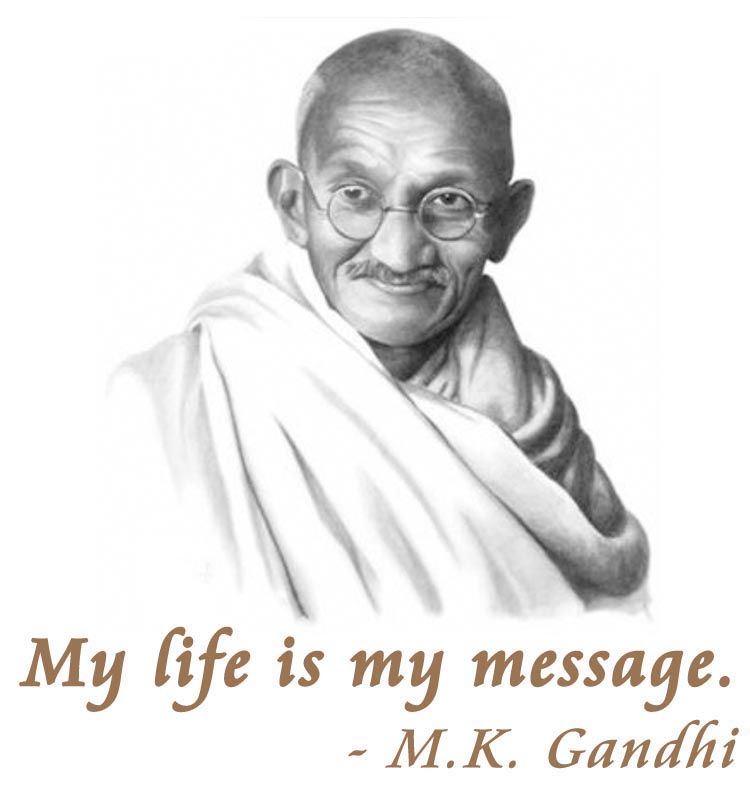
Reclaiming Gandhi for Gender Equality: A Case for Reflective Autonomy |
- By Bijayalaxmi Nanda*, Nupur Ray#, Shambhavi Mani^AbstractThe struggle for Gender equality in India is a continuous and dynamic one, with trajectories that can be traced back to pre-colonial times. Irrespective of many progressive ideas and campaigns by women's movements in India which raised debates around representation, domestic violence, reproductive autonomy, sexual harassment at the workplace and property rights, there is still a long road ahead for women to be completely emancipated. To address these challenges, which have magnified with the reconfiguration of the global economy and the intrusion of modern technologies, this paper seeks to explore and reclaim Mahatma Gandhi's ideas of Satyagraha and Swaraj, especially in the context of gender equality. Drawing on his ideas about non-violence, the moral force of feminine consciousness, and the resolute pursuit of truth, the paper argues that Gandhi's philosophy of Satyagraha and swaraj has inherent tools to address these challenges through emancipatory conceptions of labour, the body, agency, consciousness, and oppression. The article delves deep into these ideas and attempts to unravel the dilemmas and contradictions highlighted in critical feminist readings of Gandhi. 1. Introduction"When woman, whom we call abla, becomes sabla, all those who are helpless will become powerful." (CWMG 64:165) These words of Gandhi at the All-India Women's Conference in 1936 reflected his emphatic invocation of women's agency and the need to awaken their collective consciousness as prerequisites for the country's freedom and their own liberation from the shackles of oppression. From perceiving women as passive recipients of social reform movements in the early nineteenth century, waiting to be 'uplifted', Gandhi invoked the moral autonomy of women as independent subjectivities and projected them as a potential force in the Indian freedom struggle, alongside leading the movement towards building a humane and egalitarian society. Despite some 'cautious distancing' that the women's movement in India takes from Gandhi, his reframing of traditional roles and qualities associated with women as the centre of emancipatory politics challenged the patriarchal norms of Indian society and made women equal contributors to the Indian National Movement. In recent times, in spite of many progressive ideas and campaigns pushed by women's movements in India that have raised awareness and public discussion around issues of representation, domestic violence, reproductive autonomy, sexual harassment at the workplace, and property rights, two serious challenges need immediate attention and responses. First are the rising instances of more insidious forms of violence against women. Second is the decline in workforce participation, with more women either opting out of work or being unable to join the workforce due to patriarchal constraints in India, as recent studies show.(Singh, 2024). The struggle for Gender equality in India is a continuous and dynamic one, with trajectories that can be traced back to pre-colonial times. The paper argues that this process has been a disruptive one, in which the framing of the idea of women, their rights, and the claim for justice has been marked by contradictions and contestations. The paper is exploratory and raises more questions than it answers. The distinctive idea of gender equality mobilized by Gandhi has been a break from the social reformist understanding of the subject and remains one of the more significant political moments in the Indian freedom struggle. The colonial hegemonic order used the 'position' of women in Indian society to define the regressive cultural history of India. Imperialism was justified by this definition of the colonial subject in the way in which the women were treated here. Gandhi's contribution was to redefine the colonial subject, to invoke women as partners, and to reconfigure distinctions between masculinity and femininity. However, feminist texts have also critiqued Gandhi for his essentialist positions on gender and sexuality and have contested his moralising project. While the paper remains conscious of these contradictions, it strives to reclaim Gandhi by using the theoretical position of Reflective Autonomy as envisaged. In order to do so, the paper will examine Gandhi's core political ideas, Satyagraha and Swaraj, with special reference to their relevance to feminist politics. Secondly, it would apply the theoretical framework of reflective autonomy to recognize the significance of Gandhi's addressing the women's question within the nationalist discourse. His offering of alternative conceptions such as Satyagraha and Swaraj, and the articulation of his various strategies, will provide us with the traction to emphasize the relevance of the Gandhian engagement with contemporary debates on gender equality. The paper is divided into 4 sections. The first section provides a broad overview of significant critical feminist readings of Gandhian political ideas around satyagraha and swaraj from different perspectives. The second section introduces the concept of reflective autonomy in the context of gender equality, as the authors theorise it. (Nanda and Ray, 2019) The third section seeks to explore and argue that the various dimensions of Gandhi's feminization of the Indian national movement encapsulate the three components of reflective autonomy - engagement, empathy, and emancipation - which, in our view, is our foundational tool for reclaiming gender equality. 2. Feminist Reading of Gandhi: Critical ReflectionsFeminist interventions in Gandhi's political philosophy, as a system of thought and as personal dispositions, have ranged from attributing to him a 'saviour' status for women in British India to more severe critiques of his unconventional methods in his 'experiments with truth'. In this section, we discuss feminist contentions on certain issues to help us unravel significant debates in Gandhian methods and philosophy. From the margins to mainstream: Women's role in India's freedom struggleOne of the most widely accepted contributions of Gandhi to the women's question is his assertion that the ideas of Satyagraha and Swaraj cannot be pursued without the active participation of women in the Indian freedom struggle, which brought women from the fringes into mainstream discourse and movements. Scholars like Tanika Sarkar, Bhikhu Parekh and Lyn Norvell assert that it was Gandhi who transformed women from being passive recipients to active agents during various phases of the freedom struggle. As Tanika Sarkar argued, "Gandhian movements changed this. Peasant women, upper-caste, middle-class women, upper class Muslim women, tribal women came together in nationalist demonstrations, picketed foreign-goods shops, organized social boycotts of loyalists and public burning of foreign cloth, filled up prisons, became local level 'dictators' during civil disobedience when their men were arrested. No aspect of Gandhian politics was sexually segregated." But with some scepticism, she adds further, "this owed much to the self-representation of Gandhian movements. Led by a man who was seen more as a saint than as a politician ... ", to suggest that women were drawn towards the 'benevolent patriarch' or a 'savior' image of Gandhi! (Sarkar, 2011, p. 185) On the other hand, some feminists have seen this attribution with criticism and have presented contrary views. Sujata Patel writes: 'given that the phase [1917-22] is characterized by the spontaneous and later organized expression of protest against the British and participation of both men and women in this struggle, it is difficult to separate analytically which proceeded first: women's participation or Gandhi's advocacy of this.' (Patel, 2011, p.328) Essentialist constructions of masculinity-femininityThe appropriation and therefore inevitability of distinct virtues/qualities like tolerance, passive resistance, kindness as essentially feminine and violence, ego, impatience, and authoritarianism as essentially masculine has been a problematic proposition as it reinforced the gendered division of labour, virtues, and attributes, thereby strengthening the patriarchal system of social order. Sanjam Ahluwalia (2003) argues that Gandhi essentialized gendered divisions as one unravels his patriarchal assumptions. In the same vein, N. Woods (2016, p.2) averred, 'Gandhi essentialized the Indian women as pure, moral, resolute and self-sacrificing.' On the other hand, some scholars argue that ' ... one should be aware of the fact that he [Gandhi] did not consistently essentialize gender roles. Although he wanted women to assume more domestic or home-centred jobs like spinning, reinforcing the gendered public-private division, his recognition of the role that women could play in satyagraha suggested that there was no rigidity about the private-public roles" (Khoshoo and Moolakkattu, 2009, p.36) The imagery of women, essentially as mothers and nurturers and therefore naturally inclined towards care and non-violence has had adverse implications. First, the fact that women's primary responsibility as caregivers in the family, especially children, often overrides that of the father, has often constrained her professional aspirations and opportunities in the public domain. Women have been considered naturally 'unsuited' for many kinds of work, seen as naturally suited for men, which has considerably contributed to their economic, social, and political impoverishment all over. Secondly, the glorification of the idea of passive tolerance has led to the internalising and normalising of domestic violence by women. (Lal, 2008) Is there a moral limit to this passive resistance or tolerance in his theory? Instrumental role of women in Gandhi's experiments with truthCommentators have argued that Gandhi's difficult relationship with his wife and the moral coercion he exerted on her in the early years contradicted his claim that he allowed himself to be governed only by the principles of Satya and ahimsa. Erik Erikson, in his study of 'Gandhi's Truth', points to the disjunction between the non-violent struggle that Gandhi waged against the British and the psychological violence to which Kasturba and the inmates of Sabarmati Ashram were subjected. Following Erikson's cue that Gandhi may have sacrificed people to truth, Carol Gilligan (2016), in her acclaimed work In a Different Voice, links Gandhi to the 'biblical Abraham'. The scholars deliberate on his contentious experiment and have inferred it differently. Arundhati Roy (2019, p.76), while referring to this experiment writes: "He [Gandhi] viewed woman not as an individual, but a category." Rita Banerji (2018) argues, "I saw Gandhi as a classic example of a sexual predator-a man who uses his position of power to manipulate and sexually exploit the people he directly controls." Veena R. Howard, Vinay Lal, and Bhikhu Parekh are among the other Gandhian scholars who have conducted more in-depth research on this facet of Gandhi's life and have come to very different conclusions. Parekh lists the five justifications Gandhi offered for carrying out his "experiment." Among the explanations, Parekh (1989, p. 196) elucidates: "he [Gandhi] decided to plunge into the 'sacred fire ... and be burnt or saved." His adherence to celibacy was a way of mobilizing the capital of his spiritual Shakti and making it yield vitally necessary political dividends. Veena R. Howard (2013, pp.l53-54) goes one step forward and writes: "By including Manu in brahmacharya yajna, Gandhi sought to offer her an equal partnership." She argues, "Gandhi was seeking to make Manu 'an ideal brahmachari as well' and to grant women the privilege of equal choice by defining celibacy not solely in terms of semen control, but also as comprehensive control of the sense". Sexual Division of LabourFeminists have expressed concerns about Gandhi's firm belief that men and women should occupy distinct yet 'complementary' roles in society. He doubted that a woman would aspire to be the primary provider for her family and was quite resolute in his response to a question posed to him in 1935 about a woman's responsibilities within the family, asserting that 'the duty of a woman is to look after what in English is called the hearth and home.' Though he reimaged a significant 'new place' for women in the domestic sphere, he could not create a similar place for them in public. In his vision, only those women who are desexualised and dedicated to the idea of the nation can work outside. On the other hand, Madhu Kishwar's (1985) approach appears sympathetic to this view. She contends that by reimagining women in the public sphere as dedicated to the nation, Gandhi established a social-political climate in which, even now, very few people openly oppose women's fundamental rights or forbid them from engaging in politics. Drawing attention to the dignity of labor, Gandhi believed that, if the contributions of lower castes were as valuable to a society as those of physicians, attorneys, or pandits, then the domestic labor of women was equally valuable to society as that of men. Additionally, Gandhi also rejected the idea that distinct rights were somehow related to different obligations. Gandhi asserts that their rights are the same even though their responsibilities might vary. "If a woman sets out in shirt and trousers with a gun in her hand, a man has no right to stop her. In such matters men and women enjoy equal rights." (CWMG 61: 124) A woman was not obligated to enter politics, but she was perfectly entitled to do so. Many women, such as Sarojini Naidu, Vijayalakshmi Pandit, Sucheta Kripalani, Usha Mehta, and Aruna Asaf Ali, asserted themselves at the forefront of political movements. However, Gandhi had no trouble balancing the portrayal of women as guardians of the home and hearth with the political reality. Unfinished agenda of Swaraj: Women's economic IndependenceFeminist scholars have criticized Gandhi for his insufficient focus on improving women's economic status. Madhu Kishwar (1985, p.1699) articulates this viewpoint. "one of the limitations of Gandhi's thinking, then, was that he sought to change not so much the material condition of women as their 'moral' condition." She continues: ''Gandhi failed to realize that, among other things, oppression is not an abstract moral condition, but a social and historical experience related to production relations. He tried changing women's position will either transforming their relation to the outer world of production or the inner world of family, sexuality, and reproduction." However, scholars such as Simmi Jain believe that helping women become economically independent was one of Gandhi's great contributions to their emancipation. Furthermore, Neera Desai points out that, unlike many other Congress leaders of their time, Gandhi and Nehru were in favour of giving social and economic equality to women. (Norvell,2017) The claims of Simmi Jain and Neera Desai regarding Gandhi's contribution to helping women become economically independent seem to be a slight exaggeration, because Gandhi never encouraged men or women to pursue higher education, economic stability, or political power. He aimed for more radical changes in the social, economic, and political institutions that create inequality and exploitation. As Ronald J. Terchek, (1998, p.123) writes about Gandhi's economy: " ... He [Gandhi] finds that the character of the new economy introduces standards that reduce the realm of freedom available to ordinary men and women. Accordingly, his alternative is a place where people are said to regain control of their lives and livelihoods because employment is widespread, power dispersed and social relationship non-hierarchical." Gandhi's Khadi programme, along with other constructive programmes, was directed towards building structures, systems, processes, or resources that offered positive alternatives to the oppression and hierarchy created by the present economic system. It means that Gandhi wanted to create a de-cartelized, deindustrialized, village-centred, non-hierarchical economy where every man and woman can contribute according to their ability. Purity-Impurity Discourse around women's bodyFeminist scholars argue that Gandhi could not overcome his urbanized middle class upper-caste Hindu male's perception of what a 'woman' should be. Different scholars reached this conclusion in different ways. For instance, Madlm Kishwar (2011, p.271) believes that Gandhi's obsession with the idea of bodily purity of women reflects the age-old patriarchal bias in his thinking. She writes: According to Gandhi in any case, women should prefer to give up her life rather than her virtue. She adds: "The equation of rape with loss of virtue reflects the age-old patriarchal bias." Another scholar, Debali Mookerjee-Leonard (2010, pp. 43-44), has done extensive work on this aspect of Gandhi's thought. She takes an objective stance and highlights the contradictions in his perspective on the issue. First, Gandhi, as a patriarch, believes that a raped woman loses her virtue, and second, a modern liberal ethical Gandhi who believes "that the victim remains unsullied by the acts of violence performed on her." To substantiate her second point, she presents two quotes from Gandhi. In the first quote, Gandhi says: "If a women's mind is pure, her virtue is not violated and she is not stained by sin, even though she may have been raped." And in the second quote, Gandhi says: 'that girls forcibly abducted have committed no crime, nor incurred any odium.' However, she writes that "Gandhi is never fully consistent as a liberal thinker." She reconciles the contradiction between the patriarchal aspects of Gandhi's Hindu beliefs and his liberal ethical stance by asserting that Gandhi's liberalism is evident only within the specific context of the partition of India. She believed that Gandhi's progressive views were solely for advocating the social rehabilitation of Hindu and Sikh women who were repatriated from Pakistan after abduction or violation. 'Gandhi acknowledges a certain nationalist Logic for the Indian State's efforts to restore women to their families, so that they would not become wards of the State, as many women eventually did.' However, Debali's opinion might not be presenting the entire picture. There were many other incidents in which one witnessed Gandhi's liberal self. For instance, when he writes: 'and why is there all this morbid anxiety about female purity? Have women any say in the matter of male purity? ... Why should men arrogate to themselves the right to regulate female purity?' (CWMG 31:329-330) In this context, one should also not forget Vinay Lal's argument on Gandhi's 'purity'. Lal (2008, p.60) argues: "Gandhi did not at least endorse varying standards of sexual conduct for men and women. Nothing in Gandhi's writings or actions even remotely lends itself to the view that he insisted on sexual probity among women but tun1ed his face the other way when it comes to the sexual conduct of men." For Sujata Patel (2011, p.330) Gandhi exhibits upper caste and middle-class biases because "though Gandhi did introduce a dynamic concept, that politics, in his model of social role for women, he did not revolutionize the assumptions on which these middle-class reformers perceived women." She comes to this conclusion by analysing Gandhi's ·writings and speeches, in which he defines women's role in the national movement. However, she forgets that Gandhi's construction of women's role in the national movement was not based solely on his own perception of women, but was also determined by the exigencies of their social, political, and economic situation in Indian society. According to S. Shridevi (1969, p. 67), "Gandhi had to go slowly in the beginning," since he realised that women would face challenges in breaking free from isolation, primarily due to their own insecurities about their involvement in the national movement. She further states that 'they were further hindered by their menfolk, who in general were too conservative to permit them to participate in public activities.' And as Madhu Kishwar (2011, p.318) writes: 'despite insisting on the stereotype of women as running the household while men dominate the affairs of the outside world, in practice Gandhi encouraged a breaking away from these stereotypes.' She further adds, "Gandhi's action, in bringing women dignity in social life, in breaking down some of the prejudices against their participation in social and political life, in promoting an atmosphere of sympathetic awareness of their issues, goes far beyond his own views and pronouncements of women's role and place in society." 3. The idea of Reflective AutonomyWe introduced the concept of 'reflective autonomy' to offer a more nuanced and context-sensitive understanding of rights, especially in relation to marginalized groups in India. This concept challenges the liberal, individualistic notion of autonomy and instead situates autonomy within social, political, and cultural contexts. Reflective autonomy is defined as a self-aware, contextually grounded, and socially embedded form of agency. It is the capacity to make informed, critical, and self-reflective choices within the constraints of structural inequalities, such as caste, gender, class, and religion. (Nanda and Ray, 2019) It is a critical framework for reimaging, reflecting on, and reframing the discourse on rights, especially in the Indian context of deep social hierarchies and exclusions. There are three components of this framework: Engagement- Engagement refers to the active and critical participation of individuals in their social, political, and cultural contexts. This involves dialogue with tradition, community, and institutions rather than passive acceptance or wholesale rejection. For example, marginalized women engage critically with state welfare schemes or legal rights, choosing how to participate or resist based on their lived experiences. Empathy- Empathy is central to reflective autonomy. It implies the recognition of interdependence and the ability to understand and relate to others' experiences as equals. It shifts autonomy from a self-centred, individualistic notion to one embedded in human relationships. This allows for a collective and solidaristic politics, especially among marginalized communities. Emancipation- Emancipation is the goal and potential of reflective autonomy: to transform oppressive structures and assert the right to live with dignity. It includes the capacity to resist internalized oppression, imagine alternatives, and redefine agency beyond dominant narratives. This dimension aligns with social justice, as it aims not just for survival within the system but for meaningful change example: Feminist and Dalit movements that redefine both personal identity and collective political strategies. The concept offers a robust framework for promoting gender equality by recognizing that women's agency is shaped by their social, cultural, and structural contexts. Rather than seeing autonomy as individualistic freedom, it emphasizes engagement with societal norms, empathy toward shared struggles, and the pursuit of emancipation through negotiation and transformation. This approach allows women-especially those from marginalized communities-to make informed, context-sensitive choices, resist oppression from within traditional structures, and build collective, solidaristic forms of empowerment. Reflective autonomy thus supports an intersectional and ethical vision of gender justice rooted in lived realities. 4. Gandhi and 'feminizing of the Indian National Movement'Gandhian and feminist scholars agree with discomfort and for different reasons, the notion that Gandhi 'feminized' the Indian national movement. This argument invokes a plethora of multiple contexts, contestations, and connotations. Some scholars have claimed that Gandhi's emphasis on the principles of Satyagraha, Swadeshi, and Sarvodaya was closely aligned with feminine virtues of compassion, forgiveness and endurance, thereby shifting the contours of the emerging freedom struggle from a masculinist to a feminized discourse. The other set of arguments emanates from a critical perspective where Gandhi is perceived as an 'essentialist feminist' who almost fossilized the gender-based binaries that constricted Indian women into these facades of social norms and expectations carried forward post-Independence. (Fiore, 1995) The paper attempts to offer a more nuanced perspective of this debate by mapping the terrains of political, social, and personal dimensions of 'feminization' of the Indian National Movement supposedly influenced by Gandhian ideas. Feminization of the 'political':The political feminization of the Indian national movement by Gandhi was a radical process that challenged the traditional notions of leadership, resistance, and power, seeped in hegemonic masculinity. He transformed the dominant language of political struggle in the twentieth century, laced with violence, military power, and hyper masculine aggression, through three core principles: Satyagraha (non-violent resistance), Swaraj (freedom), and Swadeshi (self-reliance). Gandhi's principle of Satyagraha (non-violent resistance) was central to the Indian freedom struggle, based on the pursuit of truth force. The principle strongly relied on the moral and spiritual strength of human beings, their ability to endure, persevere, and embrace nonviolence without being tempted to resort to violence. He also emphasized that he was inspired by his own mother and wife, who he observed exhibited these qualities more 'naturally'. He declared that the future of the non-violence movement lay with women, as they were inherently equipped with these qualities. (Fiore, 1995, p. 23) Gandhi's political language destabilised the contradictions between supposedly public values and domestic values. This steady conciliation enabled women to bridge the public-private divide and encouraged them to join the national movement. He encouraged women to join the three main mass movements - the non-cooperation movement, the Civil Disobedience movement, and the Quit India movement. Women were equal partners in the mass non-cooperation movement by participating in the boycott of foreign goods, accepting Swadeshi, and becoming part of Gandhi's Constructive Programme. During the historic salt march in 1930, women played an active role in making salt as a form of defiance against the British salt tax. Women like Aruna Asaf Ali took the lead during the Quit India Movement. He also invigorated women's political mobilization, leading to the formation of independent women's organizations with a regional focus and making a significant contribution to social and political programmes for the upliftment of women. Women like Kamala Devi Chattopadhaya, and Sarojini Naidu became strong leaders under his guidance with no obligation to agree with him on all issues. His idea of Swaraj expanded the ideal of independence from a notional political independence from colonial rule of the British but to freedom from all forms of oppression, injustice, and violence, including freedom of women from gender-based discrimination. This entailed an emancipatory ideal that challenged all forms of systemic oppression prevalent in the form of patriarchy and casteism during these times. Gandhi reiterated that swaraj is not limited to political liberation but is envisioned as the premise for the social reconstruction of society led by women, which includes the politicisation of the domestic space. He also asserted that the core idea and final goal of Swaraj is moral independence, i.e., freedom from one's vices and inner demons, and that the end of oppression liberates both the oppressed and the oppressor. Therefore, the inclusion of women as equal partners with an independent agency was imperative to his vision of Swaraj for the country. As argued by Devaki Jain (1989), because the freedom struggle was a struggle to build self-reliance from the individual level up to the nation, it also became an instrument for the empowerment of women. One of the most significant arguments persistent in Gandhi's writings was a deeper analysis of the adverse impact of colonialism on the economic status of women in India. He argued that an important component of Swaraj was the idea of economic emancipation, and this is not possible without including women. (Mazumdar and Kasturi, 1994) Gandhi propagated a range of economic strategies like the use of local products, the Khadi movement, spinning 'charkha' and boycotting foreign-made goods. The symbolism attached to these political methods was conventionally associated with women, and therefore he made women not just instruments to fulfil these goals, but also intrinsic and indispensable to the success of these strategies. The 'spinning of khadi on charkha' encapsulated the essence of conventional domestic space and feminine activities. Gandhi was successful in feminizing the political/public domain by turning the 'spinning of khadi' into a political act with a political message of self-reliance and the dignity of human labour, where women became the 'end' rather than the means to achieve a goal. The woman, as a 'mother' embedded with natural qualities of patience, strength, courage, and intuition, became a new symbol of the political message, and his strategy of non-violence and freedom from colonial power would not have been possible without her involvement (Patel, 1988, p. 379). The picture of Gandhi with the spinning charkha, surrounded by Kasturba and other women, is one of the most feminine and empowering political messages etched into the national consciousness of people in India, defying all dichotomies between the public and private domains. By making spinning and wearing Khadi intrinsic to the freedom struggle, he feminized the national movement and made it inclusive of women's participation. (Forbes, 2008, p.22) Feminization of the SocialGandhi feminized the social space by offering a stern critique of orthodox social customs and traditions that were oppressive to women during several public meetings, openly and vehemently. He especially spoke against female infanticide, dowry, Sati, and the purdah system, prevalent during these times, as constraints to the political liberation of women (Norvell, 1997). He also wrote a series of articles and reflections against the social evils, including child marriage and the deplorable condition of widows in India. He campaigned for the remarriage of widows and asserted that the prevalence of oppressive social customs is against Swaraj- the social, educational, moral, and political awakening of the people of India. On the practice of Sati, he retorted that the practice has its origin in superstitions and 'blind egotism of man'. 'The wife', he averred, "is not a slave of her husband, but a comrade, his better half, colleague and friend. She is a co-sharer with him of equal rights and duties. Their obligations towards each other and towards the world must therefore be the same and reciprocal" (CWMG 39:419). These were significant interventions in creating an internal critique of certain deeply problematic and patriarchal elements of Hindu social life by a person who personified and celebrated certain religious/spiritual practices as a way of life for Indians. Gandhi also strategized his mission of social upliftment of women by alluding to texts, scriptures, and folklores embedded in the social consciousness of people in India. He asserted that women are not "play things or dolls to be adored as goddesses and decorated with ornaments. They have a voice, autonomy and agency and therefore men can attain salvation only when 'our women become to us was Uma was to Shankar, Sita to Ram and Damayanti to Nala, joining in deliberations and nourishing our aspirations" (CWMG 14: 33) An intrinsic element of the feminization of the 'social', as conceived by Gandhi, is the acknowledgment of women as autonomous and independent beings, stronger than men in many ways, and with natural human 'dignity'. For so long, the immanent presence of guilt to be just born as a woman, carrying the burden of womanhood, seeking the validation of society and men of their own human existence had made women internalise the subjugation where they had lost the agency to question, reflect or resist to their deplorable human condition. She was the ever-sacrificing, vulnerable, and helpless Sita who succumbed to the brute masculinity of Ravan and was later 'saved' by another benevolent masculinity in Ram. Gandhi empowered women by elevating the figure of Sita, thereby providing her with a voice and agency. He transformed the prevailing narrative, celebrating Sita's moral fortitude and resilience, which exemplified the concept of Satyagraha that triumphed over Ravan's oppressive masculinity. This served as an inspiration for Indian women to stand against social injustice and colonial domination. Though Gandhi has often been critiqued for feminist essentialism, Gail Minault (1989) argued that this form of essentialism is 'affirmative essentialism' which is emancipatory in nature as opposed to pejorative essentialism by the imperial powers to justify colonial rule. Gandhi's essentialism was affirmative, emancipatory, and always within the purview of his critical engagements. Gandhi's approach to feminizing the social space was also through the opening up/ democratizing of public spaces like streets, temples, schools, organizations, and protest marches, which had been denied to women for a long time. With Gandhi, women were able to claim public spaces, join and speak at public meetings, walk through streets for protest marches, and share common spaces with men for various programmes of the national movement. This was the beginning of the reconfiguration of access and the gender-based division of spaces for men and women. Women were also able to claim the nights in public spaces, so far, an exclusive privilege of men. Gandhi was able to break the barriers of caste, gender and class boundaries, including untouchability, through his Constructive programme where he envisaged the role of women as equal partners in the freedom struggle as well as nation building (Parr, 2023). Gandhi's constructive programme was a comprehensive effort to achieve social and economic transformation through non-violence and Satyagraha. He believed that, along with the Civil Disobedience movement and non-cooperation, there was a need to bring about transformative change in the social, economic, and political lives of people, with active engagement and mass participation from across all castes, communities, and genders. The Constructive programme was introduced by Gandhi in 1941 as a way to empower people, foster self-reliance and build a stronger foundation of Independent India. It entailed promoting khadi and village industries to create self-reliant rural village economies. His most significant intervention was the introduction of the spinning wheel (charkha), primarily for women, as a symbol of self-reliance and dignity of labor. He gave a new message to the women of India: spin for the country's upliftment. (Patel, 1988) His fundamental premise for the practice and success of spinning wheels and Swadeshi as a social and political tool was that these ideas could not be implemented without the involvement of women. It also emphasized the importance of education for all deprived communities, including women. He envisioned an education system that would nurture self-reliance, a dignified life, critical thinking and vocational skills. The education of women was a prerequisite for their empowerment in all spheres of life and for nation-building in post-independence India. The manual labour women did at home became a new political message, urging both men and women to spin in public spaces. This completely radicalised and feminized the exclusionary social spaces dominated by men and made women an indispensable part of it. In the words of Devki Jain (1989), Gandhi was methodologically a feminist because, for him, the means were as important as the end. ln Gandhi's vision, as argued by Kishwar (1985, p.1691), "women are not objects of reform and humanitarianism, but as self-conscious arbiters of their own destiny." Gandhi's constant pursuit of substantive equality, gender justice, and a constructive programme feminized social spaces in radical ways. Feminization of the PersonalOne of the most direct attacks on Gandhian philosophy by feminists has been his essentialist feminism. They argued that the association of women with a certain set of attributes like sacrifice, non-violence, endurance, empathy and manual labour and then appropriation of these attributes to fulfil the goals of movements (non-cooperation/civil-disobedience) and political programmes (swadeshi/charkha/swaraj) launched by him during the freedom struggle only paved way for a further subjugation of women in future. As Partha Chatterjee (2010) argued, political liberation led to a new form of subordination of women. As aptly put by Sujata Patel (1988), Gandhi's reconstruction of women did not challenge or analyse the structural foundations of women's subordination; rather, his essentialist arguments further legitimized the role of women as a mother and wife in the household by glorifying certain qualities that suited his political strategies, thereby consolidating the 'separate spheres doctrine' owing to biological differences. Gandhi's feminist politics challenged/ deconstructed the binaries between hyper-masculinist nationalism discourse and the subjugated feminine domestic space. This was not just in terms of a sharp public-private divide leading to unequal access to public domain and opportunities between men and women, but also in terms of mental/intellectual attributes like decision-making, political responsibilities, use of violence and intellectual labour as natural to public domain vs care and dependency, forgiveness, physical labour, tolerance and forgiveness in private domains. This had not only limited the reach of the national movement before Gandhi but also rendered women irrelevant to the discourse and struggle. This divide had also justified/reinforced social evils that kept women in an oppressive social system. By making women indispensable to the national movement, Gandhi transformed the entire discourse of the Indian national movement, including women's role and status in India. (Mazumdar and Katuri, 1994). In a critical examination of Gandhi's strategies, members of the women's movement have also noted that many of Gandhi's methods were those of the women's movement. Or the methods women employed in their personal sphere for protest, rebellion, or change. Gandhi admitted being influenced by the life of his mother, as a sense of the supreme sacrifice of his mother and his wife. His embrace of fasting as a form of protest reflects a feminine strategy employed by women in their day-to-day negotiations in the domestic sphere. His embrace of the principles of non-violence and his engagement with the idea of spinning the charkha symbolized feminine ethics and practices. At a more intimate level, his personal style lacked any visible signs of masculinity. A frail body, with minimal clothing, a soft but firm voice, mostly surrounded by women, cherished, laughing and arguing with them, internalised at the subconscious level, the caring and nurturing androgynous personality that made him accessible. The idea of a masculinist, hegemonic leader embodying power through physical prowess is not part of Gandhi's discourse. His choice of clothing, mannerisms, personality, and language revealed an 'assumed' vulnerability associated with maternal attributes. A study of Gandhi and his 'dinacharya' highlights that he spent a large amount of time nurturing animals, taking care of cleanliness, especially in the kitchen and toilets, and enquiring into children's health, which overlapped with stereotypical traits of motherhood, dismantling the binaries of masculinity and femininity. 5. Gandhian Politics and gender quality: A Reflective Autonomy approachThe paper tried to engage with Gandhi's attempt at politicising the personal, political and the social, which resonated with the three E's - empathy, engagement, and emancipation in the theoretical framework of reflective autonomy. His attempt at politicising begins with the conventional territory of women, 'the domestic sphere', his 'dincharya', which reflected his commitment to performing household chores and nurturing and caregiving roles, thereby diverging from the masculine idea of a man in the household. His adherence to men following and respecting domestic roles and responsibilities brought a sense of empathy for the invisible labour of women. Secondly, moving £rom the domestic to the public sphere, Gandhi did not dismiss the role of women in the nation-building process; hence, he favoured their political and social emancipation despite his own patriarchal limitations. By involving women in the political arena, Gandhi politicised their concerns. Indian women's involvement in the freedom struggle was not only visionary but also unexpected. It was the women whose engagement sustained the movement after the arrest of political leaders and even the hegemonic and patriarchal colonial setup did not have any mechanism to oppose so many of them participating in the struggle non-violently. Gandhi, with his ideals and praxis, does provide an alternative to the hegemonic masculinity that prevails in Indian society. The involvement of women in the anticolonial struggle gave a new dimension to his satyagraha and swaraj, making it transformational and inclusive. He tried to create a new image of women as more empowered, informed, and active agents of their own destiny, beyond the four walls of confinement. This kind of autonomy he acquaints women with was visionary and attempts to offer a solution to the ongoing crisis vis-à-vis women's rights. Lastly, Gandhi's attempt to emancipate women from the socially gendered and hierarchical norms practiced by the Indian society needs to be recognised. His staunch criticism against the practices of sati, dowry, child marriage and his emphasis on women being educated reflected on his quest for empowering and emancipating women from their invisible chattels of patriarchal bondage. However, one does acknowledge his failure in emancipating women from their patriarchal destinies completely, lies with the expectation of them to be the ultimate self-sacrificial figure. And given his educational and cultural exposure, one could argue that he might have been more considerate and radical in his support for women's emancipation. His tendency to essentialise inevitably creates the same dichotomy and absolves men of responsible civic engagement. His thoughts, however, have significant potential to contribute to contemporary feminist discourse and concerns. To contribute to an ongoing, dynamic quest for gender equality, one can integrate his ideals with those of modern feminist concerns. ConclusionGandhi's engagement with gender remains deeply complex and contested within feminist discourse. While he undeniably created space for women's participation in the nationalist movement and challenged certain patriarchal norms, his idealization of femininity and reinforcement of traditional roles remain contested. However, as the paper argues, when assessed through the lens of reflective autonomy, it becomes possible to appreciate how women navigated, negotiated, and sometimes subverted these constraints to assert their agency. This approach shifts the focus from Gandhi's intentions to the lived experiences and choices of women, highlighting their role as active political subjects rather than passive followers. Ultimately, a feminist reading of Gandhi must hold both his contributions and limitations in tension, recognizing the need for a critical reflection on politics that is rooted in empathy, engagement, and emancipation. References:
Courtesy: Gandhi Marg Volume 47, Number 3, October-December 2025. * Bijayalaxmi Nanda is Principal and Professor in Department of Political Science, Miranda House, University of Delhi, email principal@mirandahouse.ac.in. Her research interest is in gender studies, political theory and philosophy, human rights and public policy. # Nupur Ray is an Associate Professor in Department of Political Science, Kamla Nehru College, University of Delhi. Email hope.twpur@gmail.com. Her research interest is in Political Philosophy, Gender Studies, Human Rights, Human Development and Body Politics. ^ Shambhavi Mani is an Assistant Professor in Department of Political Science, Vivekananda College, University of Delhi, Email shambhavi@vivekanand.du.ac.in. Her research interest includes gender studies, public policy and administration and political theory. |