The Charkha and the Nation: From Symbolism to Gandhian Sovereign Action |
- By Buddhdev Pandya MBE*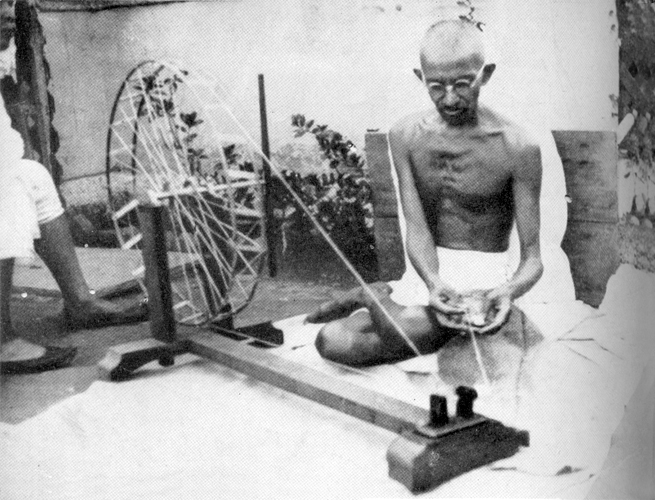
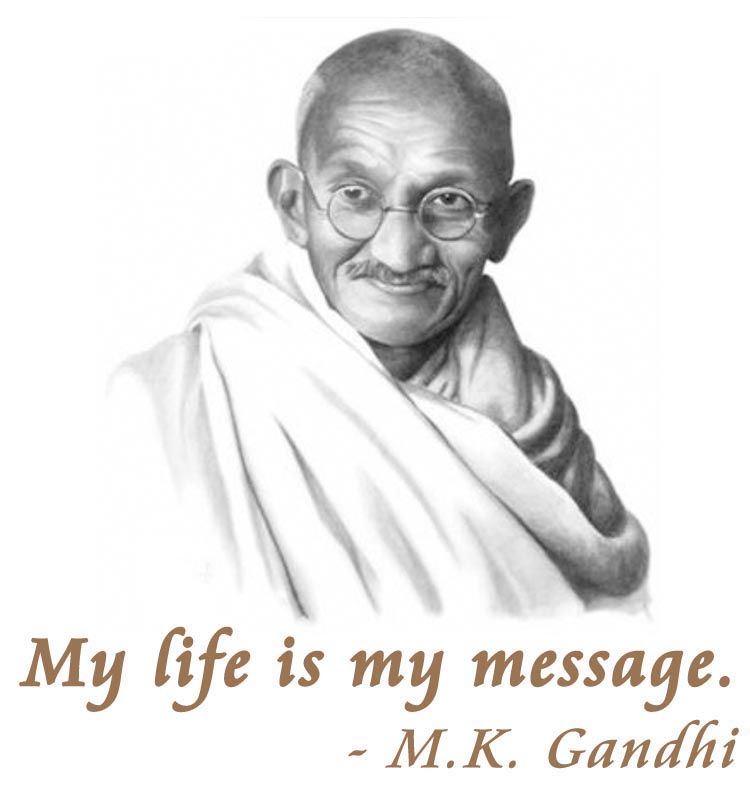
India’s soul - “The Moral Compass of a Nation”Nations, like individuals, are ultimately judged not by the scale of their wealth or the power of their institutions, but by the moral compass that guides their choices. India’s freedom was not won merely through political negotiation; it was earned through an ethical awakening led by a frail yet unyielding figure who transformed morality into a force stronger than any empire. Mahatma Gandhi did not offer India a strategy alone - he offered it a conscience. He taught that political power, if divorced from moral purpose, becomes an instrument of exploitation rather than service. For Gandhiji, freedom was not an end in itself, but the beginning of a higher responsibility: to build a nation where the weakest could live with dignity, where economic progress did not crush human values, and where leadership was measured by sacrifice rather than authority. His charkha was not simply a spinning wheel; it was a reminder that political independence must rest upon economic justice. His ashrams were not retreats from politics, but training grounds for ethical leadership. This moral foundation became the invisible architecture of modern India. It reminded those entrusted with power that their duty was not to rule, but to serve; not to dominate, but to uplift. Yet, moral foundations do not sustain themselves automatically. Each generation must consciously choose whether to preserve them or to replace them with expediency. The story that follows is not merely about Gandhi’s ideas, but about their enduring relevance in an age where nations once again face the temptation to separate progress from principle. Mahatma Gandhi’s charkha and khadi were never conceived as relics of rustic nostalgia; they were the moral and economic instruments of a nation struggling to reclaim its dignity. In the early decades of the twentieth century, India’s villages stood impoverished not because they lacked skill or resources, but because a colonial economic order had deliberately severed the link between their labour and their livelihood. Raw cotton grown by Indian farmers was shipped to the mills of Lancashire, only to return as finished cloth beyond the reach of the very hands that had produced its source. Gandhiji saw in this cycle not merely economic exploitation but the erosion of India’s self-respect. The charkha, therefore, became his quiet revolution. By spinning their own yarn and wearing khadi, villagers could earn, clothe themselves, and restore the circulation of wealth within their own communities. It was resistance without violence, yet profound in its consequences – a declaration that India would no longer remain a passive supplier of raw material and a captive market for foreign industry. Yet Gandhi’s vision extended beyond the immediate struggle against British rule. He understood that political independence without economic self-reliance would remain fragile and incomplete. The charkha embodied a permanent principle: that the strength of India lay in protecting the productive capacity of its villages, its farmers, and its artisans. It was not a call for isolation, but for balance - where global engagement did not come at the cost of domestic resilience. Seen from the vantage point of the present, the warning carries an almost prophetic resonance. What was once imposed through colonial authority can, in modern form, emerge through the unequal structures of global trade and industrial concentration. When a nation’s raw materials and natural wealth are drawn into external value chains, and refined products return at higher cost while profits flow outward, the result is a subtler erosion of economic sovereignty. The large-scale penetration of manufactured imports, often produced under vastly different cost conditions, risks weakening local manufacturing ecosystems and limiting employment opportunities for India’s own workforce. Over time, such patterns can create dependency, where the capacity to produce is diminished and the ability to innovate constrained. In this context, the continued invocation of Gandhiji’s charkha as a ceremonial symbol, without embracing its economic meaning, risks reducing a living philosophy to a ritual gesture. Gandhi did not spin for spectacle; he spun to awaken a nation to the power of self-reliance. His message was clear and uncompromising: India must never surrender its capacity to provide for itself. He would have insisted that the protection of agriculture, the strengthening of domestic manufacturing, and the nurturing of indigenous research and innovation were not matters of policy convenience but of national survival. The charkha’s hum, therefore, was more than the sound of thread being spun; it was the sound of economic freedom being reclaimed. It asked Indians to become producers rather than dependents, creators rather than consumers. Today, as India stands at the crossroads of global opportunity and economic vulnerability, Gandhi’s vision must return where India reflects upon its economic path and moral responsibility, back to the foundational wisdom that guided its freedom struggle. Mahatma Gandhi reminded us that the true strength of the nation does not lie in its cities or its symbols, but in its people and their capacity for self-reliance. He declared with clarity, “India lives in her villages” (Gandhi, Hind Swaraj, 1909), affirming that India’s economic sovereignty rests upon the dignity and productivity of its rural foundations. He further warned that freedom could not survive as a gift held by the few, but only as a capacity shared by all, when he said, “Real independence will come not by the acquisition of authority by a few, but by the acquisition of the capacity by all to resist authority when abused” (Gandhi, Young India, 1931). Gandhiji was an ‘action man’, stood against and challenge the injustice and unfairness. Yet Gandhiji also showed that transformative change need not come through force, but through moral courage and conviction, reminding humanity that “In a gentle way, you can shake the world” (The Collected Works of Mahatma Gandhi). These words remain not merely reflections of the past, but a living call to the present generation- to protect India’s self-reliance, uphold its moral integrity, and preserve the economic freedom for which he struggled. * Buddhdev Pandya MBE is a UK-based writer, socio-economic and political commentator, publisher, and human rights advocate, with a long-standing engagement in Gandhian philosophy, democratic values, and ethical public life. A recipient of the Queen’s honour for public service, Buddhdev Pandya’s writings seek to encourage informed dialogue across generations and cultures, reaffirming the enduring relevance of Gandhiji’s ideals in guiding societies towards equality, dignity, and peaceful coexistence Email: buddhdev.pandya@gmail.com |