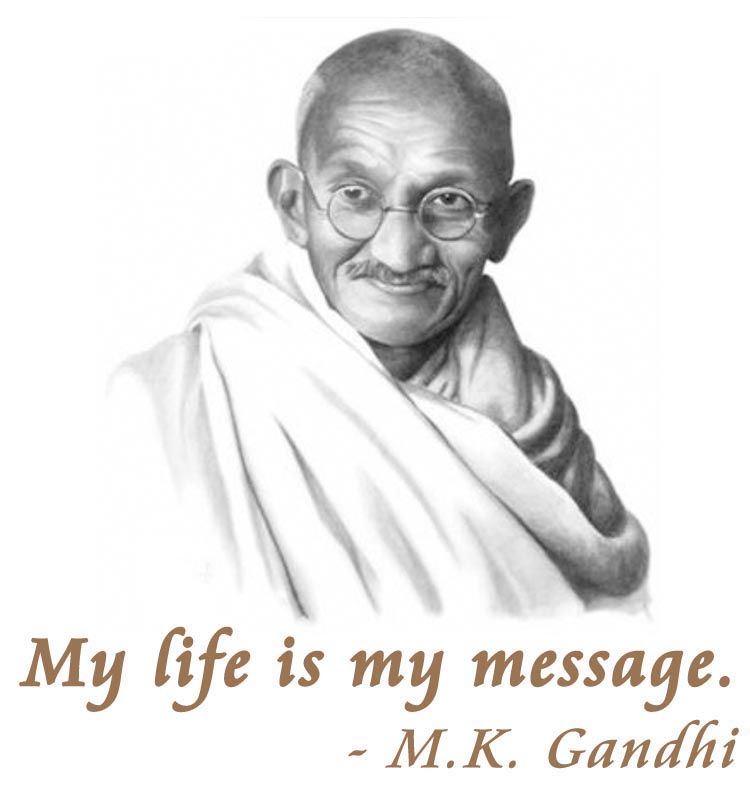
A Gandhian view of Urban Solid Waste Management |
- By Sunilkumar Karintha*If you have ever flipped through Kautilya’s Arthashastra, you would notice countless references to fines and regulations intended to maintain civic order: twelve pana for neglecting a field at the time of sowing, twenty-four pana for selling perishable goods, and so on. At first glance, it seems that such strict penalties would be useful for urban solid waste management in India today. However, once you look deeper into the issue, the thinker who comes to mind most often is not Kautilya, but Mahatma Gandhi. For example, consider the difference between the two major government frameworks on waste management. The Municipal Solid Waste (Management and Handling) Rules, 2000 promoted a centralized approach, advocating for large waste collection facilities. Unsurprisingly, this approach proved unsuccessful and was revoked in 2016. The newer Solid Waste Management Rules, 2016 instead emphasize decentralization, encouraging segregation of waste at the source—within households, shops, and institutions. This shift reflects a crucial truth: involving individuals who generate waste in the management process is essential. This principle echoes Gandhi’s broader economic and social philosophy. Gandhi believed that the challenges of modernity must be addressed at the individual level. Unlike Marx or Ambedkar, who emphasized class, caste or society, Gandhi placed responsibility first and foremost on the individual. In the case of waste management, this means that solutions must begin with each person consciously handling and reducing or processing their own waste. Another aspect worth considering is Gandhi’s insistence on effective use of resources. He was known for reusing even the smallest scraps—for example, the cover of an inland letter—toward his cause. The modern principles of waste management—reduce, reuse, and recycle—fit Gandhi’s philosophy almost perfectly. Equally important is Gandhi’s critique of centralized, large-scale industrial production. He argued in Hind Swaraj that the harm caused by modern civilization lay not in the British people but in the civilization’s very nature. For him, mass production might lower prices, but it also damages society and culture. Urban waste, especially plastic pollution in today’s cities, can be seen as a direct outcome of centralised modern production and the economic ideas that sustain it. Merely replacing rulers while keeping the same economic system, Gandhi would argue, is no real solution. We should also remember Gandhi’s idea of reducing wants, in contrast to modern economists who often celebrate rising demand as the engine of growth. Gandhi believed true happiness arises from a contented mind and a simple life, not from endless consumption. He argued that peace among nations ultimately depends on individuals cultivating contentment rather than pursuing profit or greed as the basis of national economic growth. As he once said, “The mind is a restless bird; the more it gets, the more it wants, and still remains unsatisfied.” From this perspective, individual choices—such as the decision to use single-use plastics—must be limited so that preferences do not prioritize short-term pleasure over long-term consequences. Gandhi never assumed that increased output automatically meant greater welfare. For him, welfare was a broader concept that included not only individual satisfaction but also the well-being of animals, rivers, lakes and the environment as a whole. This is why he advocated for trusteeship as a form of business ownership: because individuals, acting alone, can easily overlook harms that do not affect them personally. Collective decision-making, Gandhi believed, could reduce such risks—a point echoed in the Solid Waste Management Rules, 2016. If Gandhi were alive today, he would likely have made urban solid waste generation an immediate public concern, just as he once mobilized millions to wear khadi in response to rural unemployment in India. The staggering amounts of waste produced daily in urban centres worldwide make his personal practices—such as frugality and dietary restraint in his ashrams—seem remarkably prescient. What once appeared as personal austerity now appears as a blueprint for addressing today’s waste crisis. It is often misunderstood that Gandhi’s support for village life meant simply reproducing traditional village structures—what Ambedkar famously called “the den of ignorance.” Gandhi was not advocating for the preservation of caste-based exclusions or any such age-old practices. Rather, he envisioned localized production for smaller communities, even if this reduced profit margins or increased commodity prices. He would have seen large-scale urban waste as the inevitable byproduct of an economic philosophy that glorifies higher income, higher investment, and constant growth. Modern economists often treat the negative effects of this economic system—such as pollution, toxic emissions, or mountains of plastic—as mere “externalities,” secondary to the supposed benefits of growth. But the very term externality reveals a troubling bias: it sidelines environmental and social costs while pretending to maintain objectivity. However, there are growing signs that economists are beginning to rethink this approach. In India, for instance, Kerala’s recent slogan— “My waste is my responsibility”—offers a distinctly Gandhian message. In today’s democratic framework, rights often dominate public discourse, but Gandhi reminds us that duties are equally important. Without waste segregation at the source, garbage inevitably ends up in dump yards, where it produces dangerous gases and leachates. More broadly, the issue of waste generation is tied to modern centralized production itself, whether under capitalism or state socialism. Both systems normalize large-scale production while ignoring the broader ecological consequences. Gandhi once called the law of demand and supply a “devilish law.” Though widely accepted as a reasonable principle, he warned that what is accepted by the majority at one moment may not be wise for all time. The blind faith in demand and supply underpins the normalization of harmful practices—such as the widespread use of single-use plastics and the imposition of only nominal fines for environmental pollution—because as long as demand exists, producers will continue to supply, regardless of the long-term damage. A plastic bag may meet immediate consumer “welfare,” but it will remain in the earth for hundreds of years. Gandhi also recognized the caste dimension of waste in India. Traditionally, social hierarchies linked dignity with distance from waste: the farther one was from handling it, the higher one’s status. To challenge this mindset, Gandhi himself cleaned toilets in his ashrams, both in South Africa and India. This act was not symbolic alone; it was a direct confrontation with caste-based prejudices. Gandhi was not a politician in the modern sense, concerned with short-term elections or popular demands. His ideas, including those on waste and resource use, extended far beyond immediate political gains. For those of us who still believe in the enduring power of ideas, his vision continues to provide guidance. * Sunilkumar Karintha is a Livelihood Expert with the Kerala Solid Waste Management Project (KSWMP). He writes in national media as well as in Malayalam publications. Email: sunilkumaripe@gmail.com |