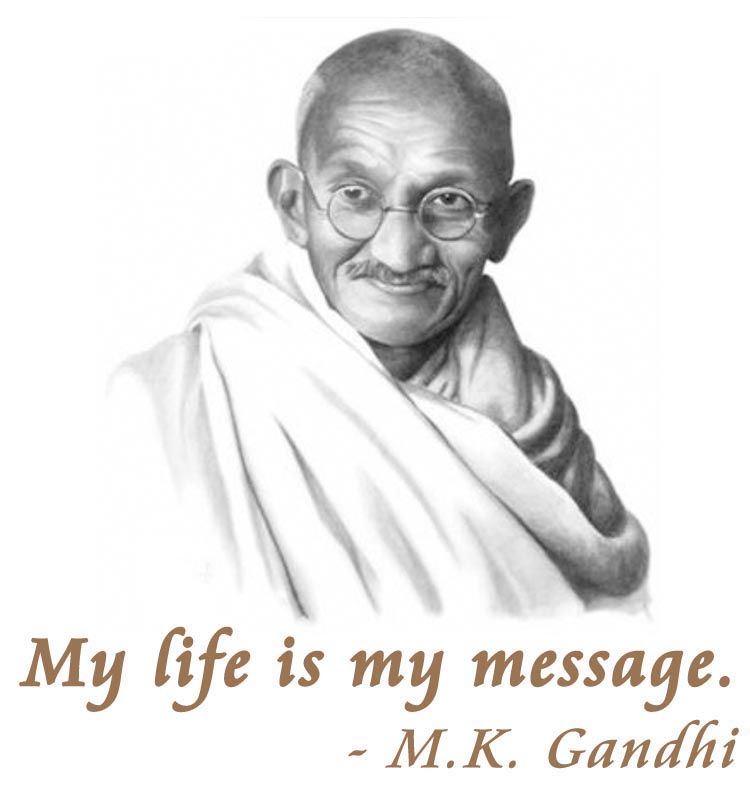
How ‘Vaishnava Jana To’ changed from Gandhi’s time to oursOnce sung in an earthy folk tradition, the hymn has been reshaped and canonised by classical and film musicians. |
- Malini Nair*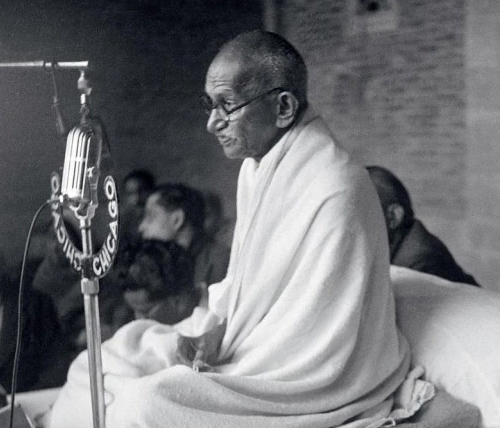
It was a haunting voice, raw and full-throated, as if someone were singing into a vast emptiness. In it, Mahatma Gandhi’s favourite hymn, Narsinh Mehta’s Vaishnava Jana To, acquired the depth and sweep of a folk ballad, rich with humanity and everyday wisdom: Vaishnavajana to tene kahiye, je pira parayi jaane re / par dukhe upkaar kare, to ye man abhiman na aane re. The true Vaishnava, it says, is one who feels the pain of another, who helps those suffering and does so without pride. In the days when a 1968 Films Division of India documentary series on Gandhi by Vithalbhai Jhaveri was a staple on Doordarshan, Mohanlal Rayani’s voice singing the hymn would often soar across our drawing rooms, stripped of embellishments, accompanied only by an ektara and cymbals. That version of Vaishnava Jana To is rarely heard now. What we get today is a sweet, pious bhajan set to raga Khamaj, popularised by polished voices of Lata Mangeshkar, rendered by classical musicians such as Amjad Ali Khan, Bismillah Khan and Hariprasad Chaurasia, and favoured by bhajan singers such as Anup Jalota. “This has now become the standard rendition of the hymn, one that is associated with ashramic congregational singing,” said music scholar Partho Datta. “But the folk style was far more earthy and it connected you to a different world, like the music of the Kabir panthis, which is evocative of the countryside and balladic traditions.” How did a no-frills folk hymn from the Kathiawar peninsula in Gujarat become part of India’s popular musical canon? The story goes back to the early decades of the 20th century, when Gandhi was establishing a spiritual community at Sabarmati. That experiment brought together a fascinating cast in a unique musical quest: Gandhi, seeking a bhajan repertoire that preached higher thinking and swaraj; Vishnu Digambar Paluskar, the zealous educationist determined to transform the social moorings of classical music; and two of his students, Narayan Moreshwar Khare and Shankarrao Vyas, eager to evangelise their guru’s mission. It is a story that weaves together strands of nationalism, spiritualism and musical traditions at a historical crossroads. Higher PurposeGandhi’s conflicted approach to music has been explored in depth in Lakshmi Subramanian’s book Singing Gandhi’s India: Music and Sonic Nationalism. For Gandhi, she says, music had to serve a purpose: the upliftment and refinement of the soul and mind, and the forging of community. He dismissed both populist music that merely titillated the senses and classical music that claimed the high ground, chafing at music being the “barter of prostitutes or high-class religious devotees”. “I have discovered no easy way of enjoying the music of songs,” he once said. “I cannot therefore drink easily of the joy they are capable of giving.” Hymns, then, were for him the most effective path to self-improvement. They were simple, needed little accompaniment, no great talent, were accessible to everyone and, critically, suited to collective singing. The bhajans he chose went beyond ritual or praise of deities – they carried larger messages of compassion and fellowship. Two of his most cherished hymns were the Ramdhun, a traditional chant reworked for him by Paluskar, and Vaishnava Jana To. Though the latter literally addressed Vaishnavites, its spirit embraced all good people. Both became staples of the ashram prayer routine and anthems of Gandhi’s public campaigns, especially the Salt March, writes historian Vinay Lal in his essay Vaishnava Janato: Gandhi and Narsi Mehta’s Conception of the Ideal Person. “As Gandhi commenced his almost 250-mile march to the sea in 1930, writes his biographer Narayan Desai, he was handed his walking stick by his close associate Kaka Kalelkar, and Narayan Khare sang Vaishnava janato,” writes Lal. “The bhajan remained on the lips of Gandhi and his companions throughout the Dandi March.” Gandhian ExperimentBhakti poet Narsinh Mehta’s bhajan was originally sung in the dayro folk tradition of Saurashtra – at village gatherings where music, storytelling and pravachan (spiritual discourse) intertwined. Today, few sing Gujarati bhajans in the spare folk idiom Rayani embodied. In its place dominate loud orchestration and performance styles that can hold the attention of large audiences in urban centres. Ahmedabad-based Praful Dave is an outlier and among the few remaining practitioners of the older style. He learned the skill from his father, Devshankar Dave, a contemporary of Rayani – both men largely absent from archival records. “They belonged to the sant parampara, which meant that they sang for themselves and inner peace, so they never sought any attention or adulation,” said Dave. “Rayani, for instance, was a tailor by day in Songadh in the Saurashtra region and he sometimes sang for the Bhavnagar radio station. There are some recordings of his singing available. Unlike the modern-day bhajan sung on commercial platforms, there was no violin, bongo, flute, clarinet accompanying them, just the ektara or ramsagar, as it is sometimes called, and the manjira.” Mehta’s bhajans, he adds, followed the cycle from sandhya (dusk) to prabhati (dawn). It is believed that the poet possessed a keen musical sensibility and that the time of day determined the rendering of his verses. It was likely from a voice like Rayani’s, or from a minstrel steeped in the same style, that Gandhi first encountered Vaishnava jana to. His mother, a devout Vaishnavite, was a dedicated temple-goer and may well have introduced him to these hymns in childhood. In her book, Subramanian notes that Gandhi’s earliest encounter with music’s power to forge community came in South Africa, where he established the Phoenix Settlement in 1904 as a testing ground for his views on satyagraha and self-sufficiency. Multi-faith hymn singing was central to its prayer services. When Gandhi returned to India in 1915, public and political debates around classical music were at their peak. Paluskar had already launched a countrywide campaign to wrest Hindustani music from what he saw as its “immoral” base of ustads and tawaifs and to relocate it within non-traditional, upper-caste Hindu households. While Gandhi wanted music to foster both enlightenment and patriotism at Sabarmati, he was uneasy with it being an entirely amateur project. It was inevitable that his aims and Paluskar’s reformist zeal would intersect. “Gandhiji had huge respect for Paluskar guruji and asked him to appoint an instructor for prarthana, someone who also reflected ashramic values,” said Hindustani classical vocalist Vidyadhar Vyas. “He picked his student Narayan Moreshwar Rao, who joined the ashram in 1918.” Khare, as Gandhi later observed, “made hymn singing interesting”, compiled the Ashram Bhajanavali and introduced the Ramdhun. According to Vyas, Khare asked his Gandharva Mahavidyalaya classmate Shankarrao Vyas, who was also Vidyadhar Vyas’s uncle, to reshape Vaishnava Jana To into a more structured, raga-based composition. Vinay Lal argues that the hymn’s message resonated with Gandhi’s approach to religions, especially Hinduism. Though he often dipped into the “paraphernalia of Hinduism” by invoking its stories and symbols, he was not ritualistic, rarely visited temples and battled his enter life against caste orthodoxy, Lal writes. Mehta, a 15th-century poet, mirrored these paradoxes – he was a devout Brahmin who was ostracised by his community for socialising with Dalits and singing for them. Full CircleShankarrao Vyas and his younger brother, Narayanrao Vyas, had been spotted by Paluskar in Kolhapur and admitted to his music school in Bombay. As he often did with senior disciples, the guru despatched them to Ahmedabad to advance his pedagogical mission of training talented youngsters from non-traditional backgrounds. There, they established the Gujarat Sangeet Vidyalaya. While Narayanrao left for a performance career in Bombay, Shankarrao continued his work in Gujarat. “It was while he was in Ahmedabad that he was approached by Khare, who had started working in the ashram to rework Vaishnava in the ragdari style as a prayer song for the congregation,” said Vyas. “He set it in raga Khamaj and it was greatly liked by Gandhiji. We have a 78 RPM recording of him singing the composition.” In 1935, Shankarrao moved to Bombay to begin a career as a composer for Hindi, Marathi and Gujarati cinema. Armed with an eclectic grasp of music – he could play, craft and repair a range of instruments – he went on to become a highly successful and influential figure in film music. He was signed by Prakash Pictures, helmed by Vijay Bhatt and known for mythologicals such as Ram Rajya, Valmiki, Ram Vivah and Bharat Milap. He infused his songs with a strong classical sensibility, evident in unforgettable 1940s compositions such as Veena madhur madhur kachhu bol and Bharat ki ek sannari ki from Ram Rajya. In a striking turn of events, he was commissioned in 1940 to compose for Narsi Bhagat, a biopic of Narsinh Mehta starring Vishnupant Pagnis, Durga Khote and Amirbai Karnataki. For the film, he returned once more to Gandhi’s favourite hymn: Vaishnava jana to. Courtesy: Scroll Magazine, dated 25th February, 2026. * Malini Nair is a culture writer and senior editor based in New Delhi. She can be reached at writermalini@gmail.com |