In a new book, Gopalkrishna Gandhi studies his grandfather Mahatma Gandhi’s views on Hinduism‘Whenever there is distress which one cannot remove, one must fast and pray.’- Gopalkrishna Gandhi“My religion teaches me that whenever there is distress which one cannot remove, one must fast and pray.” 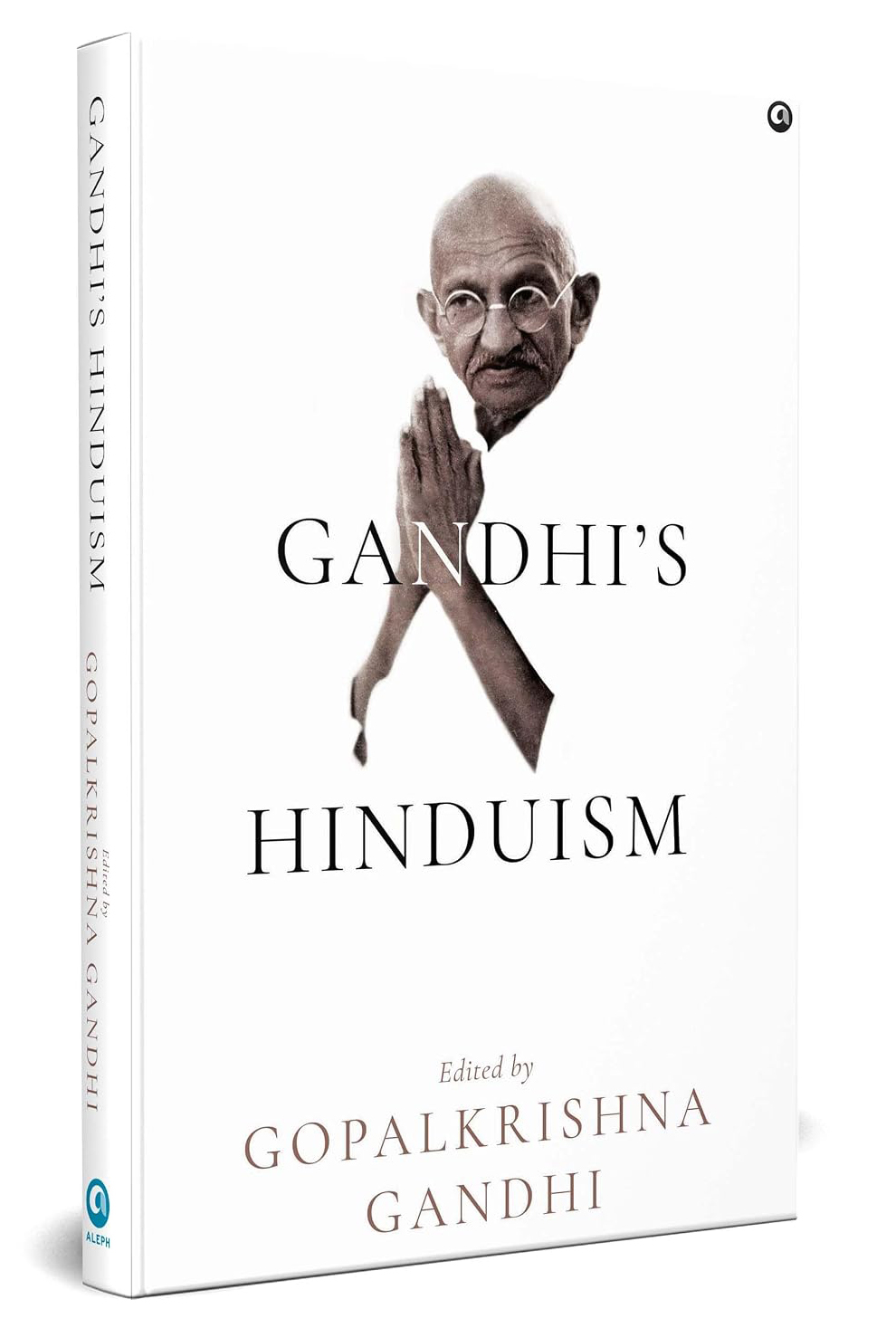 India has had a tradition of fasting as a means of self-denial, self-purification, and self-mortification. This is an integral part of India’s religious and cultural history. Fasting on certain given days of the month and week, and on certain days connected with epic lore, such as on Mahashivaratri, makes fasts more than integral to Hinduism; it makes them vital and essential to it. In the Jaina tradition, fasting is even higher in the order of observances, as in Gandhi’s description of his Jain-influenced mother fasting unfailingly and cheerfully, having been seen earlier in this narrative. And Indian Muslims, of course, observe the annual fasts in the month of Ramzan punctiliously, Gandhi noting the practice with admiration in his illustrious colleague, Khan Abdul Ghaffar Khan. Gandhi himself belonged very squarely to that tradition, the reasons for his fasts varying, but the mode remaining very Hindu-Jaina, very religious in its DNA. It has been calculated that, altogether, from the time that he returned to India from South Africa in 1915 right up until his last year, 1948, he fasted for a total of 148 days, over various issues and for varying reasons. (This tally does not include the recurring abstentions from food that he observed, very “religiously”, on Mondays and other days connected to calendric causes.) But his fasts, if very Hindu in their anatomy, were very “Gandhi” in their political and social salience. Fasting religiously for religious concord, fasting for Hindu–Muslim amity, and fasting to atone for communal disharmony was his very own spin. Notably, Gandhi undertook a 21-day fast from September 17 to October 8, 1924, for communal harmony. The fast began at Maulana Mohammed Ali’s house in Delhi. This fast, provoked by anti-Hindu violence in Kohat in the North West Frontier Province, was a long fast, and it had a sobering effect, without doubt. Two other significant “Gandhi fasts”, the first in Calcutta, from 1 to 4 September 1947, occasioned by the riots in that city, and the second, in New Delhi, from January 13 to 17, 1948, took place in the white heat of Partition-related communal tensions. The second one in the national capital was also indirectly over the issue of the new Nehru-led government’s hesitation in transferring to Pakistan its share in the new nations’ sterling balance. These two fasts of his in independent India were in their finer spirit, not just Hindu, not just religious, but transformationally ethical, with a moral voltage that lifted them to a kind of epic sublimity in their effect on public opinion and public policy. They also set a precedent and an example for what may be called emotionally coercive fasts with political aims. These were to emulate or simulate Gandhi’s, in a rapid sequencing of motivations and movements. Acharya Vinoba Bhave fasted famously in 1979 to make the government enforce laws prohibiting the killing of cows – a step Gandhi, sensitive to the social dimensions of the issue, would certainly not have approved of. Fasting, for Gandhi, meant abjuring food and, alongside that, intensifying his inward journeys into prayer and reflection. Food was replaced by prayer, one might say. It was in his fasts that Gandhi’s Hindu religiosity came to the fore with his own very distinct surcharge, lifting the act above the formulaic abstinence from food to a formidable socio-political demarche. And yet remaining very personal, very intimate. When Gandhi commenced a fast, a Hindu commenced what his ancestors had known as part and parcel of Hinduism. As the fast progressed, that Hinduism became Gandhi’s Hinduism. It re-defined fasting, re-defined Hinduism. It was spiritual, God-given, God-driven. It was soul-propelled, soul-guided. “I know,” he said, “the mental attitude is everything. Just as prayer may be merely a mechanical intonation as of a bird, so may a fast be a mere mechanical torture of the flesh…. Neither will touch the soul within.” Gandhi saw his fasts as acts of physical mortification as well as of spiritual fortification. “A genuine fast,” he wrote, “cleanses the body, mind and soul. It crucifies the flesh and to that extent sets the soul free.” His statements on fasts and fasting draw attention as few of his abstract words do. “My religion teaches me,” he said, in the peak of his 1924 fast, “that whenever there is distress which one cannot remove, one must fast and pray.” They were not easy for him, these fasts. Nor for those many from among his family and close associates who saw in helpless proximity Gandhi suffer. “Though I bear joyfully the pangs of hunger and many other discomforts of fasting,” he was to say, a decade later, “let no one imagine I do not suffer. These fasts are bearable only because they are imposed upon me by a higher Power and the capacity to bear the pain also comes from that Power.” Aware of the possibility of fasts being misused, he said, presciently, “Like all human institutions, fasting can be both legitimately and illegitimately used.” The most striking observation of his on fasts and fasting is his comment on the dos and don’ts of the mode. It makes fasting acquire an altogether new dimension, turning it into something akin to a martial art: “The weapon of fasting, I know, cannot be lightly wielded. It can easily savour of violence unless it is used by one skilled in the art. I claim to be such an artist in this subject.” Fasting, praying while fasting, receiving finely honed messages from his soul within and sending them to society without, made Gandhi on his fast a tradition-bearer as well as an innovator. What can such a one be other than an artist? Mortifying oneself is the logical opposite of gratifying oneself. Put differently, there will be fasts as long as there are feasts. But even as feasting in a poor country can seem vulgar, even obscene, so can facile fasting, in a culture that has held fasts to be almost sacred, look crude, calculated, and even cunning. Politics in post-Independence and post-Gandhi India has polished the arts of cunning, for sure. But the people of India, ever ahead of politicians in their instincts, can tell the difference between what is genuine and what claims to be so, even if their goodness is taken for a brief ride, a while. NOTE: Excerpted with permission from Gandhi’s Hinduism, edited by Gopalkrishna Gandhi, Aleph Book Company. Courtesy: This article originally published in Scroll.in, dt. 26.10.2026 |