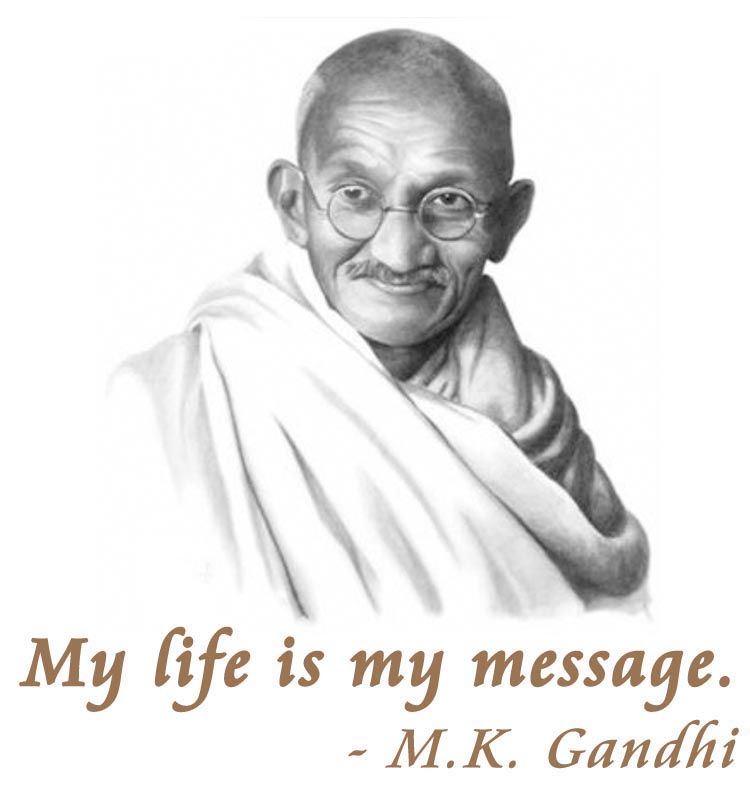
Gandhiji, how do you think making one's own cloth and inheriting one's ancestral profession solve modern problems ? |
|
One has to acknowledge that poverty and unemployment are still Himalayan problems in the modern world. We started spinning and weaving as a means of solving unemployment as well as a resolution of self-reliance (Indians need not depend on the European mills for clothing). As we progress technologically, it is of utmost importance to include the downtrodden and the under-privileged in the scheme of things. While making of one's own cloth was only symbolic, in India it represented a non-violent protest against the British rule, as it culminated in the boycott of western clothing. I believe that for a nation to prosper, it is very important that its people are employed and the nation is self-reliant. The issue of ancestral profession, while common in many other societies, is a problem of enormous proportion in India, where one's dignity in the society was attached to one's profession. I have done everything in my capability to fight against untouchability and indignity of labor. Again, in a country divested of its resources by the occupying powers, new jobs are hard to come by and I felt that as long as we can work to remove social barriers attached to professions, inheriting the family profession is the best way to employ the newer generation. Happiness does not come from money. It can come from taking pride in one's work and recognizing its contribution to society as a whole. So it is of primary importance that in a society, especially one under foreign rule, there are jobs for people to work and feed their families. Only then we can fight for other rights such as freedom. Source: Ask Gandhi |