Chapter 17 |
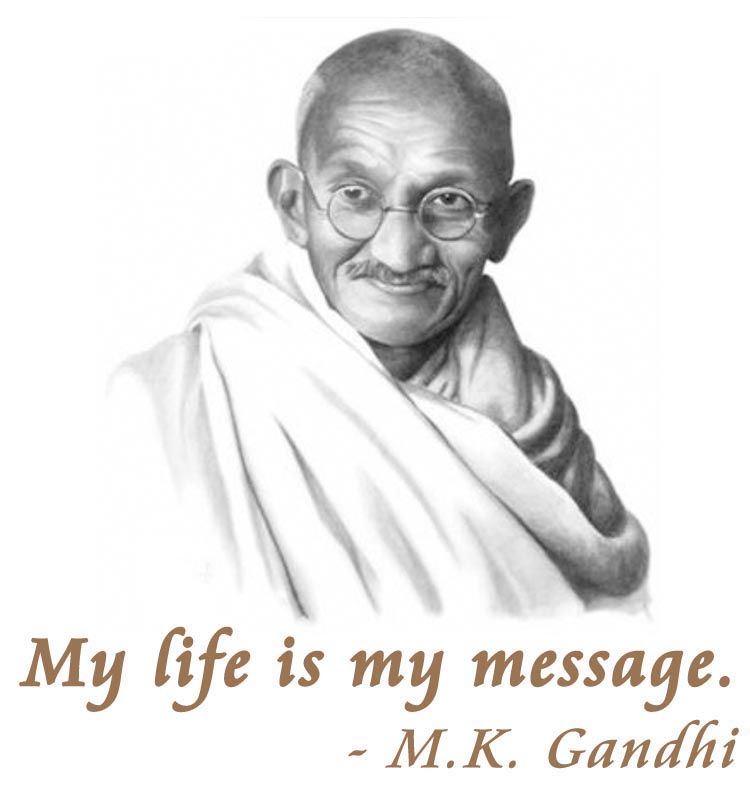
Tables had turned in the War. Hitler and Mussolini were on the verge of defeat. The Japanese Armies had been pushed back, and many countries in the East liberated. A new Viceroy had come to India, Lord Wavell. He wanted to find a way out of the deadlock in India. The leaders of the Congress or the members of the Working Committee were released. As the first step he wanted to reconstitute his Executive Council and include leaders of the people. He convened a Conference at Simla, and put forward his proposals. The Congress and the Muslim League under Jinnah participated in the Conference. But Lord Wavell's efforts failed when Jinnah insisted that the Muslims should have as many members in the Executive Council as the 'Caste Hindus' had, and the Muslim League should have the sole right to nominate Muslims for inclusion in the Executive Council. The Congress could not accept either of these demands without giving up its claim to be a national organisation representing all communities. The Conference failed. In the meanwhile, the war ended in Europe, and elections were held in Great Britain. Churchill and the Conservatives were defeated, and the Labour party came to power. Labour had sympathy for the Indian cause. In March 1946, the new Prime Minister Clement Attlee decided to send a Cabinet Mission to India. It consisted of three of his eminent colleagues. Two of them, Lord Pethick Lawrence and Sir Stafford Cripps were known to Gandhi, and were known as friends of India and Indian leaders. The Mission held discussions with the leaders of the Congress and the Muslim League and many other public figures. They took counsel with Gandhi too. When they failed to find a consensus, they presented a proposal of their own. The Constitution would have three tiers. The Union of India at the top would have control of foreign affairs, defence and communications. The rest of the powers would vest in the States. There would be three sections of States, each of which would decide whether they should function as a group and if so, what subjects should be delegated to the government at the group level. The elaborate proposals were an answer to the question: should India remain one or should the country be divided. It seemed as though the Labour Government preferred a United India. Jinnah declared that he could never accept a Union of India. From 1940 or earlier he had held that India consisted of two nations, the Muslims, and the Hindus and others. His contention was that each nation had a right to have its own state. The two nations, Hindus and Muslims could not live together. The Congress rejected 'Pakistan'. Gandhi had termed it as vivisection, and said that if it took place it would take place over his dead body. He could never look upon religion as a dividing force nor as the basis of nationhood. To him there was only one nation in India, and it comprised of and would always comprise of people of different faiths. Gandhi and the Congress believed that religion was not the basis of nationhood. There were many other factors including history, language, culture and so on. India had been a nation though it had different languages and sub-cultures in different areas. There had always been a cultural personality of India which was based on, and evolved from its diversities. India had never smothered pluralism. It had thrived on it, and evolved its distinct culture of tolerance and pluralism. This nation could not be split on the basis of religion. People of both Hindu and Muslim religions and other religions resided in all parts of India. It was not therefore possible to create a state on the basis of religion without uprooting or annihilating large masses of people belonging to other faiths. This would only result in carnage and misery. But Jinnah was adamant. He insisted that there were two nations, and that they could not live together in one State - India. A new state had to be created by the British before they left. He had already worked his followers up to a white pitch. He was not satisfied with the Cabinet proposals. The Cabinet Mission had also proposed the setting up of a National Government. They did not succeed in setting up one before they went back to England. Now Lord Wavell tried again. He asked Nehru to form one. Jinnah was in a fit of fury. He called the Congress a Caste Hindu fascist organisation, and refused to be a party to their "campaign to dominate the Muslims and other non-Hindus". He would now discard constitutional methods and take to "Direct Action" to achieve Pakistan. He appealed to the Muslims to observe the 16th of August 1946 as Direct Action Day. Against whom was the Direct Action planned? The British Government? The Congress? The Hindus? What would be the means? The answer came in Calcutta on the 16th of August. On that day, Muslim 'hooligans' went on a rampage, killing hundreds of Hindus, raping Hindu women and killing innocent children. It looked as though elaborate preparations had been made, and arms had been collected and stockpiled. For two days the Hindus were dazed. But then they rallied, killed, looted, raped and set fire to property as Muslims had done. The casualties were high on both sides. Many houses and buildings lay in embers. The reprisals by the Hindus resulted in further reprisals by the Muslims in areas where they were in absolute majority. One of these areas was the district of Noakhali in East Bengal. It became the scene of an unprecedented carnage. Hardly a handful of Hindu huts and families could survive the onslaught. Hindu men, women and children were slaughtered. Some were forcibly converted to Islam. Women were subjected to repeated rape and humiliation. Some were kidnapped and subjected to forcible "marriages". Some committed suicide to escape rape or capture. The charred remains of houses stood as reminders of the insanity and inhuman cruelty that had ravaged the fair green land where Hindus and Muslims had lived like blood brothers for centuries, speaking the same language, singing the same songs, sowing, and reaping the same harvests and sharing each other's joys and sorrows. Gandhi heard of the great Calcutta Killing when he was in his Ashram at Sevagram. He rushed to Delhi to proceed to Calcutta. At Delhi, he, as well as the country, came to know of the holocaust in Noakhali. For nearly a week the Government of Bengal, under Suhrawardy, had censored and suppressed the news. When the reports of the carnage and rape in Noakhali reached Bihar where Hindus were in a majority there was a deafening and stunning echo. Muslims were killed and raped. Their houses were gutted by arson, and looted. The Hindus in Bihar vied with the Muslims of Noakhali in repudiating the values of humanness and mutual love that had characterized and sustained Indian society for centuries. They descended to levels that would have shamed the most barbarous tribes and animals. Gandhi 'had reached Calcutta on his way to Noakhali, when reports of the Bihar outrage reached him. He was overcome with sorrow and shame. What was happening to India which had set an example to the world in tolerance and mutual love? What had happened to all the lessons that people had learnt: about the power of love and Satyagraha? Were we destined to destroy each other in fratricidal strife and kill each other as animals, or even as animals will not do? He had special affection for Bihar. It was there that he had started his first Satyagraha in India and served the exploited, starving people. He decided to live on "the lowest diet possible" a semi-fast, and announced that he would go on a fast unto death, if the people of Bihar did not immediately halt the madness and turn a new leaf. Gandhi's semi-fast and the timely measures taken by the Government had their effect, and the madness abated in Bihar. Gandhi proceeded to Noakhali. He wanted to go alone. But a Minister and Parliamentary Secretaries of the Government of Bengal accompanied him. He had to travel by train and car and boat. He was almost besieged by people who had flocked for his darshan. As Gandhi approached Noakhali he saw the havoc that communal madness had wrought, - the charred remains of houses, the skulls and skeletons that were strewn beside huts and houses; the vacant and lifeless looks of women whose honour and self- respect had been looted, the living dead who were haunting the villages that had become charnel grounds. They had seen their husbands or children or fathers being butchered before them. Men had seen their mothers or wives or sisters being raped before being killed. Gandhi did not know how to console them. Who could give back to them what they had lost forever? Gandhi said that he had not come to console, but to give courage. He would stay with them. No, he would stay alone in the hut of any Muslim who would house him, living on whatever he could get to eat, sleeping on the mud floor, at the mercy of hooligans and would-be murderers for the twenty-four hours of the day. He would share their agony and risks. He would try to bring back sanity through his courage and his appeal to the sense of humanness and compassion in the Muslims. He decided that he would send the members of his entourage to live alone in far dispersed areas, as he lived, instilling courage in the minds of the Hindus and compassion and human kindness in the minds of the Muslims. He himself would set up his headquarters in the village of Srirampur. It was a typical site. Only three of the hundreds of Hindu families living there had survived. Gandhi had with him his Bengali Secretary, Nirmal Kumar Bose, and his stenographer. His granddaughter Manu too was with him. The madness that he saw launched Gandhi into intense and ruthless introspection. He had tried to place the law of love before the people, in South Africa, in India. He had tried to practise it incessantly. He had passed through fire many times to purify himself and his people. Yet today what he could see all around him was untruth and hatred and brutal violence. It appeared as though he had failed. Why did he fail? Was there something lacking in him? Was there something lacking in his understanding of the law of love? Had he been too frail and too broken an instrument to be the medium of an invincible power? He should purify himself even further. He should reduce himself to zero and rid himself of his impurities. The moment demanded that he pass through fire to rid himself of his impurities so that the pure ore of love would shine through him and bring people to their senses. He decided to disband his camp at Srirampur and to walk alone from village to village. He would go alone, entrusting himself to* God, - the God of love and Truth. The district was crisscrossed by rivulets, and was marshy. Paths were overgrown with thorny bush. Rivers had to be crossed by walking along bamboo poles that had been stretched above the waters to serve as bridges. He was old and weak. He might slip and fall into the flowing waters or eddies. He discarded the use of footwear. He would walk on barefoot, braving thorns and quagmires. He was willing to leave a trail of blood, - his own blood - to mark his quest for compassion and love. He was at the mercy of the very people who had gone on rampage and killed and looted and raped. He would expose himself to their fury, Gandhi was not- far wrong. They stood sullen and furious as he wended his way on barefeet. At some places, they placed thorny bushes on the narrow footpaths through which he had to pass, or placed nightsoil along the footpaths that he had to take. He bent down and removed the nightsoil with dried leaves and placed his feet on the path. The looks of many showed their unrepentant anger. Some taunted Gandhi, and asked him if he was not going to Bihar. Was he only concerned with the safety of Hindus? He replied that he made no distinction. The sins of the Hindus of Bihar were as black as the sins of the Muslims of Noakhali. He would go to Bihar and Punjab as soon as some sanity was restored in Bengal. To him Allah and Ishwar were one. There were some who harkened to his call, and vowed to work for the return of sanity and humanness. After two months of this 'pilgrimage' in Noakhali, in March 1947, Gandhi decided to go to Bihar to spread the message of sanity and love. Here, it was the Hindus who had gone mad and done all that the Muslims had done in Noakhali. Gandhi's task here was to bring solace to the Muslims who had been the victims of the holocaust, and bring Hindus to the path of sanity. Here, the response that Gandhi received was far more warm and reassuring. Many who had been guilty of perpetrating atrocities on the minorities confessed their guilt, and promised to turn a new leaf. Moved by Gandhi's words on the miseries of Muslim women who had suffered, many Hindu women gave Gandhi their jewellery to give help to their 'sisters'? Gandhi was unsparing in his condemnation of what the Hindus had done in Bihar and what the Muslims had done in Noakhali. |