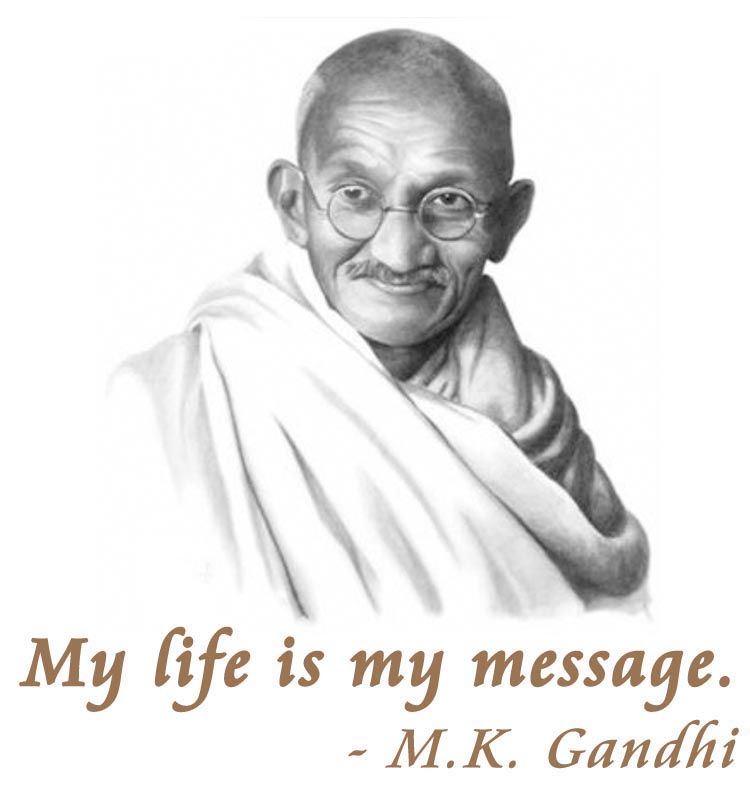
Gender perspective on education and peace |
- By Dr. Vibhuti Patel* AbstractPeace of course can have two faces, two forms- Public and private. Peace in the community, go hand-in-hand with the peace in the family life. Hence the need to deal with domestic violence and women's grievances. There may be an apparent stability and absence of conflict in situations of successful intense repression-beating, abuses, psychological torture wherein all dissent is brutally, immediately, and surgically suppressed. This is a condition in which only one group (men, in-laws, bully neighbours) dominates, in which women's views and dignity is not allowed to exist. The other situation is one in which democracy and human rights reach their pinnacle in each and every core of the community and domestic lives. It is the condition in which there are always avenues of settlement of differences and disputes without a breakdown of the framework of mutual respect, recognition of the rights of the other, and belief in good faith of the 'adversary'. It is the condition in which negotiations and persuasion are the methods of overcoming even major digressions in points of view. It is a condition in which people have the right to be different and where difference is not denied. It is also the state of affairs in which difference is not a cause of hierarchy, where the other is not the enemy or the lower or the higher being. The quest for peace is an eternal pursuit for human fulfillment. Peace or absence of antagonistic, violent, or destabilising conflict is essential for existence to become life, for survival to become human. Human beings can become human and humane only in conditions of peace. Creativity, spirituality, individual and collective achievements attain grandeur and glory only when there is peace. Qualities of compassion, forgiveness, love, sharing and universal solidarity become cherished and sought after virtuous attributes only when a community, society or nation is at peace - within and without. War on the other hand, internal or external, civil or military, declared or undeclared valorises bravery - the capacity to kill or be killed - the destruction of human life and accomplishments; it mocks compassion and conscience; it belittles refusal to erect artificial walls that divide human beings in the name of one identity or the other; it glorifies the destructive principle and devalues the principles of creation and life. The war mongers are invariably persons with few qualms of conscience, ever ready to eliminate and exterminate human life, emotions, thought, ideas, and achievements. In this context, for empowering harmony at the individual and community level, liberal humanism needs to be backed by solidarity, service and authority. Social activists like us have to organize and mobilize men, women and children to reiterate and reinforce the importance of secular values for a harmonious coexistence, to create pressure groups to condemn acts of violence and exclusion and to propagate actions and initiatives to promote peace and inclusion and to encourage, facilitate and establish similar networks/coalition of citizens to promote secular values, religious tolerance, democracy and human rights and accelerate women's participation in secular movements striving for equality and justice. To resolve conflicts with words rather than swords. IntroductionWhen faced with violence, women's predicaments as survivors, as beneficiaries of violence & as peacemakers are extremely complex issues. Women's complicity in perpetrating violence in case of female infanticide, female foeticide, dowry murders, during caste/communal/ ethnic violence and in the war-zones (Abu Grahib prison in Iraq) are widely documented. Thus, the belief that 'women as inherently peace-lover' is contested by the human rights movement. Women are also carriers of culture of violence. At the same time, 5000 years of patriarchal control over women's sexuality fertility and labour makes mass of women victim of violence. Social discrimination against women results into systematic neglect of women's health, from womb to tomb. Sexual assault, molestation, rape, sexual harassment at workplace, child sexual abuse, nuisance calls cause psychological disturbances among girls and women. The trauma of sexual violence sparks off tension and anxiety at a dangerous level. Their mental health problems are manifested in anxiety, fear, avoidance, guilt, loss of efficiency, lack of coordination, depression, sexual dysfunction, substance abuse, relieving the traumatic incidents through memory, suicidal attempts, eating disorders, disturbed sleep patterns, fear of encountering such situation once again. It is found that women who undergo extreme sexual violence experience a loss of self and self-esteem following the shock inflicted on them. When there is a continuous period of traumatic stress, it becomes chronic, lessening the individual's ability to do any kind of constructive work. Hence, this form of male violence towards women is an important issue that demands public attention. Women's organisations have taken up this issue at a local, national and global level. Discourse on mental health of women in the family situation gained serious consideration in the context of campaign against violence against women. In domestic violence situations, predicament of women is determined by their position in power-relations vis-à-vis the rest of the family members. Many social work researches which attribute deviant behaviour of adolescent girls to their working mothers guilt trip women by narrowly focusing on single parameter and ignoring factors such as peer -pressure, media, overall standards of morality in our society and power relations in the nuclear/ joint family. Such researches are used by some counselors to cage women into domesticity and divert the attention from generation of genuine support system for developmental needs of the daughters of working mothers. Women's rights organisations which are doing support work for women in distress have started giving due importance to counseling for peace building. The quest for peace is an eternal pursuit for human fulfilment. Peace or absence of antagonistic, violent, or destabilising conflict is essential for existence to become life, for survival to become human. Women as Survivors of Violence & ConflictEyes raining, without mere control, This poem by a survivor of violence & conflict, Ms. Lara Jesani portrays the pain and agony that every woman faced with domestic violence, communal/caste/ethnic violence and violence as a result of war. Peace Begins from Home...Case Sturdy of Women's Grievances Cell of Mohalla Committee Movement, Mumbai Mohalla Committee Movement (MCM) in Mumbai was formed with a firm understanding that the quest for peace is an eternal pursuit for human fulfilment. MCMs were formed in Mumbai to counter communal frenzy during Bombay riots in 1992-93. In the words of its founder member Julio Francis Ribeiro, "After the riots in Mumbai in 1992, a long term, interventionary and developmental solution was deemed necessary. The creation of Mohalla committees was one of the solutions proffered and their proliferation in various areas of Mumbai has made a measurable difference in the life of this metropolis. These committees were seen as simple, people-centred and appropriate mechanisms through which peoples' participation in the peace process is highlighted." MCM made a crucial contribution to restore peace and confidence among different communities. Moreover, it promoted developmental activities such as education, civic issues and programmes for youth and students. As MCM has a gender-sensitive approach and does not believe that 'Women's issues can wait', it decided to focus on women- both in the community as well as in the domestic arena. Formation of Women's Grievance Redressal CellWomen in the communities have been mainstays of the MCM. Women's response to the proponents of 'World Peace' was 'Peace begins from home'. Peace of course can have two faces, two forms- Public and private. Peace in the community, go hand-in-hand with the peace in the family life. Hence the need to deal with domestic violence and women's grievances. There may be an apparent stability and absence of conflict in situations of successful intense repression-beating, abuses, psychological torture wherein all dissent is brutally, immediately, and surgically suppressed. This is a condition in which only one group (men, in-laws, bully neighbours) dominates, in which women's views and dignity is not allowed to exist. The other situation is one in which democracy and human rights reach their pinnacle in each and every core of the community and domestic lives. It is the condition in which there are always avenues of settlement of differences and disputes without a breakdown of the framework of mutual respect, recognition of the rights of the other, and belief in good faith of the 'adversary'. It is the condition in which negotiations and persuasion are the methods of overcoming even major digressions in points of view. It is a condition in which people have the right to be different and where difference is not denied. It is also the state of affairs in which difference is not a cause of hierarchy, where the other is not the enemy or the lower or the higher being. To create such condition, the MCM initiated a project- Women's Grievance Redressal Cells (WGRC) in March 1997, first at the MIDC and on 2nd April 1998 in Andheri (E) to enable women of different communities to come together on a common platform. Distressing Condition of Women in the CommunityWhile working in the community, MCM activists realised that women were doubly oppressed, both socially and economically and hence needed an outlet to voice their grievances. Most of the women led submissive lives and suffered in silence. Ironically, even though communal harmony prevailed in the area, marital conflicts disturbed the peace and tranquillity of the families. Many of them had to face physical violence their personal lives. Even so they were apprehensive of lodging a complaint at the police station, either out of fear of society or due to fear of retaliation/ backlash from the family members, especially husbands. It was in this background that the members of MCM along with the police conceived the idea of WGRC in order to help women in distress. These Cells made the people aware of a common link between women and the community they live in. As a result, effective outreach programmes were developed and major extension activities were initiated to promote peace, communal harmony and constructive activities for area development. These Cells, being projects of MCM are working in collaboration with the local police and 3 NGOs function twice a week at the MIDC and Andheri (E) police stations. Awe inspiring experiences of these two Cells, motivated the members of MCM to start similar Cells in Bandra, Nagpada and Worli. Objectives of WGRC:
Approach of the WGRC:As the thrust of the Cell is on mediation and reconciliation, all the concerned parties are invited to the Cell and given a fair chance to voice their grievances against each other. Some of the meetings can be very time consuming. However in some cases, redressal process is shorter and cases quickly get resolved. Due to consistent activities of MCM in the community, the Women's Cell could get easily established and legitimised as many women who approached the Cell were also the members of MCM and attended MCM meetings regularly in their respective beats. The following examples delineate the processual dimension of WGRC's intervention: A. Easing of tension between Hafeeza Shaikh and Vimal Pawar (MIDC)For several years, Hafeeza and Vimal were at loggerheads. Even thought their fights revolved around issues such as garbage and drainage, their anger and hatred towards each other was immense. Both had lodged complaints and counter complaints against each other at the police station. But to no avail, the animosity between the two continued to prevail. Finally, the duty officer at the police station asked them to visit WGRC. On visiting the WGRC, both complained bitterly against each other. While Vimal blamed Hafeeza of witchcraft, Hafeeza blamed Vimal for provoking the fights and instigating the neighbours against her. It was evident that both did not want reconciliation. It was a Herculean task for the members of the Cell to bridge the gap between the two as they belonged to two different communities. However, after a continuous dialogue with them at the end of the third session, both agreed to bury the past and forgive each other. The Cell members were jubilant as they were able to resolve the problem that existed for many years and most importantly they were able to bring about peace in the area, especially since Hafeeza's was the only family from the minority community living in a majority dominated area. B. Reformed Swami and relieved Vasanthi (Andheri)Vasanthi, a young girl, married C. Swamy in 2003. However, on the very next day of her marriage, her husband demanded money to set up his business. She was shattered. In order to keep her marriage intact, she borrowed a small amount of money from her father and gave it to her husband. Still he continued to harass her mentally and physically for more money. Moreover, he forcibly took her gold ornaments and sold them for a large amount of money. Torture by her husband was so her unbearable that she left her matrimonial home to live with her parents. Her parents felt so cheated by their son-in-law that they decided not to send Vasanthi back and decided to call of the marriage. It was at this point in time that distraught Vasanthi approached the Cell and related her woes to the members. Vasanthi's husband was subsequently called to the Cell and there was a major showdown between the spouses. The members made uphill effort to seek reconciliation between them. But it was only after the second session that Vasanthi's husband agreed to return the money and jewels and do a service job. After the third meeting both the spouses agreed to give their marriage a try and Vasanthi returned to her husband. They are in touch with WGRC and the Cell members have found that Swamy has changed for better. Nature of Grievances
Legal InterventionThe cases that could not be resolved through negotiation were either referred to the family court at Bandra or to individual lawyers. Some women filed their petitions in the family court for maintenance and divorce while others sought the help of their lawyers in connection with illegal marriages, child custody and dowry demands made by their husbands. An advocate from Tata Institute of Social Sciences (TISS) also helped with her legal expertise at the Cell at MIDC. Teamwork between the Police and WGRC MembersIn all the Cells, the police constables are a part of the team. Their presence helps WGRC to get a better insight on the problems faced by numerous women and moreover it gives an opportunity to empathise with the victims in need of help. The police also play an important role by visiting the home of the victim and inviting the spouse to the Cell for mediation. Follow-Up WorkWGRC visits the homes where the conflict is of a serious nature so as to assess the prevailing situation. If the relationship continues to be strained, the spouses are once again invited to the Cell for further mediation. Empowerment of Women through Human Rights EducationWGRC believes that public education is the major tool to women's empowerment. Hence, it organised five workshops on gender sensitisation at Bandra-Kurla police station for the police personnel of the west region. The team from the legal aid cell of justice and peace commission conducted sessions on The Universal Declaration of Human Rights, laws related to women and crimes against women. The five-day workshop provided legal training to three hundred police personnel that included constables, sub inspectors, inspectors and assistant commissioners of police. Even women police took active part in the workshop that was divided into a lecture, a group exercise and a slide show. WGRC has also organised workshop on women and health, counselling, legal provisions, communication skills and unlearning communalism through creative methods of role-play, storytelling, group exercises, street plays, screening of films, vocational training programmes, haldi kumkum samaroha, rangoli and poster competitions and teaching precautions like first aid, fire extinguishing skills. Commemoration of International Women's Day8 March, International Women's day, that symbolises solidarity, sisterhood and strength of women, has been a focal point for women from all five Cells to meet at one place and get a feeling of empowerment. For the past seven years, the Cell has been celebrating this day with vigour an enthusiasm reflected in singing of group song, experience sharing, presentation of annual progress report, speeches of dignitaries and children's stage shows. These events have instilled a feeling of confidence and leadership qualities in women. Pre-emptive measuresKnitting Communities together has been the most effective tactic for preventing communal conflagration. In 2002, after the communal carnage in Gujarat, there was a lot of tension in the community. Women Grievance Redressal Cell (WGRC) worked with the police and held meetings all across the city through the MCM. WGRC also participated in the MCM-organised painting competitions, cultural programmes on communal harmony, sports like volley ball, gymnastics and athletics, table tennis and 'cricket for peace' as friendly and healthy competitions to inculcate a spirit of recreation to counter cut-throatism and promote peace making. After these programmes, many participants have expressed their feelings, 'Until now we were very scared and prejudiced about the police and did not feel we could approach them. But these past few days have helped us to overcome this.' Study RoomsThe other strategy implemented by the Mohalla Committees has been in the setting up of study rooms, as in many slum colonies young students do not have a quiet space where they can study. Often many of them need help with their studies. By using the classrooms of local municipal schools, which are free and unused in the evenings, the Mohalla Committees have been able to provide a much-needed service to their communities. Twelve steps (1997-2009) to Women's EmpowermentDuring the last twelve years of its existence, WGRC, has played an important role in cementing the bonds between communities, spouses, neighbours and enlightened the youth. It is an acknowledged fact that WGRC has played a useful role in forging a meaningful relationship between individuals in the family and also expanded the meaning of family that encompasses the whole community. At the time of communal tension (at times of religious festivals, release of controversial films depicting inter-religious love marriage, during ongoing unsecular episodes happening elsewhere) both police and the Cell members play a proactive role and display courage of conviction to diffuse the tension. This has been possible due to the close and constant co-operation between the police and the Mohalla Committees. The work of MCM has been successful only in areas where police officers have taken personal interest and have ensured that the right kind of people are inducted in the Committee. After seven years of functioning of the WGRC, both the communities and the police have realised that the process requires constant vigilance and evaluation. WGRC member are torchbearers of women's dignity, bodily integrity and gender-justice. Activities of WGRC have brought women's issues on the agenda of MCM. Now, members in the community accept that women's rights are human rights. This experience of MCM needs to be replicated throughout the nation. Women as Beneficiaries of Peace ProcessWomen are the main beneficiaries of peace process as it allows them freedom of movement and ensures their active participation in education, skill and enterprise development, better health status and in terms of employment and career option. Even in the midst of massive transformatory processes, women leaders from different parts of globe provided different models of peace building thro' constructive work. 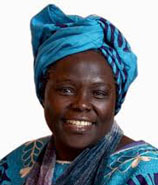
Wangari Muta Maathai, Kenya, Birth 1940 was awarded /received Nobel Peace Prize in 2004 for her contribution to sustainable development, democracy and peace. Wangari Muta Maathai was born in Nyeri, Kenya, East Africa in 1940. Prof. Maathai was the first Women from East Africa to gain a doctorate. She studied Biology at Kansas and Pittsburgh before attaining her PhD from the University of Nairobi in 1971 (Anatomy) Prof. Maathai was active in the National Council of Women of Kenya (NCWK) from 1976 to 1987 it was during this time that she was active in starting a tree planting project to help protect the environment. The Greenbelt Movement was founded by Wangari in 1977, starting with a small tree nursery in her backyard. The movement promotes sustainable livelihoods, citizen education and reforestation, involving mainly women. Millions of trees have been planted in Kenya and other African countries. Over the years, Wangari has opposed Government and others in Kenya over land-grabbing, deforestation and governance issues. In 2002, she won a landslide victory from her home constituency to become a Parliamentarian, and under the new coalition Government was appointed Assistant Minister for Environment, Natural Resources and Wildlife. Wangari is internationally recognized for her persistent struggle for democracy, human rights and responsibility, and environmental conservation. She serves on the boards of several organizations. To give peace a chance, make peace the story:While reporting every media personality must have faith: "In every conflict, there is always something retrievable". It is very important to popularize peace journalism. Public felicitations of persons involved in rescue operations and rehabilitation such as nurses of Cama Hospital in the midst of terrorist attack on 26-11-08 and hundreds of unsung heroes & heroines. Popularise efforts of global, national and local networks involved in peace-making. For example, The Thousand Cranes Peace Network is made up of groups and individuals who are willing to fold a thousand paper cranes (or as many as they can manage) as a symbol of their hope for, and commitment to, peace and non-violence. A visit to the Peace Park and the Peace Memorial Museum allows the visitor a glimpse into the horror of the world's first use of the atomic bomb against people on 6 August 1945. It is a reminder that we must work together to make sure that such a tragedy never happens again. Women as Peace MakersWomen have built peaceful movements to fight against excesses of the dictatorial regimes in Philippines, Chile, Bangladesh, Burma, so on and so forth. 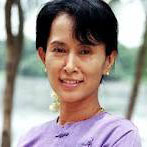 Aung San Suu Kyi was born on 19th June 1945 at Rangoon, capital of Burma (now Myanmar). Her father, Aung San was commander of the Burma Independence Army and was assassinated when she was two years old. Her mother, Daw Khin Kyi was appointed as Burma's ambassador to India during 1960. Suu Kyi accompanied mother to New Delhi and studied at high school and Lady Shri Ram College in New Delhi from 1960 to 1964. Her stay in India instilled in her a deep rooted belief in Gandhian philosophy. In 1964 she left India and studied further in University of Oxford where she met her husband, Dr Michael Aris, a visiting professor at Harvard University appreciated her leadership of the pro-democracy movement in her country. Her scholarly pursuits took her in subsequent years to United Nations, Kyoto University, Japan and the institute of Advanced Studies, Shimla. In 1988, Aung San Suu Kyi returned to Myanmar to nurse her ailing mother. There the mass slaughter of protesters against the brutal rule of military General Ne Win made her to speak out against him. She began non-violent struggle for democracy and human rights. She affiliated herself with the newly formed group, the National league for Democracy. The League won more than 80% of the parliamentary seats in the elections of 1991. However, the results of the election were ignored by the military government. For six years she was placed under house arrest by military rule and offered to release her if she agrees to leave Myanmar. She was ultimately freed from the house arrest in 1995.In recognition of her non-violent struggle for the restoration democracy in Myanmar, she received several prestigious awards including Nobel Peace Prize in 1991. She also received Human Rights Prize in 1991. In 1995, India conferred the Nehru Award for International Understanding on Suu Ki. Five Priorities for Conflict Resolution and Peace:Practitioners involved in Conflict Resolution are unanimous in their conviction about five core principles and they are: Dialogue, communication, networks - Centre for Studies in Society and Secularism (CSSS), Mumbai has been doing this for past two decades thro' research, documentation, training of people of all stake groups. Contemplation- Communalism Combat, (Hate Hurts, Harmony works) a monthly magazine provides platform for debate and discussion on political economy of conflicts and ways to resolve them.
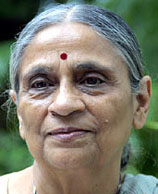 Ela Ramesh Bhatt was born on September 7, 1933 in Ahmedabad, India. She completed her B.A. from MTB College, Surat in 1952. While in college she volunteered to work on the 1951 census. After her graduation she joined Sir L.A. Law College in Ahmedabad. In 1954 she received her Law degree and a gold medal for her outstanding work in Hindu Law. Ela R. Bhatt is widely recognised as one of the world's most remarkable pioneers and entrepreneurial forces in grassroots development. Known as the "gentle revolutionary" she has dedicated her life to improving the lives of India's poorest and most oppressed women workers, with Gandhian thinking as her source of guidance. In 1972, Ela Bhatt founded the Self-Employed Women's Association (SEWA) - a trade union which has more than 1,000,000 members. Founder Chair of the Cooperative Bank of SEWA, she is also founder and chair of Sa-Dhan (the All India Association of Micro Finance Institutions in India) and founder-chair of the Indian School of Micro-finance for Women. A former Parliament member, Ela R. Bhatt has spent her life fighting for the rights and welfare of India's women workers. She was deeply influenced by Gandhiji, whose ideals she followed all her life. She has been the recipient of honorary doctorates from SNDT Women's University, M.S. University, Haverford College, USA, St. Francis Xavier University, Canada and Harvard University, USA. Approach of Conflict Transformation:Women's rights movement has contributed to conflict transformation through Media Development, Child Protection, Project Management, Humanitarian Assistance, Human Rights Protection, human development-Health, education, employment and accountability of refugees. 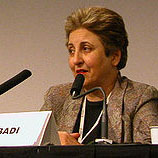 Shirin Ebadi (1947) received Nobel Peace Prize in 2003for her efforts for democracy and human rights. She focused her efforts especially on the struggle for the rights of women and children. She is the first Iranian to havebeen awarded the Nobel Peace Prize. She was awarded the Nobel Peace Prize for her outspoken campaigns for human rights and democracy in her own country of Iran. Shirin Ebadi was born in the city of Hamedan, Iran in 1947. Her family was academics and practicing Muslims. Shirin Ebadi graduated from Tehran University and went onto become Iran's first female judge, serving from 1975. However after the Islamic revolution of 1979 she was forced to resign, as women were no longer allowed to serve as judges. During a long period of unemployment Shirin wrote many books and articles on issues of human rights. In 1992 Shirin finally obtained a lawyer's certificate enabling her to set up her own practice. She defended many victims of child abuse and murder. She has also established two non-governmental organizations in Iran, the Iranian Society for Protecting the Rights of the Child and the Centre for the Defense of Human Rights. Her work for human rights in Iranhas won her admiration and respect from humanitarian bodies across the globe. However in Iran her promotion of human rights issues and politically sensitive issues has led to clashes with the conservative judiciary. In 2000 she was given a suspended jail sentence for promoting evidence that prominent conservative leaders were instigating attacks on pro reform leaders. Besides the Nobel Peace Prize, she has won other awards as well. They are: An official Human Rights Watch Observer, 1996, the selection of 'The Rights of the Child' as Book of the Year by the Culture and Islamic Guidance Ministry and the Rafto Human Rights Foundation prize for human rights activities, Norway 2001. There are three stages of Conflict Resolution.
Women's Contribution in Peace BuildingThrough sports for peace, quiz for peace, songs for peace, debate/discussion on peace, painting for peace, theatre for peace, politics for peace, rereading history of wars & peace and interfaith dialogues the youth can be motivated towards philosophy of Vasudhaiv Kutumbkam (Whole world is my family) for Local as well as Global Harmony. The concept of vasudhaiv kutumbakam- the world is but one family - culture of peace and global citizenship should be inducted into all aspects of human life and education, especially humanities. Let us celebrate and promote the spirit and philosophy of satyam, shivam, sundaram (Truth, Goodness, and Beauty) and live life purposefully and peacefully. There is a need to create Peace Museums and Peace Galleries to help promote a better understanding of other people and cultures around the world. Organisation of Peace Festivals and Peace Rallies has become a regular feature in the peace movement. In 2004, over one million people in different part of our Globe had candle light marches to stop US invasion in Iraq. In this context, for empowering harmony at the individual and community level, liberal humanism needs to be backed by solidarity, service and authority. Educationists like us have:
Women's Agency in Peace KeepingGandhian women such as Nirmala Deshpande and Medha Patkar have galvanized hundreds of women into peace movement and have brought to the fore women's agency in peace keeping. 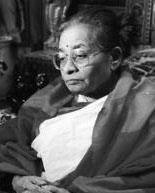 Nirmala Deshpande was a noted Gandhian and a Rajya Sabha member. She is best known for her efforts to promote Gandhian ideology, eschew communal violence and usher in peace between India and Pakistan. Popularly known as 'Didi' to her followers, 79-year-old Deshpande, clad in white khadi saree was a familiar figure at functions at institutions connected to the Father of the Nation. Having taken a vow not to get married, Deshpande dedicated her entire life to the promotion of the work and principles of Gandhi and served the deprived and the downtrodden. Her tryst with destiny began in 1952 when she joined the Bhoodan Movement and stayed at Acharya Vinoba Bhave's Paunar Ashram at Wardha near Nagpur. She undertook 40,000 kilometers of padyatras along with Bhave to carry the message of Gram Swarajya from state to state. During the historic march, they collected thousands of acres of land donated by those who believed in Gandhiji's ideals and distributed it among poor and landless people. In eighties and nineties, she was the moving spirit behind various peace marches in Punjab and Kashmir. Her peace mission to Kashmir in 1994 and her initiative to organise Indo-Pak meet in 1996 were among major achievements in her decades of public service career. She was conferred the prestigious Rajiv Gandhi National Sadbhavana Award for promoting peace and communal harmony. The international women's rights movement has decided
 Mother Teresa 1910-1997) whose original name was Agnes Gonxha Bojaxhiu, was born on August 26, 1910 in what is now Skopje, Macedonia. On 29th November 1928, at the age of 18, she joined the convent in Ireland and took the name Teresa. The order immediately sent her to India. A few years later, she began teaching at St Mary's High School in Calcutta. She also served there as Principal of the school. In 1948 the Catholic Church granted her permission to leave convent and work among the poor people. In the same year she took Indian citizenship. In 1952 Mother Teresa opened the Nirmal Hriday (Pure Heart) Home for dying destitutes in Calcutta. She served the people abandoned by society and tried to help and comfort the poor. For over 45 years she helped the poor, sick, orphaned, and dying, while guiding the Missionaries of Charity's expansion, throughout India and then in other countries. In order to respond better to both the physical and spiritual needs of the poor, Mother Teresa founded the Missionaries of Charity Brothers in 1963, in 1976 the contemplative branch of the Sisters, in 1979 the Contemplative Brothers, and in 1984 the Missionaries of Charity Fathers. Yet her inspiration was not limited to those with religious vocations. She formed the Co-Workers of Mother Teresa and the Sick and Suffering Co-Workers, people of many faiths and nationalities with whom she shared her spirit of prayer, simplicity, sacrifice and her apostolate of humble works of love. Mother Teresa never sought or expected recognition. Yet, she enjoyed universal acclaim as a living saint. In 1979, she won the Nobel Prize in peace for her work with the poor around the world. Her merit and devotion was recognized also by Indian government and awarded her padmashree in 1962 and also the highest honour of the country- Bharat Ratna award on 22nd March 1980. Until her death on 5th September 1997, Mother Teresa continued her work among the poorest of the poor. Like Gandhiji's vision, women'svision of a harmonious society revolve around concerns such as social justice, gender justice and distributive justice. Prospects and possibilities for establishing harmony at the grassroots have increased due to multi-pronged efforts at community level, national and global efforts. Harmony for women's rights movement is
Women are adept at bridging ethnic, religious, political, and cultural divides. Under mature leadership they are collaborative, inclined towards consensus and compromise. Experiences of varied memberships in mahila mandals at the village level from different castes, religions, classes come together for common goals. "For generations, women have served as peace educators, both in their families and in their societies. They have proved instrumental in building bridges rather than walls." - UN Secretary-General Kofi Annan Women have their fingers on the pulse of the community. They are close to the roots of the conflict, have accurate information about the conflict as information givers/ evidence and play a critical role in mobilizing their communities to begin the process of reconciliation and rebuilding once hostilities end. Women are community leaders, with and without formal authority. Both the right and responsibility- drive the peace processes on the ground. Women are often at the center of non-governmental organizations, popular protests, electoral referendums, and other citizen-empowering movements whose influence has grown with the global spread of democracy. Women are highly invested in preventing, stopping, and recovering from conflict, are motivated to protect their children and ensure security for their families. Despite being victims of violence at times of conflict, the consequences of absence of peace are most felt by them. Hence, in all conflict situations, women continue to pursue peace processes as it is expressed in the following pledge taken by women after the Gujarat Riots (2002) "We, The Women of India, have solemnly resolved to unite our collective wisdom for the betterment of our community and ourselves. We hereby vow to strive towards bringing PEACE and TOGETHERNESS in our families and neighbourhood and work towards communal harmony. To educate ourselves, our men and our children about the values of compassion, love, integrity, honesty, truthfulness, hard work, acceptance, forgiveness, sharing, respect for humanity and our environment. To raise collective voice against those indulging in suppression, oppression, exploitation, victimization and abuse of ourselves, our men and our children. To strive towards social, economic and political justice, liberty of thought, expression, belief, faith, worship and equality of status and of opportunity for ourselves, our men and our children. Berndt, Hagen (2006) People building peace, transforming violent conflict in South Asia, Germany: Church Development Service EED. References
Websites:* Director, PGSR, SNDT Women's University, Mumbai. Email: vibhuti.np@gmail.com |