Introduction |
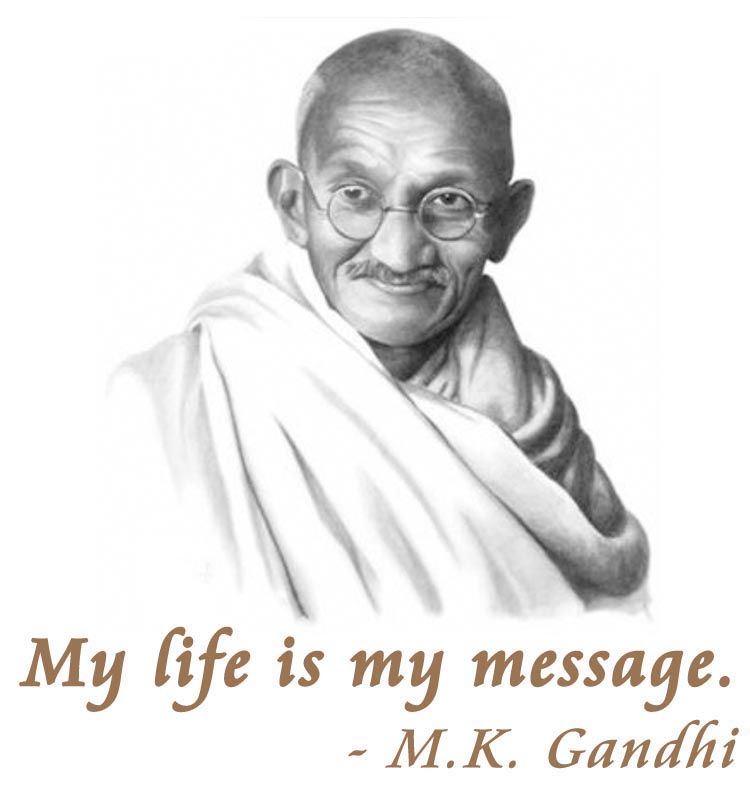
Apparently to many people, development and revolutions, which have shaken the world greatly, were done through violence. For example, The French Revolutions, The First and Second World wars, etc. Without really neglecting this, some pertinent questions have to be asked: Has there been real peace after these revolutions? Can one use a violent means to attain perfect peace and tranquillity? True enough, people are still suffering the after effects of wars like the loss of life and property, the denigration of human dignity, etc. in our world today we find ourselves having much affinity to psychological and physical violence. This issue has bordered many moralists, Philosophers and think tanks all through the centuries. There remains a reality that in as much as violence has played a role in societal changes, there remains a philosophy and a pragmatic ideology, which has been affecting people. This is non other than the Philosophy of nonviolence. Great figures have proven that there can be revolutions without violence. Prominent among these is Mahatma Gandhi. This project aims at exposing the basic tenets of his Philosophy of Nonviolence and its relevance to this our contemporary world. Chapter one traces the progress of violence and nonviolence in history. The concepts of violence and nonviolence are defined and succinctly explained. After this there is a short history of nonviolence from ancient to contemporary times. The Chapter ends with the Basic rules of nonviolence, taking special note to the methods of nonviolent action and the manner of behaviour expected of a nonviolent activist. Chapter two exposes Gandhi's Philosophy of nonviolence. Here Gandhi understands violence and nonviolence form their Sanskrit terms himsa and ahimsa. The centre of Gandhi's contribution to the Philosophy of nonviolence, Satyagraha meaning Truth Force, is also treated. Its basic precepts involve Truth, Ahimsa and Suffering. Chapter three seeks a deeper understanding and interpretation of Gandhi's Philosophy of nonviolence. It is noted that Gandhi's Philosophy has been understood from an Etic (Western) and an Emic (Eastern) point of view. Gandhi's Philosophy has been interpreted at public and private levels; at the public level we have Truth, Ahimsa, Trusteeship and Constructive action. The last two gives an insight into Gandhi's socialism and concern for the welfare of others. At the private level we have Respect, Understanding, Appreciation and Acceptance. The Chapter ends with the understanding of Gandhi's Philosophy of nonviolence in Politics. After having traced Gandhi's Philosophy of nonviolence, Chapter four questions the relevance and application of Gandhi's Nonviolence leaning on some implications arising from his doctrines. Chapter five is more of an imperative affirmation. After tracing the political situation of most African nations, the chapter ends with an affirmation that AFRICA NEEDS GANDHI. Stemming from Gandhi's affirmation "I love your Christ but I hate your Christians... " Chapter six examines the relevance of Gandhi to Christendom and especially to the Catholic Church. After such a reflection one must at least seek to know the way forward especially for us here in Africa. The last chapter takes care of this and is simply a befitting evaluation and Conclusion which brings the work to an end. |